
Melanie Leitner, PhD, consultant and founder of Accelerating NeuroVentures, talked about the findings from regimen D of the HEALY ALS platform trial assessing pridopidine.
Melanie Leitner, PhD, consultant and founder of Accelerating NeuroVentures, talked about the findings from regimen D of the HEALY ALS platform trial assessing pridopidine.
The director and chief research scientist at Tisch MS Research Center of New York talked about a phase 2 data study on stem cell treatment for multiple sclerosis that was presented at the 2023 AAN Annual Meeting. [WATCH TIME: 7 minutes]
Although it showed better functional outcomes, endovascular thrombectomy for the treatment of stroke because of basilar-artery occlusion was associated with procedural complications and intracerebral hemorrhage.
The director of the Mellen Center for MS at Cleveland Clinic talked about the ENSEMBLE study results that were presented at the 2023 AAN Annual Meeting. [WATCH TIME: 6 minutes]
Although the incidence of symptomatic intracranial hemorrhage was low, 18% of the patients in the endovascular thrombectomy group had complications associated with the procedure.
The assistant professor of neurology at Mayo Clinic spoke about understanding the phenotypes and epidemiology of autoimmune encephalitis at the 2023 AAN Annual Meeting. [WATCH TIME: 4 minutes]

In a subgroup of individuals with secondary progressive MS, 50% of patients on mesenchymal stem cell-neural progenitor therapy improved muscle strength compared with 33% of those on placebo.
The associate chief science officer at Kennedy Krieger Institute shared thoughts on the state of pediatric neurology and the significance of being named winner of the Sydney Carter Award. [WATCH TIME: 3 minutes]
The neurologist at Mayo Clinic in Jacksonville Florida provided perspective on his talk given at the 2023 AAN annual meeting on rapidly progressive dementia. [WATCH TIME: 6 minutes]
After 48 months of follow up, cipaglucosidase alfa/miglustat in cohorts of ambulatory patients with Pompe disease had an overall safety profile similar to the approved enzyme replacement therapy.
The associate professor of neurology at Mayo Clinic Rochester provided perspective on a new study presented at the 2023 AAN Annual Meeting assessing the treatment effectiveness of real-world patients with migraine. [WATCH TIME: 4 minutes]

Over 48 weeks of treatment, ALXN1480 was found to be generally well-tolerated, with improvements seen in Clinical Global Impression-Improvement scores and UWDRS Parts II and III.
The associate professor of neurology at Harvard Medical School talked about the subgroup analysis on ravulizumab in NMOSD that was presented at the 2023 AAN Annual Meeting. [WATCH TIME: 5 minutes]
Presented at the 2023 AAN Annual Meeting, remote electrical neuromodulation demonstrated itself as an effective and safe treatment for the prevention of migraine when applied every other day.
The neurologist from the Comprehensive Epilepsy Care Center for Children and Adults, in St. Louis, Missouri, talked about a few of the studies on cenobamate for epilepsy presented at the 2023 AAN Annual Meeting. [WATCH TIME: 6 minutes]

The chief scientific officer at Alzheon discussed new, positive 12-month findings on ALZ-801, an investigational agent in development for patients with early-stage Alzheimer disease.
A group of experts in the care of patients with neurological conditions—Ali Jannati, MD, PhD; Madhav R. Thambisetty, MD, PhD; Daniel Ontaneda, MD, PhD; Peter J. Goadsby, MD, PhD, DSc; Andrew Russman, DO—shared their perspectives on hot topics of treatment and management in neurology from the 2023 American Academy of Neurology Annual Meeting.
The director of Cleveland Clinic’s Epilepsy Center at the Cleveland Clinic Neurological Institute provided perspective on the in-depth testing neurologically healthy patients in the Brain Study will undergo. [WATCH TIME: 3 minutes]

Total disease burden, measured by the Facioscapulohumeral Muscular Dystrophy Health Index, was reduced by 19% over a 24-week period on recombinant human growth hormone.
The manager of Clinical Development-Research at Linus Health discussed potential avenues of research for the DCTclock and expanding its capabilities as a potential detector of cognitive decline. [WATCH TIME: 3 minutes]
Higher adherence to Mediterranean Diet Adherence Screener independently predicted 20% lower risk for cognitive impairment among patients with MS.
As a recap from AAN 2023, get caught up on some of the latest news in neurology as the NeurologyLive® team shares some of our data updates.
The neurology resident from the University of Pennslyvania talked about stroke prevalence in the United States between 1999 and 2018 as part of a presentation at the 2023 AAN Annual Meeting. [WATCH TIME: 6 minutes]
A statistically significantly higher proportion of patients, both with and without predose aura, achieved 2-hour relief of the most bothersome symptom with zavegepant.
The associate professor of neurology at the Cleveland Clinic Lerner College of Medicine of Case Western University provided commentary on the need for clinicians to be transparent with patients with MS about potential differences in disease course. [WATCH TIME: 3 minutes]
Neurology News Network for the week ending April 30, 2023. [WATCH TIME: 4 minutes]

In a subgroup of individuals with Huntington disease with high baseline C4a/C4 levels, treatment with ANX005 resulted in significant improvement in composite Unified Huntington’s Disease Rating Scale across all timepoints.
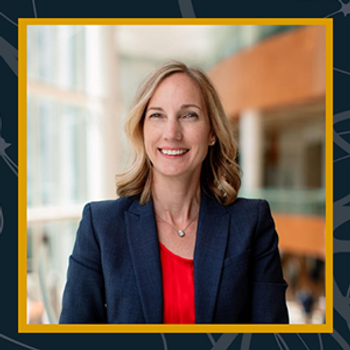
In April 2023, NeurologyLive® is spotlighting a clinician in neuromuscular diseases, Michelle Mauermann, MD, chair of the division of neuromuscular medicine at Mayo Clinic.
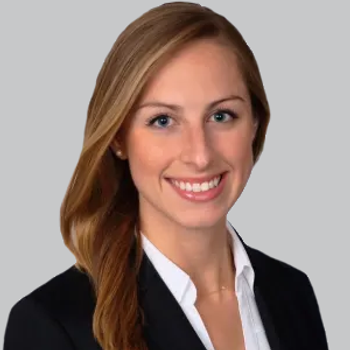
Kimberly O’Neill, MD, pediatric neuroimmunology fellow at NYU Langone, discussed her presentation at the 2023 AAN Annual Meeting focused on cognitive similarities between pediatric and adult MS.
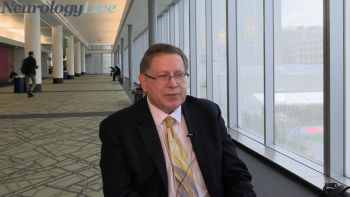
The president elect of the Association of University Professors of Neurology discussed the benefits of working in neurology and the ways to not only attract new clinicians, but keep those already in the field. [WATCH TIME: 3 minutes]