

Take 5 minutes to catch up on NeurologyLive®'s highlights from the week ending February 20, 2026.
Take 5 minutes to catch up on NeurologyLive®'s highlights from the week ending February 20, 2026.
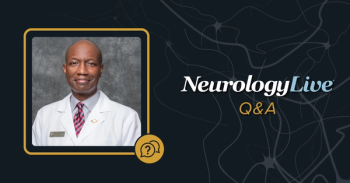
Bruce Ovbiagele, MD, MSc, MAS, MBA, founding president of the Society for Equity Neuroscience (SEQUINS) reflects on Black History Month, SEQUINS initiatives, and the policy and guideline reforms needed to advance brain health equity in 2026 and beyond.
Mind Moments®, a podcast from NeurologyLive®, brings you an exclusive interview with Jeff Chamberlain, PhD. [LISTEN TIME: 23 minutes]
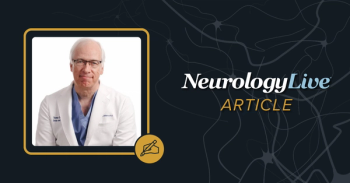
Phase 2 trials suggest LT3001 is safe in acute ischemic stroke and may boost day-90 recovery, paving the way for a global Phase 3.
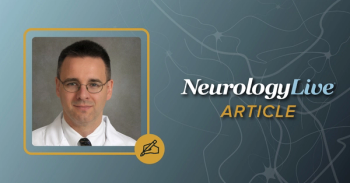
The FDA granted premarket approval to Balt Inc.’s Squid liquid embolic agent for middle meningeal artery embolization, offering a minimally invasive option to reduce treatment failure in patients with large symptomatic chronic subdural hematomas.
New data suggest that prophylactic treatment with anti-calcitonin gene-related peptide monoclonal antibodies may be associated with improvements in sleep quality and daytime sleepiness among patients with migraine.
A movement disorder specialist at Northwestern Medicine discussed developments in disease-modifying research, adaptive clinical trial designs, and evolving device-based therapies in Parkinson disease. [WATCH TIME: 5 minutes]
Leaders from Brainomix provided commentary on data from ISC 2026, discussing how automated net water uptake from routine CT imaging may refine stroke severity assessment, thrombectomy selection, and system-level treatment equity.
The chief medical advisor at the Muscular Dystrophy Association also discussed what he personally is looking forward to at the conference this year. [WATCH TIME: 4 minutes]
52-week trial data shows inebilizumab sustains gains in generalized myasthenia gravis, cuts prednisone, and spotlights CD
A pediatric neurologist at the UCL Institute of Neurology in London, England discussed how pediatric-onset MS is marked by intense inflammation, unique neurodevelopmental considerations, and evolving treatment paradigms at ACTRIMS 2026. [WATCH TIME: 5 minutes]
High-dose constraint-induced therapy boosts arm function in toddlers after perinatal stroke, with gains lasting 6 months in phase 3 trial.

The professor of neurology at Cleveland Clinic gave insights on hematopoietic stem cell transplantation, CAR T-cell strategies, and the ongoing challenges of developing immune reconstitution and repair therapies in multiple sclerosis.
The FDA expands pitolisant, marketed as Wakix, to treat cataplexy in pediatric patients 6 years and older with narcolepsy, making pitolisant the only nonscheduled option for excessive daytime sleepiness and cataplexy attacks.
Neurology experts highlighted ongoing developments in artificial intelligence applications, disease-modifying mechanisms, and genetic therapies expected to undergo evaluation. [WATCH TIME: 9 minutes]
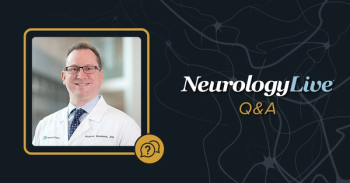
Andrew Russman, DO, director of Cleveland Clinic’s Comprehensive Stroke Center, provided an analysis of the phase 3 OCEANIC-STROKE data of asundexian in patients with noncardioembolic ischemic stroke or high-risk transient ischemic attack.
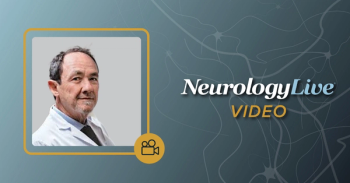
A professor of neurology from the University of Barcelona discussed the clinical implications of adding intra-arterial alteplase after thrombectomy in patients with Large-vessel occlusion (LVO) acute ischemic stroke at ISC 2026.
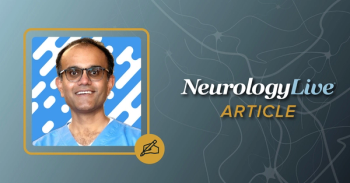
Neal K. Shah, CEO of CareYaya Health Technologies, discussed how AI-powered caregiver training platforms like YayaGuide can personalize dementia care education for family caregivers.

The director of the clinical neuroimmunology fellowship at Cleveland Clinic discussed the evolving clinical trial landscape of hematopoietic stem cell transplantation and other cell-based therapies in multiple sclerosis. [WATCH TIME: 3 minutes]

Here's some of what is coming soon to NeurologyLive® this week.
Test your neurology knowledge with NeurologyLive®'s weekly quiz series, featuring questions on a variety of clinical and historical neurology topics. This week's topic is on FDA-Approved Drugs for Duchenne Muscular Dystrophy!
An interim DSMB review halted the rivaroxaban arm of the NIH-funded CAPTIVA trial in symptomatic intracranial atherosclerotic stroke due to increased safety events and futility compared with standard dual antiplatelet therapy.

Phase 3 data show tenecteplase before thrombectomy in late basilar artery stroke adds no functional benefit, with similar bleeding and mortality.
Neurology News Network for the week ending February 14, 2026. [WATCH TIME: 4 minutes]
Mind Moments®, a podcast from NeurologyLive®, brings you an exclusive interview with Shyam Prabhakaran, MD, MS. [LISTEN TIME: 15 minutes]
Take 5 minutes to catch up on NeurologyLive®'s highlights from the week ending February 13, 2026.
The professor of neurology at the University of Alabama at Birmingham talked about findings from a CREST-2 substudy presented at ISC 2026 showing that revascularization did not improve cognitive outcomes in patients with asymptomatic carotid artery disease. [WATCH TIME: 5 minutes]

In honor of Duchenne Muscular Dystrophy Awareness Week, observed February 13 to 19, we're taking a look at the pipeline of therapeutic candidates in development for DMD.
A duo of experts at ISC 2026 discussed results from a clinical trial of high-dose, home-based constraint-induced movement therapy in infants with perinatal arterial ischemic stroke. [WATCH TIME: 5 minutes]
The Allen Geller distinguished professor of immunology at Duke University School of Medicine discusses the connection between Epstein Barr Virus and Multiple Sclerosis, citing decades of research that position EBV as a leading environmental risk factor and a potential therapeutic target in MS. [WATCH TIME: 4 minutes]