

Here's what is coming soon to NeurologyLive®.
Here's what is coming soon to NeurologyLive®.
Mobile stroke units led to a higher proportion of intravenous thrombolysis among patients with acute ischemic stroke, of whom up to one-third were treated within 60 minutes of symptom onset.

The senior vice president and chief scientific officer of the Parkinson’s Foundation spoke on the initiative, which offers free genetic testing and counseling for patients with Parkinson disease. [WATCH TIME: 2 minutes]
Test your neurology knowledge with NeurologyLive®'s weekly quiz series, featuring questions on a variety of clinical and historical neurology topics. This week's topic is nutrition in multiple sclerosis.
A third dose enhanced the number of responders to all variants and significantly increased CD8 T-cell responses, but the frequencies of Omicron-specific CD8 T-cells remained 70% of the responses specific to the vaccine strain.
Data were analyzed from the AFFINITY study cohort, which included men and women recruited within 2 weeks of stroke onset in Australia, New Zealand, and Vietnam.
Results from the preliminary study investigating the safety of the ketogenic diet for patients with MS were announced ahead of the AAN Annual Meeting in April 2022.
Take 5 minutes to catch up on NeurologyLive®'s highlights from the week ending March 4, 2022.
The staff neurologist at Cleveland Clinic’s Mellen Center for Multiple Sclerosis Treatment and Research discussed the results of a new study on age and sex as determinants of autoimmune encephalitis. [WATCH TIME: 3 minutes]
Nine of 15 tested patients in the intrathecal stem cell group had a reduction of more than 50% in neurofilament light levels, compared with only 1 of 15 in the placebo group.
The senior vice president and chief scientific officer of the Parkinson’s Foundation outlined the new CE course, as well as the benefits of being granted Joint Accreditation. [WATCH TIME: 4 mintues]

The trial will use PACC-5 score as its primary end point and expects to enroll 1200 participants who have confirmed amyloid pathology without signs of cognitive impairment.

The treatment is being developed as a first-in-class regenerative therapy for those with AD and dementia, with these safety data offering support to its development.
Investigators noted the need for more transformational treatments to improve disability for patients with both primary and secondary progressive multiple sclerosis.
The vascular neurologist at Allegheny Health Network discussed ways to grow the RapidAI software and the need to conduct additional, large-scale research. [WATCH TIME: 3 minutes]

In a pilot study in late-onset Pompe disease, patients demonstrated improvements in leg extensor, flexor strength, and maximum inspiratory pressure following resistance training.

The Distinguished Professor Emerita at Indiana University School of Nursing outlined the next steps those in the field of epilepsy need to take to address and tackle this ongoing issue. [WATCH TIME: 3 minutes]
Those with a history of status epilepticus, one of the identified factors associated with modified Atkins diet initiation, could be a target population for which to initiate this approach early.

Data suggest that there is a greater cognitive benefit for patients with higher levels of baseline neurological disability treated with the training and transcranial direct current stimulation.
The Distinguished Professor Emerita at Indiana University School of Nursing spoke on key takeaways for clinicians when it comes to helping tackle stigma, as well as the need to educate patients and their families about the condition overall. [WATCH TIME: 4 minutes]
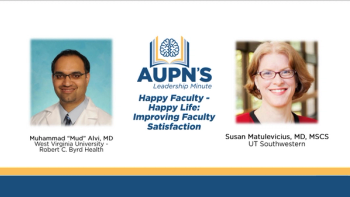
Episode 19 of the AUPN Leadership Minute features Mud M Alvi, MD, of West Virginia University; and Susan Matulevicius, MD, MSCS, of UT Southwestern Medical Center. [WATCH TIME: 4 minutes]
The two investigational agents from 4D Pharma have both been shown in preclinical studies to reduce neuroinflammation and to protect neurons from oxidative stress-induced death.
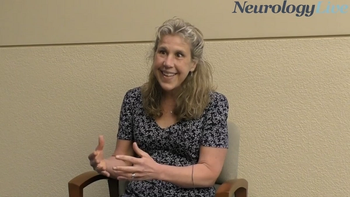
The professor of neurology at the NYU Grossman School of Medicine discussed her presentation at ACTRIMS Forum 2022, which showed better cognitive outcomes in MS following treatment with tDCS. [WATCH TIME: 3 minutes]

The assistant professor of neurology at the University of Pennsylvania provided insight on a new way to accurately predict chronic active lesion evolution from newly developing MS lesions using 7T MRI.
The study found that all COVID-19 cases were mild to moderate in severity, and all enrolled patients recovered and remained in the study.

Investigators utilized a novel method to accurately capture spinal cord area at C1 vertebral level from legacy brain MRI scans.
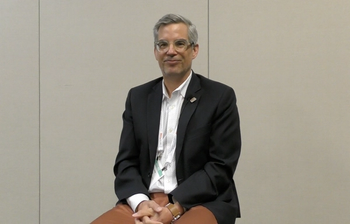
The executive vice president of the National MS Society spoke on recently published data suggesting the relationship between EBV and MS, also sharing his opinion on the potential of vaccines. [WATCH TIME: 2 minutes]
The pediatric epileptologist at Cleveland Clinic provided insight on her presentation at the 2022 AAN Annual Meeting that evaluated ganaxolone in phase 3 study of patients with CDKL5 deficiency disorder. [WATCH TIME: 4 minutes]

Most trials that reported on MS-related fatigue measured its change from baseline and whether that change was statistically significant.
The assistant professor of neurology at the University of Pennsylvania discussed his abstract at ACTRIMS Forum using 7T MRI features of newly developed MS lesions to predict chronic active lesions. [WATCH TIME: 4 minutes]