

Neurava secured a $4M NIH grant to develop and validate an AI-driven wearable platform for SUDEP risk prediction and real-time monitoring, aiming to improve clinical decision-making and early intervention in epilepsy care.
Neurava secured a $4M NIH grant to develop and validate an AI-driven wearable platform for SUDEP risk prediction and real-time monitoring, aiming to improve clinical decision-making and early intervention in epilepsy care.

The director of the Center for Neurological Restoration at Cleveland Clinic commented on tavapadon’s D1-selective mechanism, clinical development, and potential role in treating Parkinson disease across stages. [WATCH TIME: 4 minutes]

Bill Nye, science educator and advocate, reflects on Friedreich ataxia awareness, diagnostic challenges, and the evolving role of genetics and communication in advancing care.

Srikanth Muppidi, MD, a clinical professor of adult neurology at Stanford University, discussed phase 2 findings from the KYSA-6 trial of mivocabtagene autoleucel (miv-cel; KYV-101) in MG.
In honor of Huntington Disease Awareness Month, held annually in May, the director of the Huntington's Disease Center at Northwestern Medicine discussed the design of the INVEST-HD trial.

First-time seizures were associated with more than a 5-fold increase in short-term cancer risk and persistent long-term risk in a nationwide cohort study of nearly 50,000 adults.

Amanda Piquet, MD, FAAN, spoke about data she presented at AAN's 2026 Meeting.

The director of the Neuromuscular Division at the Medical University of South Carolina shared post hoc CHAMPION-MG trial findings at MDA 2026, suggesting ravulizumab may enable corticosteroid reduction while maintaining or improving clinical outcomes. [WATCH TIME: 4 minutes]

Clene plans to pursue accelerated FDA approval for CNM-Au8 in ALS based primarily on neurofilament light biomarker data and phase 2 studies, with a confirmatory phase 3 trial expected to follow.

Following his symposium at the 2026 AAN Annual Meeting, science educator Bill Nye discussed his connection to Friedreich ataxia, emphasizing the importance of awareness, early diagnosis, and effective communication between clinicians and patients. [WATCH TIME: 4 minutes]

Aprill Lane, US Advocacy Lead for Rare Disease at UCB, discusses a new national initiative aimed at improving nutrition access and reducing daily disease burden for patients with myasthenia gravis.

The associate chief quality officer at Nationwide Children’s Hospital discussed how AI-driven research initiatives within PERC are helping identify missed epilepsy diagnoses and improve care pathways in pediatric populations. [WATCH TIME: 3 minutes]

New phase 2 data indicate that dazucorilant may reduce mortality risk in amyotrophic lateral sclerosis, with sustained effects observed through 2 years, although no significant improvement in functional outcomes was reported.

GLP-1 receptor agonists show growing relevance in neurology, with strongest evidence in stroke prevention and obstructive sleep apnea and emerging signals in idiopathic intracranial hypertension and migraine.

Here's some of what is coming soon to NeurologyLive® this week.
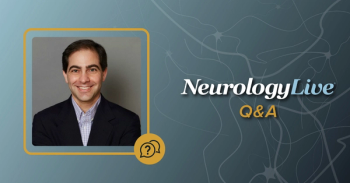
Neurologist Michael Levy, MD, PhD, outlines phase 3 METEOROID findings demonstrating satralizumab’s ability to reduce relapse risk and provide early, sustained disease control in patients with MOGAD.
Test your neurology knowledge with NeurologyLive®'s weekly quiz series, featuring questions on a variety of clinical and historical neurology topics. This week's topic is dyskinesia treatment options!

Single-patient study reports reductions in Alzheimer-related biomarkers following dapsone-based therapy for chronic Lyme disease, highlighting a potential but unproven infection–neurodegeneration link.

Neurology News Network for the week ending May 2nd, 2026. [WATCH TIME: 5 minutes]

Interim results from the PIVOT-HD extension study suggested dose-dependent effects of votoplam on measures of disease progression in stage 2 Huntington disease compared with a natural history cohort.

Take 5 minutes to catch up on NeurologyLive®'s highlights from the week ending May 1, 2026.

A recently published review reinforces ketogenic diet therapies as a clinically relevant option for epilepsy, particularly in pediatric and metabolic populations, while underscoring the need for more rigorous evidence to guide their optimal use.
Catch up on any of the neurology headlines you may have missed in April 2026, compiled into 1 place by the NeurologyLive® team.

Mind Moments®, a podcast from NeurologyLive®, brings you an exclusive interview with Greg Pontone, MD, MHS. [LISTEN TIME: 18 minutes]
FDA clears AXS-05 to ease Alzheimer dementia agitation, offering an oral option that significantly delays symptom relapse in long-term data.

Amy Waldman, MD, associate professor of neurology at the Perelman School of Medicine at the University of Pennsylvania, breaks down phase 1–3 data showing zilganersen’s potential to modify disease progression in Alexander disease.
Findings from the phase 2 ADDRESS-LC trial, assessing BioVie’s bezisterim in patients with long COVID–related fatigue and cognitive impairment, are anticipated to be reported in the first half of 2026.

Machine learning will only transform clinical neurology if predictive accuracy is matched by usability, transparency, and active physician involvement in the design and implementation of tools that support patient care.

GMRx2 reduced recurrent stroke risk by 39% in patients with prior intracerebral hemorrhage in the phase 3 TRIDENT trial, supporting single-pill intensive blood pressure control as a promising secondary prevention strategy.

Phase 1 data presented at AAN 2026 suggest that investigational siRNA therapy RAG-17 may reduce key disease biomarkers and show early signs of clinical stabilization following a single dose in patients with SOD1-ALS.