

Donald Negroski, MD, gave an overview of a study that highlighted an accelerated biologic aging clock among patients with pediatric-onset MS.
Donald Negroski, MD, gave an overview of a study that highlighted an accelerated biologic aging clock among patients with pediatric-onset MS.
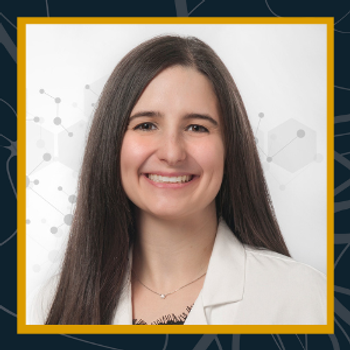
As part of our monthly clinician spotlight, NeurologyLive® highlighted multiple sclerosis expert Marisa McGinley, DO, the staff neurologist at Cleveland Clinic’s Mellen Center for MS.

Patients with CIDP treated with riliprubart reported improved quality-of-life and fatigue measures, as well as reduced neurofilament light levels.
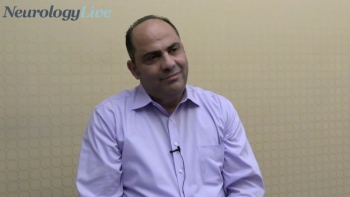
The associate professor of neurology at Georgetown University Medical Center talked about innovative treatments for dementia in movement disorders that target multiple mechanisms to effectively modify the disease. [WATCH TIME: 7 minutes]
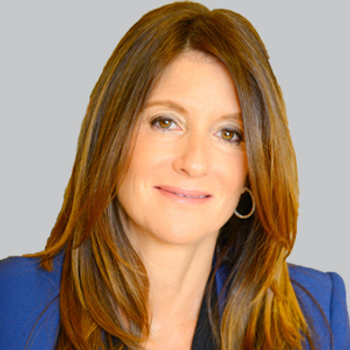
The executive director of the Association of Movement Disorder Advanced Practice Providers talked about a recent survey highlighting why patients with movement disorders may withhold critical health information from their providers.

The data, which comes less than a month after the FDA granted RMAT designation, highlighted the impacts of AMT-130 on disease progression in Huntington disease.

Mind Moments®, a podcast from NeurologyLive®, brings you an exclusive interview with Joel Salinas, MD, MBA. [LISTEN TIME: 10 minutes]

The neurologist and assistant professor at Boston University Medical Center provided clarity on recent findings on a validation study demonstrating the low accuracy of the Boston criteria v2.0 in patients who are asympomatic or only have cognitive symptoms. [WATCH TIME: 7 minutes]

Most treatment-emergent adverse events for patients on UB-312 were mild or moderate, and comparable to placebo.
Overall, treated patients showed improvements in multiple cardiac measures, including left ventricular ejection fraction, as well as indexed volumes.

Neal K. Shah, CEO of CareYaya Health Technologies, discussed the groundbreaking potential of AI-powered music therapy in revolutionizing dementia care, offering personalized interventions that can improve quality of life.
The chief executive officer and the chief scientific officer at CureDuchenne talked about a recent webinar that discussed the broad FDA approval of a gene therapy for Duchenne muscular dystrophy, highlighting patient choice and the ongoing efforts to improve treatments. [WATCH TIME: 9 minutes]
Catch up on any of the neurology news headlines you may have missed over the course of June 2024, compiled all into one place by the NeurologyLive® team.
The associate professor of neurology at Georgetown University Medical Center talked about the potential of tyrosine kinase inhibitors in treating neurodegenerative diseases. [WATCH TIME: 7 minutes]

Here's some of what is coming soon to NeurologyLive® this week.
The executive director of the Association of Movement Disorder Advanced Practice Providers discussed how effective patient care in movement disorders can lead to better management and treatment outcomes. [WATCH TIME: 4 minutes]
Neurology News Network. for the week ending July 6, 2024. [WATCH TIME: 4 minutes]
Test your neurology knowledge with NeurologyLive®'s weekly quiz series, featuring questions on a variety of clinical and historical neurology topics. This week's topic is on headache and nerve decompression surgery.
The movement disorder specialist at Texas Movement Disorder Specialists talked about the complexities and advancements in treating Parkinson disease, emphasizing the need for strategic and aggressive treatment approaches despite administrative burdens. [WATCH TIME: 5 minutes]

ALX-001, a first-in-class compound, will be assessed in an additional cohort of patients with Alzheimer disease as the company continues to plan for phase 2 studies.
Take 5 minutes to catch up on NeurologyLive®'s highlights from the week ending July 5, 2024.

Bryant Robinson, senior manager of government relations at the National MS Society, discussed how telehealth access has become vital for patients with multiple sclerosis who often lack nearby specialist care.
The director of movement disorders at the Banner Sun Health Research Institute talked about making strides in developing minimally invasive tests and imaging ligands for neurodegenerative diseases, such as Parkinson disease. [WATCH TIME: 2 minutes]
The assistant clinical professor of medicine at Medstar Georgetown University Hospital highlighted the need for clinicians to maintain informed, open-minded discussions about therapeutic options. [WATCH TIME: 2 minutes]
After 48 weeks of continued treatment, those in the high-dose frexalimab group showed a 41% reduction in neurofilament light.

Data from the large-scale, phase 3 OCARINA 2 trial was the basis for the approval.
Negroski detailed a real-world analysis on cladribine, an FDA-approved DMT, in an aging population of MS, and the recent increase in research for older populations with the disease.

Over the 3-year treatment period, buntanetap resulted in improvements in motor and nonmotor functions in patients with postural instability and gait difficulty, a group with faster disease progression.
In this episode, Negroski gave insight on the impact of health care-related social determinants of health, their impact on brain structure and aging in MS, and where efforts should be directed towards going forward.

The neurologist at Baptist Health provided context on identifying treatment approaches for varying degrees of migraine, the need to optimize medication use, and when patients may be experiencing more than just migraine.