
The professor of neurology at UT Southwestern Medical Center discussed the Octave Multiple Sclerosis Disease Activity Test as a complementary tool to MRI and clinical assessment in MS. [WATCH TIME: 6 minutes]
The professor of neurology at UT Southwestern Medical Center discussed the Octave Multiple Sclerosis Disease Activity Test as a complementary tool to MRI and clinical assessment in MS. [WATCH TIME: 6 minutes]

The discussion turns to the pivotal INDIGO trial, with a focus on how vorasidenib improved progression-free survival and introduced a new early treatment strategy for patients with grade 2 IDH-mutant glioma following surgery
The associate professor at Johns Hopkins University discussed emerging biomarkers outside of neurofilament light chain, including muscle MRI, immune-targeted markers, and microRNA research in peripheral nerve disorders. [WATCH TIME: 3 minutes]
The associate clinical professor at the University of South Carolina School of Medicine discussed data presented at SLEEP 2026 from a phase 2 study of orexin 2 receptor agonist alixorexton in narcolepsy type 2. [WATCH TIME: 3 minutes]
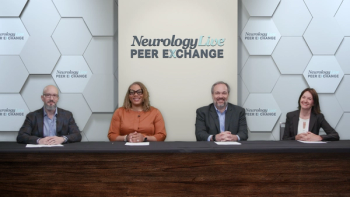
In this episode, moderator Dr. Mitzi Joi Williams discusses Anti-CD20 Therapies in multiple sclerosis with Dr. Stephen Krieger, Dr. Benjamin Greenberg, and Dr. Riley Bove. Dr. Williams notes that while three anti-CD20 agents are FDA-approved for MS (ocrelizumab approved in 2017, followed by ofatumumab and ublituximab), rituximab has been used off-label for many years. Though these agents target the same molecule, they differ in meaningful ways.
In "Why Anti-CD20 Therapy Has Become a Cornerstone of MS Treatment" episode, panelists explore the anti-CD20 drug class itself — a group of B-cell depleting therapies that have become the most commonly initiated treatments for MS in the United States. Experts recount that the field initially viewed B-cell targeting as counterintuitive in what was long considered a T-cell-mediated disease. However, experience and trial data have demonstrated that depleting CD19/CD20-positive B cells produces profound downstream immunological effects that dramatically suppress MS disease activity.
Neurology News Network for the week ending June 20th, 2026. [WATCH TIME: 4 minutes]

Maya Hrachova, DO, neurologist and neuro-oncologist at Allina Health Brain and Spine Institute, discusses the evolving role of neurologic consultation in cancer care and the importance of accurate diagnosis in complex oncology patients.
In this episode, “Family Burden and Lifelong Care Planning in Dravet Syndrome,” the panelists explore the far-reaching impact of Dravet syndrome on caregivers, families, and support networks.
This episode, titled “Dravet Syndrome Disease Modification Beyond Seizure Control,” features panelists discussing the evolving role of disease-modifying therapies across the full spectrum of Dravet syndrome, including adolescents and adults.
In “Emerging Therapies in Dravet Syndrome,” our panel explores how investigational therapies may reshape the future treatment landscape for patients with Dravet syndrome.
In “Unmet Needs and the Impact of Disease Modifying Therapies in Dravet Syndrome,” the panelists explore the limitations of current treatment approaches and discusses how emerging disease-modifying therapies may transform the future management of Dravet syndrome. Expert faculty review the significant advances achieved with currently available antiseizure medications while acknowledging that substantial unmet needs remain for many patients and families.
This episode, titled “Dravet Syndrome Treatment Monitoring and Goals for Long-Term Management,” features panelists discussing the practical considerations that guide treatment selection and ongoing management for patients with Dravet syndrome.
In “Dravet Syndrome Managing Refractory Seizures Across the Lifespan,” our panel explores the ongoing challenges of treating refractory seizures in patients with Dravet syndrome despite significant advances in available therapies.
In this episode “Current Treatment Strategies for Dravet Syndrome,” the panelists explore how genetic findings influence treatment selection and long-term management in Dravet syndrome. Expert faculty discuss the practical realities of treating patients when clinical suspicion for Dravet syndrome exists before genetic confirmation is available, emphasizing the importance of initiating appropriate management early and avoiding therapies that may worsen outcomes.
In “Interpreting Variants of Uncertain Significance in Dravet Syndrome,” our panel explores one of the most challenging aspects of genetic testing: the interpretation and clinical management of variants of uncertain significance (VUS).
In “The Role of Genetic Counseling and Community Resources in Dravet Syndrome,” our panel explores the critical role genetic counselors play throughout the genetic testing process and the broader impact of establishing a molecular diagnosis for patients with Dravet syndrome and other genetic epilepsies
In this episode, “Navigating Unresolved Genetic Findings in Dravet Syndrome,” the panelists explore the challenges clinicians face when genetic testing fails to identify a clear cause of disease and discuss the importance of ongoing re-evaluation in patients with suspected genetic epilepsies.
This episode, titled “Genetic Testing Approaches in Dravet Syndrome,” features panelists discussing the rapidly evolving landscape of genetic testing and how clinicians can navigate the growing number of testing options available for patients with suspected Dravet syndrome.
In “Dravet Syndrome Diagnosis and the Impact of Genetic Testing in Epilepsy,” our panel explores the growing role of genetic testing in confirming a diagnosis of Dravet syndrome and the clinical implications of identifying pathogenic SCN1A variants.
In this episode, “Identifying Dravet Syndrome Earlier with Genetic Testing,” the panelists explore the clinical scenarios that should prompt consideration of a genetic etiology in patients with unexplained epilepsy.
Sam Amin, MD, discusses how phase 3 findings may influence CDD treatment approaches, while emphasizing the need for long-term safety and efficacy data to better define fenfluramine’s role in clinical practice.
Mitzi Joi Williams, MD, sits down with Sheree Love and Mana Opang Owusu to discuss how movement supports brain health, function, and quality of life for people living with neurologic conditions.
Welcome back to another Neurology Live Peer Exchange series. In this episode titled, “Recognizing Dravet Syndrome in Patients with Unexplained Epilepsy,” expert faculty discuss the burden and heterogeneity of epilepsy and the challenges clinicians face when evaluating patients with unexplained seizures.
The professor of neurology and pediatrics at Vanderbilt University Medical Center discussed her advocacy for sleep health, especially for pediatric patients and their families, at SLEEP 2026. [WATCH TIME: 5 minutes]
AT ATMRD 2026, the CEO and founder of Yes, and... X discussed why social connection and support groups should be viewed as critical components of Parkinson disease care, alongside traditional medical management. [WATCH TIME: 3 minutes]
The discussion shifts toward the biologic rationale behind vorasidenib, exploring how mutant IDH inhibition may simultaneously target tumor growth and seizure activity in patients with IDH-mutant glioma.
At SLEEP 2026, the section chief in the Division of Pulmonary Critical Care and Sleep Medicine at West Virginia University discussed the high burden of undiagnosed sleep apnea in hospitalized patients. [WATCH TIME: 5 minutes]
Discover how a continuous apomorphine pump reduces Parkinson’s “off” time—and why tracking symptoms with a care partner transforms daily life.
Brett Morrison, MD, PhD, associate professor at Johns Hopkins University, discussed the current landscape of biomarkers in peripheral nerve disorders and the evolving role of neurofilament light chain in clinical care and research. [WATCH TIME: 3 minutes]