
Stuart H. Isaacson, MD, FAAN, speaks to the current understanding of genetics and other factors in the individualization of care for patients with Parkinson disease.
Stuart H. Isaacson, MD, FAAN, speaks to the current understanding of genetics and other factors in the individualization of care for patients with Parkinson disease.
Benjamin Greenberg, MD; Douglas Kerr, MD; and Sanford Siegel provided perspectives on the gaps in the epidemiology and treatment paradigm for patients with rare neuroimmune disorders. [WATCH TIME: 3 minutes]
The adjunct professor of human genetics at Emory University School of Medicine discussed how the Rett Syndrome Behavior Questionnaire has evolved into a versatile tool with a broader scope. [WATCH TIME: 10 minutes]
The associate professor at Washington University School of Medicine discussed the reasons for why some institutions have different risk benefit analyses for thrombolysis, and whether this causes challenges for the healthcare system. [WATCH TIME: 4 minutes]
An expert neurology panel detailed some of the changes in therapeutic strategies and approaches to treating rare neuroimmune disorders, including the steps taken during the acute phase. [WATCH TIME: 6 minutes]
An expert comments on the impact of factors such as disease course, antibody status, and patient adherence on the management of gMG.
A physician expert discusses the socioeconomic burden of gMG on both the patient and the caregiver.
The chief medical officer at ML Bio Solutions, an affiliate of BridgeBio, talked about the significant progress of investigational agent BBP-418 to treat limb-girdle muscular dystrophy type 2I/R9. [WATCH TIME: 3 minutes]
Several experts in neuroimmune disorders discuss the mechanisms of action that underlie these disorders, and how the perception of their pathology has changed. [WATCH TIME: 7 minutes]
The professor of neurology at the NYU Grossman School of Medicine discussed the RECOVER-NEURO trial that is focused on improving cognitive dysfunction in patients with long COVID symptoms. [WATCH TIME: 5 minutes]
A group of panelists discussed the history of the Siegel Rare Neuroimmune Association, and the progress made on rare neuroimmune disorders in the nearly 30 years since its existence.
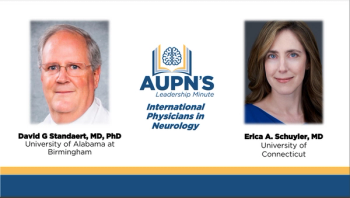
Episode 37 of the AUPN Leadership Minute features David G. Standaert, MD, PhD, of the University of Alabama at Birmingham; and Erica A. Schuyler, MD, of the University of Connecticut. [WATCH TIME: 5 minutes]

The genetic epidemiologist at the University of Pennsylvania discussed a recent study that highlighted the importance of diverse samples in genetic research for Alzheimer disease in helping to uncover hidden genetic risk factors. [WATCH TIME: 2 minutes]
The professor in the department of internal medicine at RUSH Medical College discussed a study aimed to provide insights to help tailor cognitive decline prevention programs and raise awareness about health disparities in minority populations. [WATCH TIME: 5 minutes]
The assistant professor at Hunter College discussed the importance of using a systematic approach to localization and thorough consideration of clinical symptoms to enhance diagnostic accuracy and reduce misdiagnosis in multiple sclerosis. [WATCH TIME: 4 minutes]
Neurology News Network for the week ending September 9, 2023. [WATCH TIME: 3 minutes]
The associate professor of psychiatry at the University of Illinois at Chicago talked about the importance of diverse insight and perspectives from the headache community in shaping medical research priorities. [WATCH TIME: 3 minutes]
The associate professor at Yeshiva University and Albert Einstein College of Medicine explored the challenge of discussing lifestyle changes for patients with migraine, noting that lifestyle modifications can be a valuable addition to migraine treatment. [WATCH TIME: 3 minutes]
The president of the ANA and the chair of the annual meeting programming committee provided commentary on the advances in neurology and the shift in how clinicians approach and treat diseases once thought to be fatal. [WATCH TIME: 6 minutes]
The president of the ANA and the chair of the annual meeting programming committee gave an overview on the various topics and courses the clinical community should home in on at the upcoming annual meeting. [WATCH TIME: 6 minutes]
The headache specialist at Hartford Healthcare Headache Center emphasized the importance of avoiding unnecessary fear surrounding the potential link between migraine and dementia, as current evidence does not strongly support it being a significant risk factor. [WATCH TIME: 2 minutes]
The president of the ANA and the chair of the annual meeting programming committee provided perspective on the upcoming ANA Annual Meeting and what clinicians may get out of the meeting. [WATCH TIME: 7 minutes]
The chief medical officer at Avidity Biosciences talked about how its exon skipping AOC therapies are designed to address the lack of functional dystrophin protein among patients with Duchenne muscular dystrophy to improve muscle function. [WATCH TIME: 4 minutes]
The director of epilepsy surgery at Allegheny Health Network provided insight on the early discussions between patients with drug resistant epilepsy and clinicians seeking to find beneficial treatment strategies. [WATCH TIME: 3 minutes]
The associate professor in the department of population and quantitative health sciences at Case Western Reserve University School of Medicine talked about striving to understand and address the disparities among Latinx patients with multiple sclerosis. [WATCH TIME: 2 minutes]
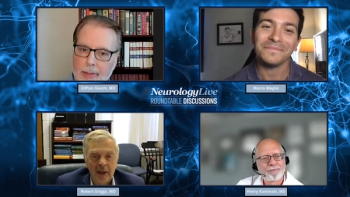
A group of esteemed panelists discussed the important values neurology department directors and educators should prioritize when teaching students of the future. [WATCH TIME: 6 minutes]
Neurology News Network for the week ending September 2, 2023. [WATCH TIME: 3 minutes]
A trio of former and current neurology department directors discussed ways in which residency and fellowship programs may change as technology and therapeutic capabilities continue to expand. [WATCH TIME: 8 minutes]
The associate professor of neurological sciences at the University of Vermont in Burlington discussed the persistent issue of delayed and misdiagnoses among patients with multiple sclerosis, highlighting the need to improve accurate diagnosis. [WATCH TIME: 3 minutes]
A panel of former AUPN presidents detailed how advances in neurology have changed the way the clinical specialty is taught, and why collaboration among leadership remains vital to creating an effective neurology department. [WATCH TIME: 7 minutes]