
Opinion|Videos|September 9, 2026
Building a Practical Diagnostic Workup for Suspected Epilepsy
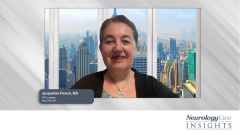
Author(s)Jacqueline French, MD
In this episode, neurologist Jacqueline French, MD, outlines a practical approach to suspected epilepsy, including how clinical history, EEG, MRI, cell phone video, and prolonged monitoring can help establish and refine the diagnosis.
Advertisement
Body text: Diagnosing epilepsy is not simply a matter of documenting a seizure. Clinicians must first determine whether an event was truly a seizure, whether it reflects an epilepsy diagnosis, and, if so, whether the epilepsy is focal or generalized. Although diagnostic technology continues to advance, a detailed clinical history remains one of the most valuable tools for answering these initial questions.
In this NeurologyLive® Insights series, Jacqueline French, MD, professor of neurology at NYU Grossman School of Medicine and co-director of epilepsy research and epilepsy clinical trials at NYU Langone Health, provides a practical examination of epilepsy diagnosis and long-term care. Across the series, French addresses common areas of uncertainty for clinicians, including disease burden, classification, diagnostic testing, comorbidities, transitions of care, and the expanding role of genetics.
In this episode, French walks through the diagnostic workup for suspected epilepsy and how testing can be selected based on the level of clinical uncertainty. She discusses the roles of EEG and MRI in newly diagnosed epilepsy, circumstances in which additional neuroimaging or prolonged monitoring may not be necessary, and how cell phone video, ambulatory EEG, and video EEG can help when the diagnosis remains unclear.
The workup of epilepsy has to start with: Does the person have seizures? And then, are those seizures part of an epilepsy diagnosis? Because not all seizures are, of course. And then, if there is epilepsy, is it focal or generalized, as I mentioned?
So, the first very important thing is: Is it epilepsy? I think the part of the diagnostic workup that people sometimes miss is a very, very thorough history. A thorough history can tell you a lot about whether the person has epilepsy or not, and often we will raise the likelihood or probability that, A, it is epilepsy, and B, that it is focal or generalized epilepsy based on history alone.
Everybody with newly diagnosed epilepsy should have an EEG and an imaging test where available. In parts of the world where it's available, an MRI is the most useful. Having said that, if you have diagnosed some of the pediatric generalized epilepsy syndromes with an EEG, such as absence epilepsy, that might be the one circumstance under which neuroimaging is not required.
What is also not required is, once you've made the diagnosis, it is not always necessary to do a prolonged EEG to capture, for example, a seizure. Again, by history alone, you may have a very high certainty, and certainly accompanied by the appropriate EEG, you can have a very high certainty of a diagnosis, which would basically preclude you from needing to actually see the seizure itself.
However, if there is any doubt about the diagnosis, whether it's a doubt about whether it's focal or generalized epilepsy or whether it's a doubt about whether it's epilepsy at all, then there are two things in the armamentarium that are very important.
One is the cell phone. I love the article that was written that says everyone has half of a video EEG monitoring unit in their pocket, which is entirely true. If there is an opportunity to tell a family member, "When you see these events, get a cell phone video," that can again be diagnostic in and of itself. There are certainly more and more papers confirming that.
But in the case that that is not possible, or it is still not diagnostic or confirmatory, then a prolonged ambulatory EEG or video EEG may be necessary in order to pin down the diagnosis.
Advertisement
Related to this article

Phase 3 data show the oral BTK inhibitor reduced annualized relapse rate by 35.2% and 31.2% vs teriflunomide, with no liver safety signal or Hy's Law cases.
Take 5 minutes to catch up on NeurologyLive®'s highlights from the week ending October 23, 2026.
A secondary analysis of the DISTAL trial found endovascular therapy's benefit depended more on stroke severity than on prior thrombolysis treatment.
The FDA set a first quarter 2027 goal date for troriluzole in spinocerebellar ataxia and plans an advisory committee after a 2025 complete response letter.
A pooled analysis of 4 randomized trials found that more time with blood pressure below 130 mmHg after intracerebral hemorrhage reduced recurrent stroke risk.
A phase 2 trial found liposomal mitoxantrone hydrochloride had an acceptable safety profile and a potential trend toward fewer relapses in neuromyelitis optica spectrum disorder.
The phase 2 FENerations1 study is an open-label, single-arm, small-scale study evaluating fenebrutinib dosing in 8 to 12 children and adolescents with relapsing MS.
Data from the real-world, CONFIDENCE study found switching from intravenous to subcutaneous ocrelizumab was well tolerated in patients with relapsing and primary progressive MS.
Advertisement
Advertisement
Trending on NeurologyLive - Clinical Neurology News and Neurology Expert Insights
1
FDA Accepts Troriluzole NDA Resubmission for Spinocerebellar Ataxia
2
Remibrutinib Lowers Relapse Rate vs Teriflunomide in Relapsing MS
3
Early Data Show Dual-Targeting CAR-T Agent CTA313 Stabilizes Progressive Multiple Sclerosis
4
Real-World Data Show Switch to Subcutaneous Ocrelizumab Well Tolerated
5