
Commentary|Videos|March 2, 2026
Chemotherapy and Targeted Therapy: Distinguishing Neurotoxicity From Paraneoplastic Syndromes

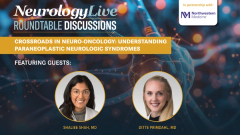
Neuro-oncology experts examined how cumulative neurotoxicity from cytotoxic and targeted therapies can obscure paraneoplastic neurologic syndromes, and how treatment timing and modification decisions influence neurologic outcomes. [WATCH TIME: 6 minutes]
Advertisement
WATCH TIME: 6 minutes | Captions are auto-generated and may contain errors.
Episodes in this series
This clinical video series, titled “
Episode Guide
- Episode 1: Overview
- Episode 2: Patient Screening
- Episode 3: Immunotherapies
- Episode 4: Chemotherapy
- Episode 5: Management
- Episode 6: Outlook on PNS
In collaboration with
In this fourth episode, Shah and Primdahl explored the diagnostic overlap between PNS and treatment-related neurotoxicity in patients receiving cytotoxic or targeted therapies. They discussed how cumulative exposure to systemic treatments can obscure or delay recognition of PNS, as well as which therapies most commonly complicate diagnosis. The pair then examined how treatment timing influences the evolution and potential reversibility of neurologic deficits and outlined how neuro-oncologists can guide decisions around dose modification or treatment interruption when neurologic symptoms emerge during active therapy.
Advertisement
Related to this article
Catch up on any of the neurology headlines you may have missed in September 2026, compiled into 1 place by the NeurologyLive® team.
The associate vice president of clinical research at the Parkinson's Foundation discussed a large-scale replication of rs3115534-G, a noncoding GBA1 variant tied to Parkinson disease in people of African ancestry.

At a NeurologyLive Clinical Forum in Philadelphia, Jessica D. Schulte, MD, PhD, of NYU Grossman School of Medicine, discussed how earlier recognition and systemic therapy options are changing the treatment paradigm for patients with NF1-associated plexiform neurofibromas.

Newly presented post hoc analyses examined diazepam nasal spray for status epilepticus in seizure clusters and intervals between clusters in children, alongside real-world data on rescue medication prescribing.

A retrospective 10-center U.S. study found stiripentol reduced convulsive seizure frequency, status epilepticus episodes, and emergency health care use in patients with Dravet syndrome.

A phase 1b/2 trial is testing an intrathecal antisense oligonucleotide designed to lower KCNT1 expression in children with a severe, drug-resistant epilepsy syndrome.

Here's some of what is coming soon to NeurologyLive® this week.
Test your neurology knowledge with NeurologyLive®'s weekly quiz series, featuring questions on a variety of clinical and historical neurology topics. This week's topic is biomarkers in multiple sclerosis!
Advertisement
Advertisement
Trending on NeurologyLive - Clinical Neurology News and Neurology Expert Insights
1
Ocrelizumab Shows MRI Benefits vs Fingolimod in Phase 3 Pediatric-Onset Multiple Sclerosis Study
2
Satralizumab Reduces MOGAD Relapse Risk in Phase 3 METEOROID Trial
3
RGX-202 Meets Primary End Point in Phase 3 Duchenne Trial
4
TSHA-102 Produces Multidomain Functional Gains in Rett Syndrome
5