
Opinion|Videos|October 14, 2026
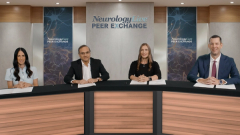
Distinguishing Disease Control From Disease Modification in MG
Controlling MG symptoms and modifying its underlying immunology are related but distinct treatment goals. The panel explores how targeted therapies are changing the way clinicians think about remission and disease modification.
Advertisement
Episodes in this series
In this episode, ‘Distinguishing Disease Control From Disease Modification in MG,’ the panel of neuromuscular experts explores the evolving distinction between disease control and disease modification in myasthenia gravis. Faculty discuss the traditional view of disease-modifying therapy as treatment that alters the underlying immune mechanism rather than providing transient symptomatic benefit. They note that many conventional and targeted immunotherapies modify disease activity while treatment is present, but the underlying autoimmune process may remain capable of reemerging when therapy is withdrawn.
The discussion then considers a more ambitious definition of disease modification based on whether treatment changes the longer-term trajectory of MG after therapy is stopped. The panel emphasizes that this degree of durable immunologic remission remains difficult to achieve with most currently available therapies. They contrast upstream strategies intended to influence antibody production with downstream approaches that can rapidly control pathogenic effects while slower mechanisms take effect. Rather than viewing these strategies as mutually exclusive, the faculty discuss how upstream and downstream therapies may be used together to achieve rapid clinical control while pursuing a more durable response.
The panel ultimately frames complete medication-free remission as an aspirational goal, while recognizing pharmacologic remission with well-controlled disease and minimal corticosteroid exposure as a more realistic objective for many patients.
The next episode in this series, ‘Understanding FcRn Inhibition and Pathogenic IgG Reduction in MG,’ features the panelists examining FcRn-mediated IgG recycling and how disruption of this pathway can rapidly reduce circulating pathogenic antibodies.
Advertisement
Related to this article
The professor of neurology and program director of Neuromuscular Medicine at UC Irvine, discusses phase 3 NIMBLE trial findings for cemdisiran in generalized myasthenia gravis, including its novel siRNA mechanism, efficacy, and hospitalization data.

New 48-week phase 3 data show many patients with generalized myasthenia gravis reached minimal symptom expression on telitacicept, and most who did sustained it.
The Galassia trial will evaluate the safety and tolerability of intranasal cenegermin in about 60 children with spastic cerebral palsy across Italy.
New analyses found differences in functional outcomes over 2 years among patients aged 8 to 12 years treated with delandistrogene moxeparvovec, while separate findings characterized micro-dystrophin expression in children younger than 3 years.
The director of the Center for Neurological Restoration at Cleveland Clinic discusses when to transition beyond oral medication and considerations for selecting device-aided therapies in PD.

Here's some of what is coming soon to NeurologyLive® this week.
Test your neurology knowledge with NeurologyLive®'s weekly quiz series, featuring questions on a variety of clinical and historical neurology topics. This week's topic is recent therapeutic advances in MS!
Take 5 minutes to catch up on NeurologyLive®'s highlights from the week ending October 9, 2026.
Advertisement
Advertisement
Trending on NeurologyLive - Clinical Neurology News and Neurology Expert Insights
1
ELEVIDYS Shows Sustained Functional Differences vs External Controls in Older Ambulatory Duchenne Patients
2
The Untapped Promise of Genetics in Multiple Sclerosis
3
Dompé Begins Phase 2 Trial Testing Intranasal Nerve Growth Factor for Cerebral Palsy
4
Individualizing Advanced Therapies in Parkinson Disease: Hubert Fernandez, MD
5