Now Playing
Understanding where immune dysfunction occurs in MG provides the foundation for selecting increasingly targeted therapies. The panel connects disease biology with upstream and downstream treatment strategies.
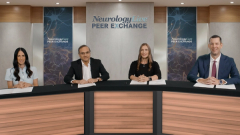
Welcome back to another Neurology Live Peer Exchange series. In this episode titled, ‘Understanding MG Pathophysiology and Therapeutic Targets,’ expert faculty review the immune mechanisms underlying myasthenia gravis and how these pathways translate into therapeutic targets. The panel discusses interactions between the adaptive and innate immune systems, including T-cell signaling, B-cell–mediated antibody production, and downstream complement-mediated injury at the neuromuscular junction. They explain how pathogenic antibodies can impair acetylcholine receptor function directly while also contributing to structural damage that ultimately reduces effective neuromuscular transmission and produces characteristic manifestations such as fatigability, ptosis, bulbar symptoms, and limb weakness.
The panel also distinguishes key immunologic differences across antibody subtypes. In particular, they note that MuSK-positive MG is mediated by IgG4 antibodies and is not complement driven, illustrating why antibody status can influence the relevance of specific therapeutic mechanisms. Against this biologic background, faculty describe how current therapies can act at different levels of the disease process by targeting B-cell–mediated antibody production, reducing circulating pathogenic IgG, or inhibiting complement-mediated injury. This mechanistic framework establishes why the expanding MG treatment landscape allows therapy to be increasingly matched to disease biology and individual patient characteristics.
In the next episode, ‘Distinguishing Disease Control From Disease Modification in MG,’ panelists will examine what it means to modify the underlying disease rather than simply control symptoms and consider how upstream and downstream approaches may contribute to longer-term disease control.