
Opinion|Videos|April 22, 2026
DMD Management: Evolving Regimens and Real-World Adherence
Clinicians tailor Duchenne steroid therapy over time—balancing benefits, side effects, and family capacity for monitoring newer treatments like gene therapy and givinostat.
Advertisement
Episodes in this series
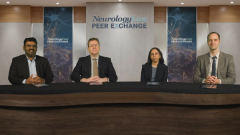
This episode examines how treatment regimens are adapted over the disease course and how real-world factors shape clinical decision-making. Dr. Jayaraman notes that for older patients, weekend corticosteroid dosing may be more tolerable and sustainable than daily dosing—and that any steroid is better than none. She reiterates population-level data supporting steroid use: approximately three additional years of ambulation, improved cardiac and pulmonary function, and reduced scoliosis surgery rates.
The discussion highlights the growing complexity of treatment monitoring. Therapies such as givinostat and gene therapy require frequent clinic visits and laboratory monitoring. For families who can barely make it to clinic once a year, these burdens can make otherwise promising therapies impractical. Dr. Chrzanowski describes tailoring therapy choices to what a given family can realistically sustain—a principle of "do no harm" applied to access and compliance.
A patient case is discussed in which gradual escalation of corticosteroid dosing—from weekend prednisone to daily deflazacort—appears to coincide with stabilization of a patient who had been showing functional decline. The panel uses this to illustrate the real-time learning process in DMD care.
The episode then pivots to gene therapy access, revisiting the brief period during which delandistrogene moxeparvovec was available for non-ambulatory patients under accelerated approval. Dr. Veerapandiyan describes his experience counseling families about the limited efficacy data and emerging safety signals in this population. The discussion also touches on the importance of shared decision-making with older patients who can assert their own preferences, contrasting this with the parent-driven decisions made for young children. The panel notes that while gene therapy is currently one-and-done, re-dosing research is actively ongoing.
In the next episode, "Emerging Therapies in DMD," the panel highlights the most promising investigational therapies and what the field can anticipate in the years ahead.
Advertisement
Related to this article
The approval, based on phase 3 IB1001-303 trial data showing consistent SARA scale improvement, makes levacetylleucine the first treatment approved specifically for ataxia-telangiectasia.

Take 5 minutes to catch up on NeurologyLive®'s highlights from the week ending September 18, 2026.
A published protocol outlines the randomized, open-label EPOCH trial testing whether cilostazol accelerates hematoma resorption and improves recovery after intracerebral hemorrhage.

Brian Lin, PhD, discussed the current evidence linking football participation with ALS, the questions that remain unanswered, and how emerging research may help clarify the association.

Mind Moments®, a podcast from NeurologyLive®, brings you an exclusive interview with Jennifer Fokas, MD, and Minali Nigam, MD. [LISTEN TIME: 21 minutes]
A recent MS cohort study suggests that higher EBV nuclear antigen 1 antibody levels are associated with a lower risk of confirmed disability worsening, particularly among patients carrying both HLA-A02:01 and HLA-DRB115:01.
In honor of Muscular Dystrophy Awareness Month, held annually in September, NeurologyLive® looks back at the decade-long expansion of the DMD treatment landscape and the data that supports each approval.
Marketed as Fayuvi, the 1-time AAV9 gene therapy showed sustained cerebrospinal fluid heparan sulfate drops and developmental gains among pediatric patients with mucopolysaccharidosis type IIIA in prior studies.
Advertisement
Advertisement
Trending on NeurologyLive - Clinical Neurology News and Neurology Expert Insights
1
FDA Approves UX111, First Gene Therapy for Pediatric Sanfilippo Syndrome Type A
2
FDA Clears Phase 1b/2 Trial of CAR T-Cell Therapy C-CAR168 for Refractory Progressive Multiple Sclerosis
3
Episode 175: Advancing the Ways of Treating Cluster Headache
4
FDA Approves Levacetylleucine for Ataxia-Telangiectasia
5