Now Playing
Clinicians detail modern Duchenne care: essential multidisciplinary teams, access workarounds, and family-centered visits as therapies accelerate.
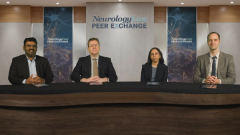
Welcome back to another Neurology Live Peer Exchange series. In this episode titled "DMD Advances: Multidisciplinary Care and Treatment Landscape Overview," moderator John Brandsema, MD, Children's Hospital of Philadelphia, Philadelphia, PA, discusses Duchenne muscular dystrophy with Stephen Chrzanowski, MD, PhD, UMass Memorial Health, Worcester, MA; Divya Jayaraman, MD, Columbia University, New York, NY; and Aravindhan Veerapandiyan, MD, Arkansas Children's Hospital, Springdale, AR.
The discussion begins with Dr. Veerapandiyan reflecting on the dramatic transformation in DMD care over the past five to ten years. Where a diagnosis once carried few therapeutic options, clinicians now navigate an expanding and evolving treatment landscape, a development he acknowledges as a welcome challenge.
The panel transitions to multidisciplinary management, with Dr. Chrzanowski emphasizing that the neurologist serves as the "captain of the ship," coordinating care across a wide range of subspecialties. Key specialists include cardiologists, pulmonologists, endocrinologists, physical and occupational therapists, orthopedics, palliative care, and nutrition. He stresses that care must evolve with disease stage: in early ambulatory phases, PT and OT take priority, while cardiac, pulmonary, and endocrine needs become prominent as the disease progresses.
Dr. Brandsema raises the real-world challenge of not every institution having access to comprehensive interdisciplinary teams. Dr. Chrzanowski counters that "perfection is the enemy of progress," urging clinicians to do their best with available resources. He identifies neurology, cardiology, pulmonary, and endocrinology as non-negotiable priorities. Panelists add the importance of asking families what concerns they want to address at each visit, and highlights the critical but often overlooked role of psychiatry and psychology, noting that dystrophin is absent in the brain and that steroids can affect neuropsychiatric health. The panel also acknowledges diversity within the Duchenne community and the need to meet families where they are culturally and linguistically.
In the next episode, "DMD Treatment Toolkit: Corticosteroids, Exon Skipping, and Gene Therapy," the panel provides a comprehensive overview of both mutation-specific and non-mutation-specific DMD therapies available in clinical practice.