
Opinion|Videos|December 23, 2024
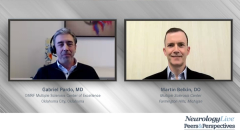
Evaluating Cognitive Health: Tools, Markers, and the Concept of Cognitive PIRA
Author(s)Gabriel Pardo, MD, FAAN, Martin Belkin, DO
Key Takeaways
- Advanced imaging, CSF analysis, and peripheral blood markers are crucial for assessing cognitive health, offering insights into brain structure and function.
- Cognitive PIRA underscores the need to monitor cognitive changes that occur without clinical relapses, necessitating comprehensive assessment strategies.
Panelists discuss how clinicians can evaluate cognitive health using neuroimaging, cerebrospinal fluid (CSF)/blood biomarkers, and comprehensive assessments. Understanding concepts like cognitive progressive irreversible reductions in activity (PIRA) and focusing on multifaceted interventions—including lifestyle modifications, early detection, and personalized strategies—can help maintain cognitive wellness and mitigate decline.
Advertisement
Video content above is prompted by the following:
- Which tools, imaging, CSF, or peripheral blood markers can clinicians use to evaluate cognitive health in a patient? Please explain.
- What are your thoughts about the concept of cognitive PIRA?
- What advice would you have for health care providers so they can help patients better maintain their cognitive health?
Advertisement
Related to this article

An ACT–based group intervention did not significantly improve resilience at 3 months in patients with MS but was associated with improvements in anxiety, well-being, psychological flexibility, and health-related quality of life.

A recent MS cohort study suggests that higher EBV nuclear antigen 1 antibody levels are associated with a lower risk of confirmed disability worsening, particularly among patients carrying both HLA-A02:01 and HLA-DRB115:01.

The FDA lifted a clinical hold on simufilam, clearing Filana Therapeutics, formerly Cassava Sciences, to begin a phase 2a study in TSC-related epilepsy.

Ulefnersen met its primary end point in the phase 3 FUSION trial, providing the first placebo-controlled evidence for a genetically targeted therapy in FUS-ALS.
A recently published study showed that Qihuang needle acupuncture significantly improved motor function, nonmotor symptoms, and quality of life in patients with PD when added to standard medication.
Xenon Pharmaceuticals submitted an FDA New Drug Application for azetukalner, a KV7 potassium channel opener, as adjunctive therapy for focal seizures in epilepsy.

The CHMP recommended approval of gefurulimab (Klygefa), a weekly self-administered C5 inhibitor, for AChR-antibody-positive generalized myasthenia gravis in the EU.

Here's some of what is coming soon to NeurologyLive® this week.
Advertisement
Advertisement
Trending on NeurologyLive - Clinical Neurology News and Neurology Expert Insights
1
Xenon Submits New Drug Application for Azetukalner as Treatment for Focal Seizures
2
Gefurulimab Recommended for EU Approval in Generalized Myasthenia Gravis
3
FDA Approves Levacetylleucine for Ataxia-Telangiectasia
4
World Alzheimer Day: Notable Clinical Interviews From 2026
5