
Opinion|Videos|October 10, 2024
Long-term Patient-Centric Approach for the Management of Parkinson's Disease
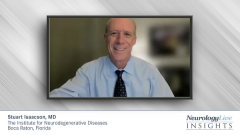
Author(s)Stuart H. Isaacson, MD, FAAN
Key Takeaways
- Patient-centric care for PD requires individualized treatment plans and multidisciplinary approaches to address diverse symptoms.
- Communication barriers and variability in symptoms present significant challenges in delivering effective care to PD patients.
Dr. Isaacson discusses the challenges of delivering patient-centric care to individuals with Parkinson's disease (PD), alongside the evidence supporting improved symptom management through the combination of pharmacological therapies and wellness strategies.
Advertisement
Episodes in this series
Video content above is prompted by the following:
- What challenges exist in delivering patient-centric care to patients with PD?
- What evidence exists to support better symptom management when combining pharmacological therapies with wellness strategies?
Advertisement
Related to this article
Sara Cuccurullo, MD, FAAPMR, and Talya Fleming, MD, FAAPMR, of Hackensack Meridian JFK Johnson Rehabilitation Institute, discuss the updated adult stroke rehabilitation and recovery guidelines and their implications for clinical practice.
Shadi Yaghi, MD, FAHA, Chair of Neurology at Hackensack Meridian Neuroscience Institute at Jersey Shore University Medical Center, discusses a new calculator that predicts stroke risk within 30 days of a procedure.
The clinical professor of neurology and pediatrics at The Ohio State University Wexner Medical Center discussed payer step therapy, earlier preventive treatment, and questions the updated guideline leaves open.
Brian Snelling, MD, director of the stroke program at Marcus Neuroscience Institute discussed delays in calling 911 after stroke onset, gaps in awareness of atypical symptoms, and how to reach underserved populations.

Kim Henriksen, PhD, discusses research evaluating blood-based biomarkers of blood-brain barrier remodeling and immune cell activity in multiple sclerosis, including their potential to track treatment responses and inform future biomarker development.
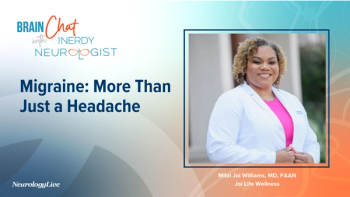
Mitzi Joi Williams, MD, is joined by Temitope Adeola, MD, and Chantale Branson, MD, to discuss migraine as a complex neurological condition, including recognizing symptoms and triggers, navigating acute and preventive treatment options, and incorporating lifestyle modifications to improve migraine management.
The Editor-in-Chief of the Journal of the American Heart Association discussed what journal editors look for in stroke research submissions, how AI and open access are reshaping publishing, and the equity gaps that still exist for researchers in lower-income countries.

Paul Melmeyer, MPP, Executive Vice President of Public Policy and Advocacy at the Muscular Dystrophy Association, discusses the Neuromuscular Advocacy Collaborative, its growing year-round presence, and what the group hopes to accomplish heading into the 2027 MDA Clinical and Scientific Conference.
Advertisement
Advertisement
Trending on NeurologyLive - Clinical Neurology News and Neurology Expert Insights
1
Machine Learning Spots Early Signs of MS and NMOSD Years in Advance
2
Incorporating the Updated AAN/AHS Migraine Prevention Guideline Into Practice
3
Blood-Based Biomarkers for Monitoring Treatment Response in Multiple Sclerosis
4
World Stroke Day 2026: Closing the Gap Between Stroke Onset and the Emergency Call Number
5