Leonard Dragone, MD, PhD, Disease Area Leader at Johnson & Johnson, discusses how nipocalimab is being incorporated into generalized MG care, what long-term data show, and where J&J sees the therapy’s role evolving.
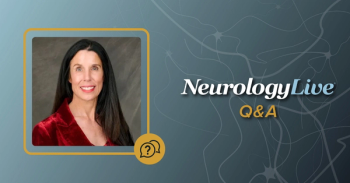
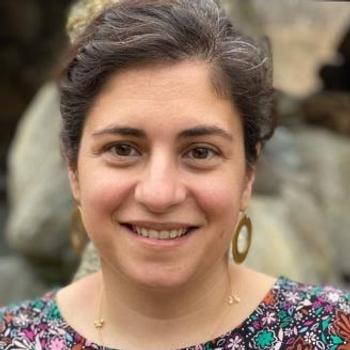
Erika Trovato, DO, MS, program director of the Brain Injury Medicine Fellowship at Burke Rehabilitation Hospital, provided clinical advice for trainees and early-career physicians looking to establish themselves in the field.
For trainees and early-career physicians entering brain injury medicine, establishing a career can involve navigating an evolving field while developing expertise, professional relationships, and a clear understanding of where they can make an impact. When speaking with NeurologyLive®, brain injury specialist
As the program director of the Brain Injury Medicine Fellowship at Burke Rehabilitation Hospital, Trovato has worked closely with trainees pursuing careers in the field. Since the fellowship's launch in 2021, she has gained perspective on the experiences and challenges facing applicants and early-career physicians, while drawing on her own career to offer guidance on mentorship, professional development, and finding one's place within an institution.
In a recent conversation with NeurologyLive, Trovato, who is also chief quality officer and associate chief medical officer at Burke Rehabilitation Hospital, discussed what initially drew her to brain injury medicine and the aspects of the specialty that have sustained her interest throughout her career. She also offered advice for trainees and early-career physicians on developing expertise, building mentorship relationships, networking through professional conferences, and pacing themselves as they establish their careers. Trovato additionally highlighted the expanding scope of brain injury medicine, including opportunities across inpatient and outpatient care.
Erika Trovato, DO, MS: When deciding during residency if and what I wanted to specialize in, I was really lucky to be exposed to a diverse patient population that had sustained brain injuries. What I recognized immediately was the ability to establish a rapport not just with the patient, but also with their loved ones, whether those were family members or community members.
Patients with brain injuries typically stay in an acute inpatient rehabilitation facility for a longer period of time compared with someone who has an orthopedic condition. You're really at their bedside, providing a lot of education, and you have the ability to see progress in this patient population.
Typically, when a brain injury occurs, it's not something that is anticipated or elected to happen. It's quite devastating. That gives you, as a physician, the opportunity to have a profound impact on the patient's trajectory and recovery. You're also able to connect with the family and caregivers, educate them, and empower them to transition into a role that they may never have thought they would have to take on, potentially so early in their lives.
For me, it was really the ability to have what I felt was a profound impact on other people's lives and have the expertise to guide them along their journey of recovery.
I think, as a program director at Burke Rehabilitation Hospital, I've really had an opportunity, now that we've had this program open since 2021, to take a different perspective. I'm learning about the applicants who want to go into brain injury, learning more about their progress and their impressions. It's been really valuable for me to think about my own experience and how I can help improve the experience of others.
When it comes to mistakes that applicants potentially make, I wouldn't necessarily call them mistakes, but it's more about keeping an open mind and thinking about what type of work this field is going to entail, both now and in the future. Brain injury medicine is still relatively new compared with other fields, and there is a lot of time, effort, and financial resources being invested in this area, particularly in recovery and understanding how rehabilitation can augment that journey.
I think it's important to understand that, yes, the training can be overwhelming because it may involve a lot of unknowns. It's not necessarily a black-and-white type of treatment, but it's really exciting, new, and refreshing. Sometimes, trainees may discount the field because of that uncertainty.
The field also has a significant inpatient component, but there's a huge and growing outpatient component as well. That encompasses the spectrum of brain injury diagnoses. It might be concussion, for example, where we're seeing new approaches to diagnosis, including biomarkers.
There is also spasticity management. At Burke, we have several brain injury physicians who are performing cryoneurolysis, which is a relatively new treatment in the field of spasticity. There are a growing number of procedures becoming available to this patient population.
You can have a really nice combination of inpatient work, where you're working with patients who have had more moderate to severe brain injuries, and outpatient work, where you can work with patients who have had a concussion or sequelae of a brain injury, such as spasticity, and help manage those conditions.
I think it's really, important as you graduate from a resident to a fellow and then into an early-career attending role to remain curious. You have to remain open-minded to understand how you can best fit with the institution you're going to be working for and also what you can offer.
I think it's important for an early-career physician to understand what the patient needs during their time with you and how you're able to lead a team of professionals. When you become an attending physician, particularly early in your career, you have a lot of people looking at you and looking to you to lead and have those answers.
I also think it's important to develop a strong mentorship relationship. It should be someone you've developed a nice relationship with over time. It may not necessarily be someone in brain injury medicine; it may be someone in a very different field. Sometimes that's valuable because it gives you a different perspective.
You can become so accustomed to your own field, but having a different set of eyes and someone who can give you advice based on their own experience can be extremely valuable.
When you're in residency, your goals are a little bit different. It's about mentorship and establishing great relationships. As you graduate into fellowship and become more immersed in the brain injury field, and then move into early career, I think it's important to become involved in different aspects of medicine and academic medicine.
At Burke, we encourage many of our early-career physicians to attend national conferences within their field and within physiatry. There are several annual conferences, as well as subspecialty conferences for those interested in areas such as sports medicine or brain injury medicine.
It's important to attend these conferences to stay up to date with new and exciting developments within the field. But they're also important for networking. It's important to get out there, make connections, and immerse yourself within the field.
At the end of the day, physiatry is a small world, and the brain injury medicine world is even smaller. Those different types of exposure and the opportunities that come from them can be quite vast. I think that's what broadens your scope and your level of expertise.
Pace yourself. That would be one thing that I would have done.
I've had so many incredible opportunities, and I think early on, especially early in your career, as a physician or any professional, you want to say yes to everything. That has led to an enormous number of opportunities for me, so in that sense, it has been fantastic.
But if I were to look back and really take a closer look at it, I think pacing yourself and understanding that this is a journey, and a continuation of your learning is important. You may not be a "trainee" anymore, but when you're in your early career in any profession, there is a buildup. Have grace with yourself. You'll know that you'll make mistakes along the way, but as long as you keep the patient at the focus of all that you do, you will do well.
At Burke Rehabilitation Hospital, we're proud of the program that we've built here. As physiatrists, and now having a Brain Injury Medicine Fellowship, our focus has really been on the continuum of care for patients who have sustained a brain injury.
From the moment they present to an emergency room at a level 1 trauma center, to their neurocritical care course, to being identified as an appropriate patient for acute inpatient rehabilitation, and then their transition to our outpatient faculty practice group, we've really focused on that continuum.
It's been an honor, and something that really excites me, to have the opportunity to teach others and mentor them across their journey toward this emerging field within brain injury medicine. I really think Burke has advanced the field in this regard, and I'm proud to be part of that transition.
Transcript was edited for clarity.