
Opinion|Videos|May 1, 2026
Navigating CIDP Guidelines, Misdiagnosis, and Disease Variants
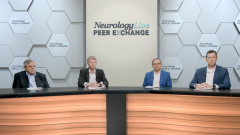
In this episode, "Navigating CIDP Guidelines, Misdiagnosis, and Disease Variants," the panelists in neurology and neuromuscular medicine explore the practical utility of the 2021 EAN/PNS CIDP guidelines and the considerable complexity introduced by disease variants. The discussion opens with a question about monophasic CIDP, with one expert noting that 20–30% of patients can achieve drug-free remission after initial treatment, suggesting a subset of patients experience a self-limiting course that nonetheless meets the diagnostic threshold of progression or relapse beyond two months.
Advertisement
In this episode, "Navigating CIDP Guidelines, Misdiagnosis, and Disease Variants," the panelists in neurology and neuromuscular medicine explore the practical utility of the 2021 EAN/PNS CIDP guidelines and the considerable complexity introduced by disease variants. The discussion opens with a question about monophasic CIDP, with one expert noting that 20–30% of patients can achieve drug-free remission after initial treatment, suggesting a subset of patients experience a self-limiting course that nonetheless meets the diagnostic threshold of progression or relapse beyond two months.
Regarding the 2021 EAN/PNS guidelines, panelists acknowledge that while academic neuromuscular centers tend to follow them more closely, adoption among general neurologists remains inconsistent. The guidelines are characterized as a valuable blueprint for integrating clinical features, electrodiagnostic findings, and the exclusion of CIDP mimics, though their complexity is cited as a barrier to routine use. Emerging app-based and web-based tools are briefly noted as practical resources for distilling guideline recommendations into more accessible formats.
The panel then examines CIDP variants, which collectively represent a significant driver of both overdiagnosis and underdiagnosis. Distal CIDP is identified as particularly challenging, as its presentation closely resembles common neuropathies, making electrodiagnostic findings and treatment response critical for confirmation. Sensory CIDP presents its own difficulties, as the absence of weakness complicates response assessment. Motor CIDP can mimic myopathy or even ALS, underscoring the importance of nerve conduction studies. Focal and multifocal CIDP round out the discussion, with experts noting that conduction slowing at entrapment sites can obscure the multifocal picture. Panelists note that typical CIDP accounts for roughly 50–60% of cases, while variants each represent approximately 5–10%, and that about half of variant cases may evolve into a typical phenotype over time.
The next episode in this series, "CIDP Quality of Life Impact and Unmet Needs," features the panelists discussing the broad impact of CIDP on quality of life and the importance of multidisciplinary management beyond immunotherapy, before turning to an open discussion on the field's greatest unmet needs, including earlier diagnosis, more effective therapies, and the development of diagnostic and disease activity biomarkers.
Advertisement
Related to this article

New data from the 2026 AANEM Annual Meeting showed zilucoplan delivered via autoinjector was bioequivalent to the pre-filled syringe and was well tolerated when self-administered by patients with generalized myasthenia gravis.

The phase 3 HARMONIA trial will evaluate whether a muscle- and CNS-targeted antisense conjugate improves function across multiple systems in patients with myotonic dystrophy type 1.

New phase 3 MINT trial analyses presented at the 2026 AANEM Annual Meeting showed inebilizumab produced sustained improvement in MuSK-positive gMG regardless of time since diagnosis.

PridCor Therapeutics is moving its phase 2 SHIELD trial of a combination antiviral regimen toward enrollment, building on case series data showing durable symptom improvement in long COVID.

New PREVAIL trial analyses presented at the 2026 AANEM Annual Meeting showed gefurulimab reduced gMG-related hospitalizations and produced durable symptom and quality-of-life gains through one year.
FDA approves once-daily oral tavapadon for Parkinson disease, a first-in-class D1/D5 partial agonist that improves motor function and ON time, with key safety warnings.

In a discrete choice experiment, somnolence risk and short-term efficacy were the top factors driving vesicular monoamine transporter 2 inhibitor selection for tardive dyskinesia in patients aged 55 years and older.

Here's some of what is coming soon to NeurologyLive® this week.
Advertisement
Advertisement
Trending on NeurologyLive - Clinical Neurology News and Neurology Expert Insights
1
FDA Approves Tavapadon for the Treatment of Parkinson Disease
2
SHIELD Trial Advances Combination Antiviral for Long COVID
3
Gefurulimab Cuts Hospitalizations, Sustains Response in Phase 3 PREVAIL Trial of Myasthenia Gravis
4
Inebilizumab Shows Durable Benefit in MuSK+ Generalized Myasthenia Gravis at AANEM 2026
5