The associate vice president of clinical research at the Parkinson's Foundation discussed a large-scale replication of rs3115534-G, a noncoding GBA1 variant tied to Parkinson disease in people of African ancestry.
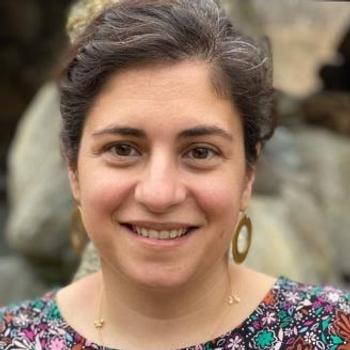
A neuroimmunology fellow at the Cleveland Clinic shared her experience attending the 2026 ACTRIMS Forum, specifically focusing on the late-breaking data presented in multiple sclerosis.
The treatment landscape for
At the
In a new iteration of
Kaitlyn Palmer, MD: It was a great conference this year. Honestly, I felt like this year was particularly engaging. I think the organizers did a really good job at picking the theme, which was “MS at a Crossroads”. I think that really acknowledges where we are in the field right now. As a lot of us know, for the past 30 or so years, we've gotten really good at treating acute inflammation in MS. This is what's driving relapses and new MRI lesions, and enhancing lesions, and our disease-modifying therapies do a really good job at treating that. We can honestly stop most of that in its tracks, and we don't really expect much other activity in patients from that standpoint.
But at the same time, our patients are having this slow clinical progression, and we've really been trying to figure out what the main driver of that is. We've talked before about, is there compartmentalized, smoldering CNS inflammation that's driving this, or is it a component of neurodegeneration that we need to target? I think what the theme did was it really acknowledged how far we've come over recent years and the good we're doing for these patients but also acknowledged that we still have some room to grow.
A lot of the discussions were talking about how we are researching these topics, how we are approaching these topics, and whether we need to pivot like, are we at a crossroads, and do we need to pivot in how we're starting to study progression in patients? I thought it was exciting. I think there's a lot of potential growth and changes to come in the MS field, and the conference did a really good job of summarizing where we're heading.
I’d say personally, in general, I always really like the panel discussions at conferences. At the end of all the abstract presentations, we always get a chance to ask people questions, but some of the sessions are specifically set up where they bring up further experts, and it’s a debate and a panel just about key questions in the field.
I know this year, for example, there was a topic and it was, “Is brain atrophy at a crossroads as a surrogate marker of disability progression in MS?” It was just a bunch of key thought leaders talking about whether we should use this as an outcome in our progressive trials. Do we need to change it? Do we need to get rid of it completely? There wasn’t a right or wrong answer, but it was just engaging and good to hear about how this field might be changing in the future.
I’d say after that, everyone always looks forward to the late-breaking abstracts. So particularly this year, there were a few key presentations that were given during the late-breaking abstract session. We had 2 phase 3 studies looking at BTK inhibitors in primary progressive MS that reported their results.
First, there was tolebrutinib versus placebo that was studied in the PERSEUS trial. Tolebrutinib was previously shown to benefit disability progression in a secondary progressive MS trial, but unfortunately, they reported that they did not meet their end point in the primary progressive trial, which we were a little bit surprised to hear.
Then there was the fenebrutinib trial results, which looked at fenebrutinib compared to ocrelizumab. They were looking at whether fenebrutinib was noninferior to ocrelizumab, and they did end up meeting their composite end point, which was really exciting. It was about 58% or 59% of people with fenebrutinib who had disability progression versus about 66% in the ocrelizumab group. Overall, it was about a 12% risk reduction. It was exciting, and I know they have other trials ongoing in the relapsing space that are reading out now too. Hopefully soon, that’s going for regulatory approval, and we might have another option for our patients with MS.
The last exciting abstract at the late-breaking session was a trial called REWRAP, and it was looking at remyelinating therapy. It was a study of a selective estrogen receptor modulator and whether this can help repair some of the damage we see in MS. It had shown some promise in mouse models at the bench, and they were looking at this in midlife women to see if they had a benefit. Unfortunately, this one also did not meet its end point and did not show a difference.
But it was just exciting to see that we’re stepping into trials in this space, because we do have evidence at the bench that shows maybe we can have remyelination in our patients and start to benefit them from that standpoint. There’s a lot of work to be done in how to design these trials, which populations to use, which outcomes to use, but overall, it was just encouraging to see that we’re starting to explore those. I’d say those were the key takeaways for this conference.
I think a lot of it has to do with some of the abstracts I just talked about, especially since the BTK inhibitor trials started reporting over the past year. So that’s been the constant, what’s happening, is something going to be approved? So that’s the most exciting thing, I think, right now, is that hopefully in the near future, we do have another therapeutic that can help these patients.
In that same sense, the opening lecture—the memorial lecture—was given by Jeff Cohen, MD, from the Cleveland Clinic. It was all about our cell-based therapies that we’ve been exploring. We have things like autologous hematopoietic stem cell transplantation and CAR T-cell therapies too. Both have actually shown pretty good benefits in the right patient population.
For stem cell transplant recipients, people who have highly relapsing disease have been shown to have a durable benefit that may help them long term. Then even the CAR T trials, they’re very early in phase 1, but some of the results we’ve been seeing suggest that this could potentially even help our progressive patients. These studies are ongoing, and obviously we’ll have a lot of results to follow up on.
Hopefully, in addition to the BTK inhibitors, we’ll have another therapeutic. But I know just for me in general right now, a lot of the conversations I’m having are about these topics. Our patients with MS are well educated, and they’re on top of it just as much as anyone else. After every conference, they’re asking, “what was the data? Do I have an option? What’s going on?”
Right now, it’s a lot of saying, “yeah, there were some good trials. Things are happening.” I’m just excited to hopefully, in the near future, be able to say, “hey, things are moving forward. Here are some options. Let’s figure out how we can best treat you.” So that would be my biggest hope in the next year that maybe some of these conversations can switch from “you’re asking the right research questions” to, “wait, actually, we have an intervention that we can help you with.”
Transcript edited for clarity.