
Duchenne trials accelerate with next-gen gene therapy, muscle-protecting drugs, and improved exon-skipping approaches—aiming for safer, longer-lasting benefits and easier dosing.
Pediatric neuromuscular neurologist at Arkansas Children's Hospital and associate professor of pediatrics at the University of Arkansas for Medical Sciences.
Duchenne trials accelerate with next-gen gene therapy, muscle-protecting drugs, and improved exon-skipping approaches—aiming for safer, longer-lasting benefits and easier dosing.
Clinicians tailor Duchenne treatment over time, balancing steroid benefits, side effects, ambulation changes, and required monitoring for newer therapies and families.

Coordinated Duchenne care transitions align cardiology, pulmonary and neuromuscular handoffs, protecting families from risky gaps after 18.
Clinicians tailor Duchenne steroid therapy over time—balancing benefits, side effects, and family capacity for monitoring newer treatments like gene therapy and givinostat.
See how care coordinators sync cardiology, pulmonology and neuromuscular visits so Duchenne teens move to adult care without gaps.
Clinicians weigh vamorolone vs prednisone/deflazacort, tailoring growth and weight goals while managing tricky steroid switches and adrenal risks.
Clinicians weigh vamorolone vs prednisone/deflazacort for young boys, balancing growth, weight, and adrenal safety during steroid transitions.
Duchenne care now reaches adulthood—discover when to plan transition, boost teen independence, and find adult clinics that support lifelong needs.
Explore today’s Duchenne muscular dystrophy treatment options, from corticosteroids and givinostat to gene therapy and exon skipping, plus evolving dosing debates.
Clinicians weigh safety, dosing, and combo therapies in Duchenne, balancing infusion burden, ethics, and gene-transfer risks before decline.
Explore today’s DMD treatment toolkit—from steroids and givinostat to gene therapy and exon skipping—plus dosing debates shaping care.
A teen with Duchenne shows how exon-skipping and steroids shape care, while clinicians stress realistic expectations amid varied progression.
Learn how DMD clinics coordinate neurology, cardio, pulm, rehab and mental health—without overwhelming visits—using nurse coordinators and team huddles.
Clinicians detail modern Duchenne care: essential multidisciplinary teams, access workarounds, and family-centered visits as therapies accelerate.

Experts discussed new biomarker data from a phase 1/2 study, presented at the 2026 MDA Conference, of the gene therapy SGT-003 in boys living with Duchenne muscular dystrophy.
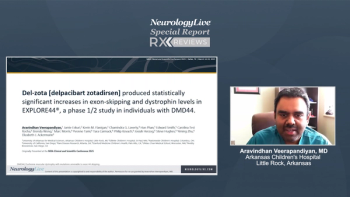
Aravindhan Veerapandiyan, MD, discusses how del-zota (delpacibart zotadirsen), an exon 44 skipping agent using antibody-conjugated phosphorodiamidate morpholino oligomer (PMO) technology, demonstrated favorable safety, significant dystrophin production (25% of normal), and unprecedented reduction of creatine kinase levels to near-normal in patients with Duchenne muscular dystrophy (DMD) during phase 1/2 clinical trials.

The pediatric neuromuscular neurologist at Arkansas Children's Hospital and associate professor of pediatrics at the University of Arkansas for Medical Sciences talked about findings from a phase 1/2 study on dosing 3 pediatric patients with Duchenne muscular dystrophy with REGENXBIO’s RGX-202. [WATCH TIME: 4 minutes]

April 8th 2026