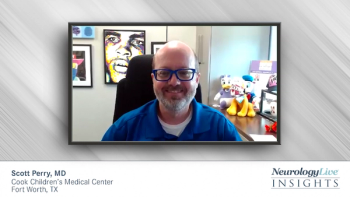
M. Scott Perry, MD

Co-director, Jane and John Justin Neurosciences Center, Cook Children’s Hospital

Articles by M. Scott Perry, MD

2 experts are featured in this series.

Panelists discuss how the treatment paradigm for Dravet syndrome has dramatically shifted with newer FDA-approved medications (cannabidiol, stiripentol, and fenfluramine) now recommended as first- and second-line therapies alongside traditional options such as valproate and clobazam, emphasizing that these novel mechanisms offer distinct advantages and should be used early rather than as last-resort treatments, with risk evaluation and mitigation strategies (REMS) programs and specialty pharmacies actually improving patient access and monitoring.
2 experts are featured in this series.

Panelists discuss how patients with Dravet syndrome face elevated sudden unexplained death in epilepsy (SUDEP) risk compared with other epilepsy populations, emphasizing the importance of early family education about risk factors such as convulsive seizures and medication adherence, while highlighting that newer therapies show promise in reducing both seizure frequency and SUDEP risk through better seizure control and decreased status epilepticus occurrence.

2 experts are featured in this series.

Panelists discuss how SCN1A genetic testing has enabled earlier diagnosis of Dravet syndrome, though some clinicians still hesitate to order tests due to discomfort with genetics, emphasizing that early genetic confirmation is crucial for avoiding contraindicated sodium channel medications, implementing appropriate treatments, and providing families with answers and community connections that improve long-term outcomes.

2 experts are featured in this series.

Panelists discuss how early recognition of Dravet syndrome's key clinical features—including prolonged seizures triggered by fever or illness in the first year of life, the importance of genetic testing for SCN1A variants, and the progressive nature of the condition that evolves from initial febrile seizures to multiple seizure types alongside developmental delays—can support timely diagnosis and improve long-term outcomes for pediatric patients.

1 KOL is featured in this series.

Scott Perry, MD, discusses how effective management of Dravet syndrome requires a multidisciplinary approach, emphasizing the critical importance of early diagnosis and aggressive treatment aimed at achieving seizure freedom, which can significantly improve long-term outcomes and quality of life for patients.

1 KOL is featured in this series.

Scott Perry, MD, discusses how caregivers of patients with Dravet syndrome face significant challenges and emphasizes the importance of health care providers navigating sensitive conversations with empathy, clear communication, and comprehensive support to address caregivers’ concerns and needs.

1 KOL is featured in this series.

Scott Perry, MD, discusses how treatment challenges in Dravet syndrome necessitate careful monitoring by health care providers, who must consider factors such as individual patient response, adverse effect profiles, drug interactions, and the potential need for escalation therapy, to optimize seizure control and overall patient outcomes.

1 KOL is featured in this series.

The panelist discusses how the goal of Dravet syndrome treatment is to reduce seizure frequency and severity, typically starting with initial treatments like valproate and clobazam and potentially escalating to combination therapies including options such as cannabidiol, with the overall aim of improving patients’ quality of life and developmental outcomes

1 KOL is featured in this series.

Scott Perry, MD, discusses how pediatric patients with Dravet syndrome often experience various comorbidities alongside seizures, including developmental delays, behavioral issues, and sleep disturbances, which significantly impact quality of life, especially when diagnosis is delayed, necessitating comprehensive management strategies.

1 KOL is featured in this series.

Scott Perry, MD, discusses how Dravet syndrome is diagnosed through a combination of clinical observation, genetic testing, and phenotypic evaluation, emphasizing the challenges and importance of early diagnosis to improve patient outcomes.

1 KOL is featured in this series.

Scott Perry, MD, discusses how Dravet syndrome is a rare genetic epilepsy characterized by frequent, prolonged seizures beginning in infancy, often accompanied by developmental delays and other health issues that persist and evolve as patients age.