


Dementia and Alzheimer Disease
Latest News
Advertisement
Latest Videos
CME Content










Advertisement
More News
Take 5 minutes to catch up on NeurologyLive's highlights from the week ending April 30, 2021.
"Mind Moments," a podcast from NeurologyLive, brings you exclusive interviews with Stephanie J. Nahas, MD; Bruce Cree, MD, PhD, MAS; Sana Somani, MD, MBBS; Hubert Fernandez, MD; Daniel Ontaneda, MD, PhD; and Richard Gershon, PhD.
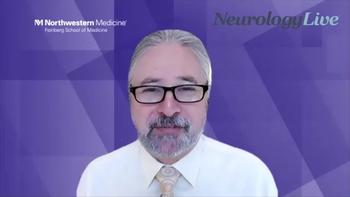
The vice chair for research at the Northwestern University Feinberg School of Medicine discussed how the cognitive mobile toolbox can be used to assess cognition in all populations.

Here's what is coming soon to NeurologyLive.
Take 5 minutes to catch up on NeurologyLive's highlights from the week ending April 23, 2021.
The MTB is built to safely, remotely, and effectively collect data from assessments that measure the executive function, language, memory, and processing speed of adults, and can be captured via smartphone.
The findings add to the body of evidence for use of antiplatelets in patients with cerebral amyloid angiopathy.
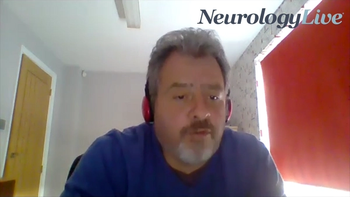
The dean at the University of Exeter Medical School discussed the questions related to treating dementia-related psychosis and the options available.

The 2021 AAN Meeting Hot Topics plenary focused on neurological facets of COVID-19, and featured insight from Anthony Fauci, MD, of NIAID, and Walter Koroshetz, MD, of NINDS, among others.
Here's what is coming soon to NeurologyLive.
Aducanumab currently sits before the FDA for review for the treatment of Alzheimer disease, with a PDUFA date set for June 7, 2021.

The study presented at the 2021 AAN Meeting follows the complete response letter issued by the FDA to Acadia Pharmaceuticals due to deficiencies in their sNDA.
Take 5 minutes to catch up on NeurologyLive's highlights from the week ending April 16, 2021.
Data from a cohort of more than 900 individuals suggest that while total tau can add cross-sectional value in certain contexts, neurofilament light served better for prognostication of cognitive decline and imaging changes.
The neurologist from Mayo Clinic discussed his abstract at AAN 2021 comparing stroke rates in patients with cerebral amyloid antipathy given treatment with aspirin.
The professor of health science at the Medical University of South Carolina detailed the limits of what can be achieved with behavioral interventions for the symptoms of dementia.
The 2021 AAN Annual Meeting will be held virtually from April 17-22. Follow along with coverage from NeurologyLive, including expert interviews and session recaps.

Researchers analyzed data from the 10,472 Medicare beneficiaries diagnosed with mild cognitive impairment or dementia in California.

A group of 15 repurposed agents were identified as the best candidates for activity against the network of 20 related and distinct biochemical pathways that are dysregulated in AD-related dementia.
Here's what is coming soon to NeurologyLive.
The professor of health science at the Medical University of South Carolina spoke to the dire need for more therapeutic approaches to treat some of the most difficult symptoms of dementia.
Neurology News Network for the week ending April 10, 2021.

The director of the Institute for Health, Health Care Policy, and Aging Research at Rutgers University discussed the issues that remain with enrolling patients into real-world dementia trials and standardizing measures.
Take 5 minutes to catch up on NeurologyLive's highlights from the week ending April 9, 2021.

The Gary Sinise Foundation Avalon Network aims to combat TBI and post-traumatic stress in veterans and first responders.
Advertisement
Advertisement
Trending on NeurologyLive - Clinical Neurology News and Neurology Expert Insights
1
FDA Approves UX111, First Gene Therapy for Pediatric Sanfilippo Syndrome Type A
2
FDA Clears Phase 1b/2 Trial of CAR T-Cell Therapy C-CAR168 for Refractory Progressive Multiple Sclerosis
3
Episode 175: Advancing the Ways of Treating Cluster Headache
4
FDA Approves Levacetylleucine for Ataxia-Telangiectasia
5