


Movement Disorders
Latest News
Advertisement
Latest Videos





CME Content











Advertisement
More News
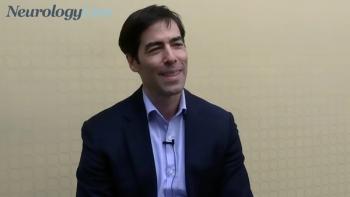
Limitations and Promise of Synuclein Biomarkers in Parkinson Disease Diagnosis: David Shprecher, DO, MSci, FAAN
Published: | Updated:
The director of movement disorders at the Banner Sun Health Research Institute talked about that although synuclein biomarkers have shown high sensitivity in identifying Parkinson disease, further studies are needed to address their limitations. [WATCH TIME: 3 minutes]

In recent analysis indicated that initiating apomorphine hydrochloride injection without antiemetic premedication was well-tolerated among patients with Parkinson disease.
ND0612 Receives Complete Letter Response, Otsuka Terminates AVP-786, TSHA-102 Performs in Phase 1/2 REVEAL Studies
Published: | Updated:
Neurology News Network. for the week ending June 22, 2024. [WATCH TIME: 4 minutes]

ND0612 Reduces OFF Time for Motor Fluctuations in Parkinson Disease at 12 Months
Published: | Updated:
An open-label phase 2b trial assessing ND0612 showed that the rate of treatment responders increased over a 12-month period among patients with Parkinson disease who experienced motor fluctuation.

Test your neurology knowledge with NeurologyLive®'s weekly quiz series, featuring questions on a variety of clinical and historical neurology topics. This week's topic is on Alzheimer disease/dementia.
Take 5 minutes to catch up on NeurologyLive®'s highlights from the week ending June 21, 2024.

ND0612, an investigational agent, had supportive data from the pivotal phase 3 BouNDless trial, a large-scale, phase 3 study of patients with Parkinson disease.

Patients with Parkinson disease and depression exhibit significantly worse nonmotor symptoms, highlighting the need for comprehensive management including orthostatic hypotension, constipation, and hyposexuality.

Here's some of what is coming soon to NeurologyLive® this week.

AMT-130, uniQure’s investigational gene therapy, is the first therapeutic candidate to receive regenerative medicine advanced therapy designation for Huntington disease.
Test your neurology knowledge with NeurologyLive®'s weekly quiz series, featuring questions on a variety of clinical and historical neurology topics. This week's topic is on narcolepsy.

Rakesh Jain, PhD, MS, clinical professor of psychiatry at the Texas Tech University School of Medicine, provided insight on a recently approved tablet dosage for deutetrabenazine, an FDA-approved therapy for chorea and tardive dyskinesia associated with Huntington disease.
Take 5 minutes to catch up on NeurologyLive®'s highlights from the week ending June 14, 2024.

For up to 24 months, patients on mirdametinib demonstrated significant improvements in pain severity, pain interference, and health-related quality of life, in addition to deep and durable plexiform neurofibroma volume reductions.

Catch up on any of the neurology news headlines you may have missed over the course of May 2024, compiled all into one place by the NeurologyLive® team.
Here's some of what is coming soon to NeurologyLive® this week.

After 28 days of treatment, bezisterim showed pronounced effects on measures of the Non-Motor Symptom Scale, as well as greater achievement of ON time than levodopa alone.
Test your neurology knowledge with NeurologyLive®'s weekly quiz series, featuring questions on a variety of clinical and historical neurology topics. This week's topic is on stroke and large hemispheric infarction.
Take 5 minutes to catch up on NeurologyLive®'s highlights from the week ending June 7, 2024.

Following presented phase 1 clinical trial findings at AAN 2024, bemdaneprocel receives regenerative medicine advanced therapy designation by the FDA for the treatment of Parkinson disease.

Where Are We: Development of Gene and Cell Approaches for Parkinson Disease
Published: | Updated:
According to recent studies and the latest insights provided by experts, early developments in gene and cell therapies show promise for patients living with Parkinson disease, but challenges remain.
Here's some of what is coming soon to NeurologyLive® this week.
Test your neurology knowledge with NeurologyLive®'s weekly quiz series, featuring questions on a variety of clinical and historical neurology topics. This week's topic is on amyotrophic lateral sclerosis (ALS).
Take 5 minutes to catch up on NeurologyLive®'s highlights from the week ending May 31, 2024.

Mike Hooven, chairman and CEO of Enable Injections, and Randall Moreadith, MD, PhD, chief development officer of Serina Therapeutics, provided insight on the development plans of SER-252, an investigational apomorphine therapy for advanced Parkinson disease.
Advertisement
Advertisement
Trending on NeurologyLive - Clinical Neurology News and Neurology Expert Insights
1
Remibrutinib Lowers Relapse Rate vs Teriflunomide in Relapsing MS
2
FDA Accepts Troriluzole NDA Resubmission for Spinocerebellar Ataxia
3
Tenecteplase Benefit Before Thrombectomy Varies by Stroke Cause, Study Shows
4
Real-World Data Show Switch to Subcutaneous Ocrelizumab Well Tolerated
5