



Movement Disorders
Latest News

Advertisement
Latest Videos



CME Content











Advertisement
More News

Here's some of what is coming soon to NeurologyLive® this week.
Medtronic DBS Approved for Asleep Surgery, BHV-2100 Shows Early Promise, AOC 1044 Continues Dystrophin Production in Latest Update
Published: | Updated:
Neurology News Network. for the week ending August 17, 2024. [WATCH TIME: 4 minutes]

The panelists provided clinical insight on the utilization of IPX203, its potential benefits and clinical implications, as well as the practicalities of transitioning patients from other therapies.
The panelists discussed the safety profile of IPX203, considering challenges with transitioning, dosing strategies, and monitoring and adjusting patients’ individual dosage.
Dr. Hauser and Dr. Fernandez provided insight on the body of supportive evidence for IPX203, the notable takeaways from RISE-PD, and the long-term benefits observed from treated patients.
IPX203 combines immediate and extended-release levodopa, utilizing advanced delivery technology to optimize absorption and prolong therapeutic effects in patients with Parkinson disease.

Medtronic's asleep DBS approval could expand treatment options for patients unable to tolerate awake surgery, enhancing access to deep brain stimulation therapy.
In this opening segment, Hauser and Fernandez discussed the FDA approval of IPX203, a new long-acting levodopa formulation for Parkinson disease, highlighting its significance in improving treatment options and patient compliance.

A pair of neurologists from the University of Miami Miller School of Medicine provided insight on the various ways deep brain stimulation has changed and the potential treatment opportunities that lie ahead. [WATCH TIME: 4 minutes]
IND Cleared for Cell Therapy in Progressive MS, FDA Approves IPX203, Migraine Treatment Nerivio Safe in Pediatric Populations
Published: | Updated:
Neurology News Network. for the week ending August 10, 2024. [WATCH TIME: 4 minutes]
Catch up on any of the neurology news headlines you may have missed over the course of July 2024, compiled all into one place by the NeurologyLive® team.

FDA Approves Carbidopa/Levodopa ER Capsules Formulation IPX203 for Parkinson Disease
Published: | Updated:
Marketed as Crexont, the combination extended- and immediate-release treatment is indicated for treatment of PD, and is anticipated to be available in the United States in September 2024.
The personalized medicine lead at Linus Health provided clarity on a new outcome measure that captures various perspectives about what matters to individuals and their brain health.
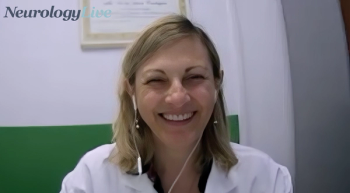
The Need for Flexibility and Patient-Centered Approaches in Clinical Trials for Cervical Dystonia: Anna Castagna, MD
Published: | Updated:
The consultant neurologist at Fondazione Don Carlo Gnocchi ONLUS stressed how new clinical trial designs for cervical dystonia should incorporate more flexible and patient-centered approaches, including new measurement scales and the use of technology. [WATCH TIME: 5 minutes]

The president at Fasikl and the Laverne and Joyce Rider professor of neurology at the University of Kansas Medical Center talked about results from a pilot study assessing the Felix Neural AI wristband in patients with essential tremor. [WATCH TIME: 4 minutes]

The meeting with the American Neurologic Association fosters collaboration, networking, and joint sessions, enhancing knowledge sharing among academic neurologists.
The consultant neurologist at Fondazione Don Carlo Gnocchi ONLUS talked about a recent study that examined the varying methods and results of clinical trials assessing the duration and efficacy of botulinum toxin treatment in cervical dystonia. [WATCH TIME: 7 minutes]
In this episode, the panel discusses the emerging challenges for neurology departments, the shortage of neurologists, and the ways to disseminate between useful and useless information amid a busy career.
John England, MD, and Lisa Merlin, MD, commented on the significant changes to neurology over the years and how education aligns with the latest in treatments advancements and understanding of neurological disorders.
The duo provided insight on a number of key sessions clinicians and neurology educators should attend at the upcoming AUPN Annual Meeting.
Panelists John England, MD, FAAN, and Lisa Merlin, MD, discuss the main objectives of the upcoming AUPN Annual Meeting, set to take place September 14th in Orlando, Florida.
Here's some of what is coming soon to NeurologyLive® this week.
Cerliponase Alfa Approved for All Ages of CLN2 Disease, SAGE-324 Discontinued, ION582 to Advance to Phase 3 in Angelman Syndrome
Published: | Updated:
Neurology News Network. for the week ending July 27, 2024. [WATCH TIME: 4 minutes]
Test your neurology knowledge with NeurologyLive®'s weekly quiz series, featuring questions on a variety of clinical and historical neurology topics. This week's topic is on congenital muscular dystrophy.

The application was supported by positive data of KYV-101 in patients with stiff-person syndrome treated in Germany under a named-patient treatment option.
Advertisement
Advertisement
Trending on NeurologyLive - Clinical Neurology News and Neurology Expert Insights
1
Remibrutinib Lowers Relapse Rate vs Teriflunomide in Relapsing MS
2
FDA Accepts Troriluzole NDA Resubmission for Spinocerebellar Ataxia
3
Tenecteplase Benefit Before Thrombectomy Varies by Stroke Cause, Study Shows
4
Real-World Data Show Switch to Subcutaneous Ocrelizumab Well Tolerated
5