


MS and Demyelinating Disorders
Latest News
Advertisement
Latest Videos


CME Content










Advertisement
More News

The company's phase 3 MUSETTE trial reported that an increased ocrelizumab dose did not further slow disability progression but reinforced the efficacy of the approved 600 mg dose.
In this final episode, neurologists discuss the role of advanced imaging, like OCT, in diagnosing and managing MS, emphasizing the need for further research to optimize its clinical application. [WATCH TIME: 2 minutes]

Here's some of what is coming soon to NeurologyLive® this week.
A pair of neurologists provide clinical insight on the difficulties with identifying and differentiating optic neuritis in various autoimmune conditions like multiple sclerosis and neuromyelitis optica spectrum disorder. [WATCH TIME: 4 minutes]
In this third episode, experts delve into the evolving role of optic neuritis and the central vein sign in refining multiple sclerosis diagnosis, highlighting their significance in distinguishing MS from other conditions and ensuring accurate patient care. [WATCH TIME: 3 minutes]
Take 5 minutes to catch up on NeurologyLive®'s highlights from the week ending March 28, 2025.
Panelists explore the impact of including optic nerve involvement in the diagnostic criteria for multiple sclerosis, highlighting how this revision leads to more definitive diagnoses and earlier initiation of treatment for patients at high risk. [WATCH TIME: 2 minutes]
In this panel discussion, clinicians dive into the crucial role of neuro-ophthalmologists in diagnosing and managing visual symptoms in patients with multiple sclerosis. [WATCH TIME: 3 minutes]

Tolebrutinib's potential approval as the first brain-penetrant BTK inhibitor for non-relapsing secondary progressive MS and to slow disability accumulation independent of relapse activity could represent a paradigm shift in treating disability driven by smoldering neuroinflammation.
The assistant professor in the department of neurology at Mount Sinai discussed distinguishing cognitive impairment in MS from AD emphasizing orientation as a key differentiator. [WATCH TIME: 5 minutes]
Challenges and Trust in Telehealth Integration for Multiple Sclerosis Care: Enrique Alvarez, MD, PhD
The professor of neurology at University of Colorado School of Medicine talked about the challenges of telehealth and device-based data collection in clinical practice. [WATCH TIME: 4 minutes]
Despite advancements in NMOSD treatments, the founder and executive director of the Sumaira Foundation discussed how misdiagnosis, delayed diagnosis, and disparities in care remain significant challenges. [WATCH TIME: 4 minutes]
Here's some of what is coming soon to NeurologyLive® this week.
The professor of neurological sciences at the University of Vermont discussed the work of the MS Differential Diagnosis Consortium, highlighting efforts to refine MS differential diagnosis and improve clinical accuracy. [WATCH TIME: 8 minutes]
The medical director of the Barlo Multiple Sclerosis Program at St Michaels Hospital discussed findings from phase 3 trials suggesting that baseline PRLs can predict disability accumulation and may serve as biomarkers for treatment response to tolebrutinib. [WATCH TIME: 6 minutes]
Here's some of what is coming soon to NeurologyLive® this week.

Kathleen Costello discusses her new role as interim CEO of the CMSC. She has the support of Jeff Wilken, CMSC president, and Tina Trott, CMSC director.
The interim chief executive officer at the Consortium of Multiple Sclerosis Centers invites healthcare professionals to the Consortium’s annual meeting from May 28–31 in Phoenix, Arizona. [WATCH TIME: 2 minutes]
The associate researcher at the University of California, San Francisco discussed a refined EAE model that could better replicate MS pathology, enabling deeper insights into demyelination, neuronal loss, and remyelination. [WATCH TIME: 6 minutes]
The professor of neurology and neurosurgery at McGill University discussed the evolving understanding of neuroimmune interactions in MS, highlighting how these interactions contribute to disease progression and potential repair mechanisms. [WATCH TIME: 4 minutes]
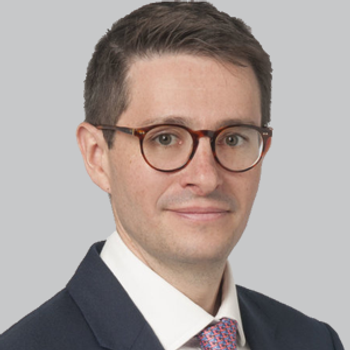
Daniel Ontaneda, MD, PhD, a professor of neurology at the Cleveland Clinic Lerner College of Medicine, gave thoughts and perspectives on some of the emerging, promising advances in multiple sclerosis care expected to come to fruition in 2025.
The assistant professor in the department of neurology at Mount Sinai talked about a recent study that highlighted how socioeconomic status and diet could significantly impact physical and cognitive outcomes in patients with MS. [WATCH TIME: 2 minutes]
The professor of neurology at University of Colorado School of Medicine discussed the evolving landscape of MS treatment, highlighting the role of personalized medicine and biomarker-driven decision-making. [WATCH TIME: 5 minutes]

Treatment strategies varied across cases, incorporating therapies like prednisolone, rituximab, and azathioprine, with overall positive outcomes and symptom improvement.
Here's some of what is coming soon to NeurologyLive® this week.
Advertisement
Advertisement
Trending on NeurologyLive - Clinical Neurology News and Neurology Expert Insights
1
uniQure Submits BLA for Gene Therapy in HD, AAN, AHS Issue Updated Guideline on Migraine Prevention, CTE Prevalence, Brain Donation Findings in Former NFL Players
2
EU Approves Modified-Release Carbidopa/Levodopa Capsules for Parkinson Disease Motor Fluctuations
3
Phase 4 Study Highlights Valbenazine's Positive Impact on Patient-Reported Quality of Life, Daily Functioning in Tardive Dyskinesia
4
FDA Approves Zilganersen, First Treatment for Alexander Disease
5