





MS and Demyelinating Disorders
Latest News
Advertisement
Latest Videos
CME Content












Advertisement
More News

Experts shared their clinical perspectives on trending topics in the treatment and management of multiple sclerosis at the 41st Congress of the European Committee for Treatment and Research in Multiple Sclerosis.
Take 5 minutes to catch up on NeurologyLive®'s highlights from the week ending October 10, 2025.

Catch up on any of the neurology news headlines you may have missed in September 2025, compiled into 1 place by the NeurologyLive® team.
Here's some of what is coming soon to NeurologyLive® this week.
In this final episode, Riley Bove, MD, considers the next phase of MS research, emphasizing the need for innovative trial designs to address sequencing, discontinuation, and subgroup-specific treatment strategies.
In this clip, a multiple sclerosis expert reflects on how ofatumumab’s role has expanded since FDA approval in 2020, from first-line use to special populations, and what this means for daily practice.
Final results from a phase 3 extension study presented at ECTRIMS 2025 demonstrated long-term efficacy and safety of ravulizumab-cwvz in patients with neuromyelitis optica spectrum disorder.
Take 5 minutes to catch up on NeurologyLive®'s highlights from the week ending October 3, 2025.
Riley Bove, MD, an associate professor of neurology at UCSF, breaks down the ARTIOS phase 3b trial results, highlighting the exceptionally low relapse rates, MRI outcomes, and safety findings in patients switching therapies.
At ECTRIMS 2025, a staff neurologist at Cleveland Clinic discussed findings from an observational study on long-term safety risks of ocrelizumab in patients with multiple sclerosis. [WATCH TIME: 3 minutes]

Mind Moments®, a podcast from NeurologyLive®, brings you an exclusive interview with Daniel Ontaneda, MD, PhD. [LISTEN TIME: 19 minutes]
In episode 1, Bove explores how ofatumumab, a B-cell–depleting therapy, stands apart from fingolimod and fumarates, and why its mechanism may offer distinct treatment advantages.
At ECTRIMS 2025, the postdoctoral research fellow at the University of Siena in Italy talked about how machine learning could classify multiple sclerosis into biologically distinct subtypes. [WATCH TIME: 5 minutes]

In a phase 3 trial presented at ECTRIMS 2025, ocrelizumab demonstrated noninferior relapse control compared with fingolimod in pediatric patients with relapsing-remitting multiple sclerosis.

Primary results presented at ECTRIMS 2025 suggest that body-weight–adjusted high-dose of ocrelizumab did not further slow disease progression in patients with primary progressive multiple sclerosis.

A phase 2 study presented at ECTRIMS 2025 showed that autologous adipose-derived mesenchymal stem cell therapy was safe and effective in patients with relapsing-remitting multiple sclerosis.
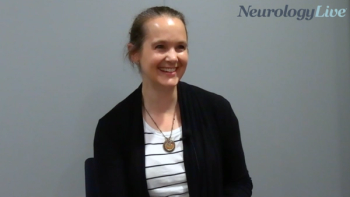
Applying the 2024 Diagnostic Criteria for MS to Enable Earlier Intervention: Erin Longbrake, MD, PhD
At ECTRIMS 2025, the associate professor of neurology at Yale School of Medicine talked about the 2024 diagnostic criteria, the preclinical phase of the disease, and progressive MS. [WATCH TIME: 3 minutes]
Here's some of what is coming soon to NeurologyLive® this week.

The executive director of The Sumaira Foundation (TSF) talked about TSF's research update and award ceremony held during ECTRIMS 2025. [WATCH TIME: 5 minutes]
Test your neurology knowledge with NeurologyLive®'s weekly quiz series, featuring questions on a variety of clinical and historical neurology topics. This week's topic is on the ECTRIMS Congress.

A global panel of experts revised NMOSD diagnostic criteria and updated disease classifications, distinguishing aquaporin-4 antibody–positive disease from related conditions such as MOGAD.

New research highlights the effectiveness of paramagnetic rim lesions as a key biomarker for diagnosing multiple sclerosis, enhancing diagnostic accuracy.
Take 5 minutes to catch up on NeurologyLive®'s highlights from the week ending September 26, 2025.

At ECTRIMS 2025, the professor of neurology at the University of Basel talked about the decades of progress in MS therapeutics and highlighted the need for comprehensive, early assessments for patients. [WATCH TIME: 4 minutes]

New data reveal vidofludimus calcium shows promise in slowing disability progression in primary progressive multiple sclerosis, warranting further trials.
Advertisement
Advertisement
Trending on NeurologyLive - Clinical Neurology News and Neurology Expert Insights
1
FDA Approves Autoinjector for Self-Administered Zilucoplan in Generalized Myasthenia Gravis
2
Arimoclomol Plus Miglustat Shows Early, Sustained Slowing of Niemann-Pick Disease Type C Progression
3
New Phase 1 Study Tests Intrathecal Gene Therapy Agent INS1201 in Duchenne Muscular Dystrophy
4
TSHA-102 Produces Multidomain Functional Gains in Rett Syndrome
5