





Neuromuscular
Latest News
Advertisement
Latest Videos





CME Content











Advertisement
More News

Steve Hughes, MD, chief medical officer at Avidity, provided perspective on recently announced positive phase 1/2 and OLE data evaluating AOC 1001, an investigational antisense oligonucleotide, in patients with myotonic dystrophy type 1.
Neurology News Network for the week ending November 11, 2023. [WATCH TIME: 3 minutes]
Take 5 minutes to catch up on NeurologyLive®'s highlights from the week ending November 10, 2023.
Catch up on any of the neurology news headlines you may have missed over the course of October 2023, compiled all into one place by the NeurologyLive® team.

The director of the neuromuscular diseases division at the University of Washington discussed findings from a new post hoc analysis presented at AANEM 2023 that showed that zilucoplan treatment significantly reduced fatigue in patients with myasthenia gravis. [WATCH TIME: 6 minutes]
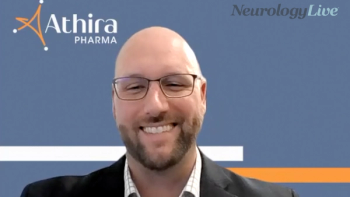
The chief scientific officer at Athira Pharma talked about new preclinical results presented at the 2023 NEALS Annual Meeting on the investigational therapy ATH-1105 for patients with amyotrophic lateral sclerosis. [WATCH TIME: 5 minutes]

Recent findings from an analysis of the CHAMPION MG study suggest that ravulizumab continues to be an effective therapy for patients with generalized myasthenia gravis, regardless of whether they had received prior IVIg treatment.

The vice president of translational medicine at Cene Nanomedicine talked about a recently funded grant that is focused on inclusivity and the collection of real-world data on the efficacy of CNM-Au8 in various stages of amyotrophic lateral sclerosis. [WATCH TIME: 7 minutes]

Mind Moments®, a podcast from NeurologyLive®, brings you an exclusive interview with Barry J. Byrne, MD, PhD. [LISTEN TIME: 10 minutes]
Neurologists' Perspectives on Healthcare Disparities in Myasthenia Gravis: A. Gordon Smith, MD, FAAN
The professor and chair of neurology at Virginia Commonwealth University discussed a study conducted among neurologists that revealed healthcare disparities in the treatment of myasthenia gravis, particularly related to access to care and therapeutics. [WATCH TIME: 5 minutes]

Recent research, presented at the 2023 AANEM Annual Meeting, emphasized the potential need for patient support programs targeting at-risk populations to enhance disease management and reduce acute care utilization in myasthenia gravis.
The director of disability policy at the Muscular Dystrophy Association discussed his lecture at AANEM 2023 on how clinicians can advocate for their patients to help improve accessibility and health equity. [WATCH TIME: 7 minutes]

Among 67 patients with generalized myasthenia gravis studied from January 2021 to June 2023, 89.5% failed to meet clinical trial inclusion criteria, with the most common reason being a Myasthenia Gravis Activities of Daily Living score of less than 5.

In a new post hoc analysis of RAISE-XT, early responders to zilucoplan maintained their response throughout the long-term open-label extension, irrespective of baseline characteristics.

Zilucoplan demonstrated significant and sustained improvements in myasthenic fatigue when compared with the placebo in the phase 3 RAISE study and its extension trial, RAISE-XT.

Here's some of what is coming soon to NeurologyLive® this week.

AI could revolutionize patient advocacy by bridging communication gaps between patients and providers, and the synergy of medicine and AI offers a promising avenue for enhanced patient care and operational efficiency.
Test your neurology knowledge with NeurologyLive®'s weekly quiz series, featuring questions on a variety of clinical and historical neurology topics. This week's topic is narcolepsy.

L. John Greenfield Jr, MD, PhD, “spoke” about the future of artificial intelligence in neurology with ChatGPT-4—one of the largest language modules that have grabbed the field’s interest.

There should be a holistic approach to how the systems in place affect equity: how medicine is practiced and research is conducted, the structure of academic institutions, and how media influence our perceptions of neurologic conditions.

The safety and tolerability of efgartigimod was consistent across different indications and doses, showing comparable rates of treatment-related adverse events with placebo in clinical trials for myasthenia gravis, primary immune thrombocytopenia, and pemphigus.
Take 5 minutes to catch up on NeurologyLive®'s highlights from the week ending November 3, 2023.

A post hoc analysis of the phase 3 RAISE study evaluating zilucoplan, a complement C5 inhibitor, showed significantly fewer patients experienced worsening and fewer requiring rescue therapy while on medication compared with placebo.

A study on patients with Friedreich ataxia showed that cervical spinal cord cross-sectional area is a potential biomarker for disease progression, particularly at C1 level.
The professor of neurology at Cedars-Sinai Medical Center talked about findings from the ADHERE trial assessing efgartigimod, a human IgG1 antibody Fc fragment, as a treatment for patients with chronic inflammatory demyelinating polyneuropathy. [WATCH TIME: 6 minutes]
Advertisement
Advertisement
Trending on NeurologyLive - Clinical Neurology News and Neurology Expert Insights
1
Real-World Data Show Switch to Subcutaneous Ocrelizumab Well Tolerated
2
FDA Accepts Troriluzole NDA Resubmission for Spinocerebellar Ataxia
3
Early Data Show Dual-Targeting CAR-T Agent CTA313 Stabilizes Progressive Multiple Sclerosis
4
Clene Submits NDA Seeking Accelerated Approval for ALS Drug
5