




Dementia and Alzheimer Disease
Latest News
Advertisement
Video Series



Latest Videos



Shorts

0:57
What Other Nerve Conditions Are Teaching Us About Reversing DPN
4 days ago
by
Brian Callaghan, MD, MS

0:57
The 5 to 10 Year Outlook for Diabetic Peripheral Neuropathy
5 days ago
by
Brian Callaghan, MD, MS

0:49
The Research Gaps Standing Between DPN and Reversibility
5 days ago
by
Brian Callaghan, MD, MS

1:44
What Should Clinicians Know About “Brain Fog” From Long COVID?
16 days ago
by
Jacqueline Becker, PhD(+1 more)

1:35
The Missing Step Between iPSC Drug Screening and Clinical Trials
20 days ago
by
Ahmet Hoke, MD, PhD

0:35
What iPSC Models Miss About the Nervous System
20 days ago
by
Ahmet Hoke, MD, PhD

1:28
Building a Smarter Drug Development Pipeline for Neuropathy
21 days ago
by
Ahmet Hoke, MD, PhD

0:48
Why Animal Models Still Matter in Neuropathy Research
21 days ago
by
Ahmet Hoke, MD, PhD

1:23
What’s Different About the Players Who Don’t Develop CTE?
22 days ago
by
Louie Pasculli(+1 more)
1:46
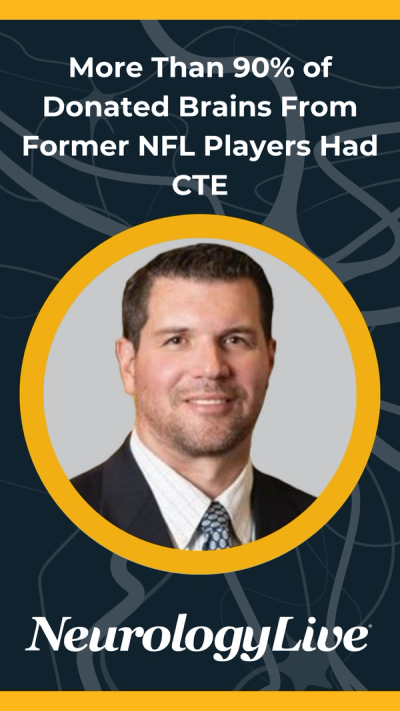
More Than 90% of Donated Brains From Former NFL Players Had CTE
23 days ago
by
Louie Pasculli(+1 more)
Podcasts
CME Content






Advertisement
More News

In recognition of World Alzheimer's Day, NeurologyLive revisits 8 expert conversations from 2026 that explore advances in Alzheimer disease research and care, including emerging biomarkers, artificial intelligence, disease mechanisms, and treatment strategies.

Here's some of what is coming soon to NeurologyLive® this week.

Take 5 minutes to catch up on NeurologyLive®'s highlights from the week ending September 18, 2026.
Microstructure Imaging has announced that the FDA cleared its MICSI-PET, an MR-guided PET enhancement platform with automated amyloid Centiloid and tau quantification.

Subgroup analyses from the phase 2 ADDRESS-LC trial showed bezisterim significantly improved fatigue, malaise, and cognition in long COVID patients with more severe baseline symptoms.
Here's some of what is coming soon to NeurologyLive® this week.
Take 5 minutes to catch up on NeurologyLive®'s highlights from the week ending September 11, 2026.

The clinical neuropsychologist and assistant professor of medicine at the Icahn School of Medicine at Mount Sinai discussed the mechanisms behind brain fog from Long COVID and its potential links to Alzheimer risk.
Catch up on any of the neurology headlines you may have missed in August 2026, compiled into 1 place by the NeurologyLive® team.

Thayne Munce, PhD, discusses the challenges and unanswered questions shaping CTE research, as well as the implications of findings from former NFL players for athletes competing today.
New research examining the prevalence of chronic traumatic encephalopathy among former NFL players provides additional insight into CTE pathology, while highlighting the challenges of interpreting findings from postmortem brain-donation studies.

Phase 1b/2 findings showed that the investigational anti-amyloid monoclonal antibody ABBV-916 produced dose-dependent reductions in brain amyloid in adults with early Alzheimer disease, although development of the agent was discontinued before dose expansion because of sponsor business considerations.
Here's some of what is coming soon to NeurologyLive® this week.
The FDA has cleared Roche's Elecsys pTau217, a blood test that uses a single biomarker to both rule in and rule out amyloid pathology in adults being evaluated for Alzheimer disease, across both primary and specialty care settings.
Here's some of what is coming soon to NeurologyLive® this week.
FDA has cleared C2N Diagnostics' PrecivityAD2 blood test for adults 40 years and older with cognitive symptoms, offering fast amyloid and tau insight to guide diagnosis and trials in Alzheimer disease.

Kyle Marden, MD, sports neurologist and medical director of the Concussion and Sports Neurology Program at Northwestern Medicine, discusses emerging developments in concussion diagnosis and management, ongoing challenges in the field, and the future of individualized care.

The FDA granted Fast Track designation to Acadia Pharmaceuticals’ investigational remlifanserin for hallucinations and delusions associated with Alzheimer disease psychosis.
Here's some of what is coming soon to NeurologyLive® this week.

A large multicenter study found that APOE genotype and a polygenic Alzheimer risk score together predict up to a 10-year difference in disease onset among people carrying an extra copy of the APP gene, whether through an APP duplication or Down syndrome.
The FDA approved Tauklarify (florquinitau F 18 injection), a tau PET imaging agent, for identifying tau neurofibrillary tangle pathology in adults being evaluated for Alzheimer disease.

Voyager Therapeutics is advancing 2 tau-targeted Alzheimer disease therapies toward key clinical milestones expected in the fourth quarter of 2026, including tau PET imaging data for VY7523 and first-in-human dosing for VY1706.
Here's some of what is coming soon to NeurologyLive® this week.
Take 5 minutes to catch up on NeurologyLive®'s highlights from the week ending August 7, 2026.
The FDA has granted 510(k) clearance to VoxNeuro's Cognitive Function Neuroimaging software, an EEG/ERP-based tool designed to give clinicians an objective, adjunctive measure of cognitive function.
Advertisement
Advertisement
Trending on NeurologyLive - Clinical Neurology News and Neurology Expert Insights
1
FDA Approves Tavapadon for the Treatment of Parkinson Disease
2
Inebilizumab Shows Durable Benefit in MuSK+ Generalized Myasthenia Gravis at AANEM 2026
3
FDA Accepts Fenebrutinib NDA Under Priority Review for Relapsing and Primary Progressive MS
4
New Phase 3 Trials to Test Empasiprubart Against Placebo, IVIG in CIDP
5