






Multiple Sclerosis
Latest News
Advertisement
Video Series


Latest Videos










Shorts

1:08
Part 3: What's the Biggest Gap in Pediatric Neurology Care Right Now?
a day ago
by
Jonathan Santoro, MD(+1 more)

1:50
Escalating Treatment in Refractory Neurosarcoidosis
2 months ago
by
Marco Meglio

1:50
Tocilizumab and Repurposing Agents for Neurosarcoidosis
2 months ago
by
Marco Meglio

0:53
Symptom Overlap Between Multiple Sclerosis and NMOSD
3 months ago
by
Mitzi Joi Williams, MD
0:50
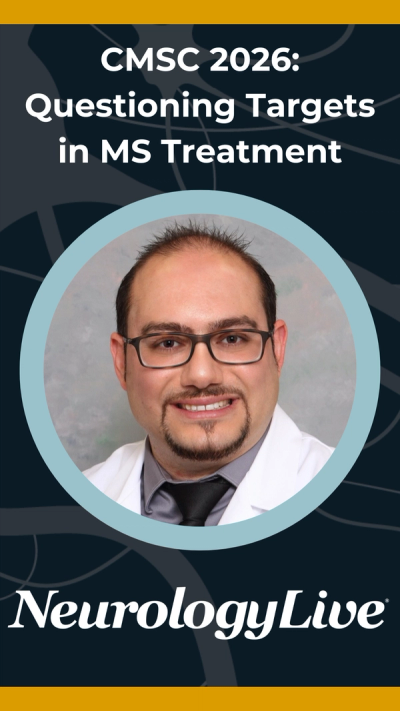
CMSC 2026: Questioning Targets in MS Treatment
3 months ago
by
Ahmed Obeidat, MD, PhD(+1 more)

1:15
CMSC 2026: Enhancing MS Clinical Trial Impact
3 months ago
by
Mark Freedman, MD, MSc, HBSc, CSPQ, FANA, FAAN, FRCPC(+1 more)

1:00
The 2024 MS Diagnostic Criteria: More Than a Definition Update
3 months ago
by
Daniel Ontaneda, MD, PhD(+1 more)

1:02
Diagnosis Is Not the Same as Treatment in Multiple Sclerosis
3 months ago
by
Daniel Ontaneda, MD, PhD(+1 more)

1:46
How Biomarkers Can Help Clarify the MS Diagnostic Gray Zone
3 months ago
by
Daniel Ontaneda, MD, PhD(+1 more)

0:56
Debunking Nerve Pain Myths
4 months ago
by
Mitzi Joi Williams, MD
Podcasts




CME Content












Advertisement
More News

A recent MS cohort study suggests that higher EBV nuclear antigen 1 antibody levels are associated with a lower risk of confirmed disability worsening, particularly among patients carrying both HLA-A02:01 and HLA-DRB115:01.

The FDA clearance allows AbelZeta to study bispecific CAR T-cell therapy C-CAR168 in refractory progressive multiple sclerosis.

A recent study suggests that cumulative genetic variation associated with lymphocyte counts may help identify patients living with multiple sclerosis at increased risk of dimethyl fumarate-associated lymphopenia.

A recently published multiple sclerosis study suggests disease-modifying therapy use may be associated with higher rates of human papillomavirus positivity, cervical abnormalities, and other gynecologic complications.

Findings showed that remibrutinib outperformed teriflunomide in the REMODEL-1 and REMODEL-2 phase 3 trials among adults with relapsing MS, lowering relapse rates and MRI lesions with a favorable safety profile.

Hannah Kopinsky, MD, an MS specialist at Northwestern Medicine, discussed recent updates to multiple sclerosis diagnostic criteria, the shift toward early high-efficacy treatment, and the unmet needs that remain in progressive MS.

A large claims-based cohort study found that two doses of the recombinant zoster vaccine reduced the risk of shingles by 64% to 81% in adults with multiple sclerosis, a population with elevated shingles risk and historically low vaccine uptake.

Experimental small molecule CN045 promoted oligodendrocyte maturation and modest remyelination in preclinical models of multiple sclerosis, supporting further development of the compound as a potential remyelination therapy.

The FDA has cleared Quantum BioPharma's investigational new drug application for Lucid-MS, allowing the company to begin a phase 2 trial of the first-in-class demyelination-targeting compound in progressive multiple sclerosis.

A recently published study showed that 4 weeks of high-dose oral N-acetyl cysteine significantly reduced serum GFAP levels in adults with progressive multiple sclerosis compared with placebo.

Real-world data from a London MS pregnancy clinic showed persistent B-cell depletion and favorable postpartum disease outcomes in women who discontinued ofatumumab upon confirmed pregnancy.

John Corboy, MD, professor of neurology at the University of Colorado, discussed recent findings focused on disease-modifying therapy discontinuation in older, stable patients with multiple sclerosis.

Actress Jamie Lynn Sigler discussed how patient education, treatment adherence, and self-advocacy have shaped her approach to living with multiple sclerosis at the 2026 CMSC Annual Meeting.

Carrie Hersh, DO, MSc, FAAN, president of the Consortium of Multiple Sclerosis Centers, discussed key sessions presented on disability progression, emerging biomarkers, and the shift toward comprehensive, patient-centered MS care.

Ahmed Obeidat, MD, PhD, associate professor of neurology at the Medical College of Wisconsin, talked about the need to rethink multiple sclerosis clinical trial design by recognizing immune cells’ potential neuroprotective roles.

Mark Freedman, MD, MSc, HBSc, CSPQ, FANA, FAAN, FRCPC, director of the multiple sclerosis research unit at Ottawa Hospital, outlined how research-integrated multiple sclerosis care can refine treatment strategies in clinical practice.

A cross-sectional survey of 4181 NARCOMS Registry participants found that only 7.4% had ever used semaglutide or tirzepatide, despite 40% meeting FDA-approved indications for the drugs.

The first randomized, double-blind trial directly comparing the 2 anti-CD20 agents showed rituximab met the prespecified noninferiority criterion on MRI suppression, with a similar serious adverse event profile and a substantially lower cost.

TG Therapeutics has indicated it plans to submit a supplemental BLA to the FDA in the second half of 2026, seeking approval for the consolidated initiation regimen of ublituximab-xiiy.

The 510(k) clearance was supported by a 3-study, 159-patient registrational program showing a 45.5% increase in response rate vs physical therapy alone, and includes Medicare coverage at launch.

Tom Fuchs, MD, PhD, postdoctoral researcher at the MS Center at Amsterdam University Medical Center, shared his reaction to the European Commission's approval of tolebrutinib for nonrelapsing secondary progressive MS.

Jens Kuhle, MD, PhD, head of the Multiple Sclerosis Centre at University Hospital Basel, discusses the EU approval of tolebrutinib for nonrelapsing SPMS and its implications for treating disability progression.

The European Commission has approved Cenrifki (tolebrutinib) for nrSPMS without relapses in the last two years, a milestone that arrives despite the drug's failed US submission and a regulatory pathway that has been anything but linear.

FDA Clears Investigational New Drug Application for Remyelinating Agent PTD802 in Multiple Sclerosis
FDA’s clearance for PTD802, a first-in-class GPR17 antagonist designed to promote remyelination, enables initiation of a first-in-human phase 1 study in healthy volunteers and advances a novel regenerative approach for multiple sclerosis.

Neurologists Sarah Simmons, MD, PhD, and Fatma Inanici, MD, PhD, discuss how the combination of noninvasive cervical spinal cord stimulation with exercise therapy can improve upper extremity function in people with MS.
Advertisement
Advertisement
Trending on NeurologyLive - Clinical Neurology News and Neurology Expert Insights
1
Ocrelizumab Shows MRI Benefits vs Fingolimod in Phase 3 Pediatric-Onset Multiple Sclerosis Study
2
Satralizumab Reduces MOGAD Relapse Risk in Phase 3 METEOROID Trial
3
TSHA-102 Produces Multidomain Functional Gains in Rett Syndrome
4
First-in-Human Trial Begins for an Antisense Oligonucleotide in KCNT1-Related Epilepsy
5