
Test your neurology knowledge with NeurologyLive®'s weekly quiz series, featuring questions on a variety of clinical and historical neurology topics. This week's topic is Alzheimer and dementia.
Test your neurology knowledge with NeurologyLive®'s weekly quiz series, featuring questions on a variety of clinical and historical neurology topics. This week's topic is Alzheimer and dementia.
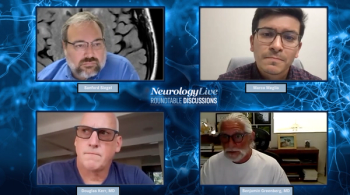
Sanford Siegel, Douglas Kerr, MD; and Benjamin Greenberg, MD, detailed the need for greater research on treatment strategies that repair myelin improve neurodegeneration, as well as expanded knowledge on how neuroimmune disorders present. [WATCH TIME: 5 minutes]

Findings from a recent study showed that pain in the lower limbs of children and adolescents, commonly referred to as growing pains by providers, may reflect a precursor or comorbidity with migraine.
Neurology News Network for the week ending September 16, 2023. [WATCH TIME: 3 minutes]
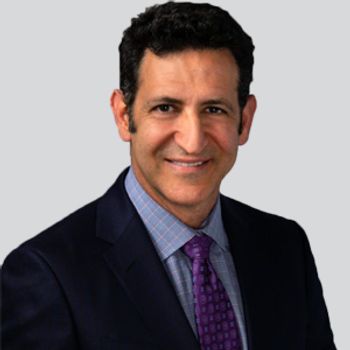
Positive findings from a phase 2b/3 study investigating blarcamesine, an investigational agent, demonstrated efficacy among patients with early Alzheimer disease.
Take 5 minutes to catch up on NeurologyLive®'s highlights from the week ending September 15, 2023.

Benjamin Greenberg, MD; Douglas Kerr, MD; and Sanford Siegel provided perspectives on the gaps in the epidemiology and treatment paradigm for patients with rare neuroimmune disorders. [WATCH TIME: 3 minutes]

Black adults who had a stroke because of a severe blockage of a major artery in the brain were younger, had higher rates of high blood pressure and type 2 diabetes, and had lower physical activity scores compared with nonBlack adults.

The adjunct professor of human genetics at Emory University School of Medicine discussed how the Rett Syndrome Behavior Questionnaire has evolved into a versatile tool with a broader scope. [WATCH TIME: 10 minutes]

In a recent case-control study of 836 human serum samples, including 332 AQP4-IgG–positive and 504 negative samples, the novel immunodot assay showed a 99.4% sensitivity and a 99.2% specificity.
The associate professor at Washington University School of Medicine discussed the reasons for why some institutions have different risk benefit analyses for thrombolysis, and whether this causes challenges for the healthcare system. [WATCH TIME: 4 minutes]

In this small-scale Turkish-based substudy, stopping eciluzumab appeared to be associated with a “rebound” effect with a high risk of relapse in patients with NMOSD.
An expert neurology panel detailed some of the changes in therapeutic strategies and approaches to treating rare neuroimmune disorders, including the steps taken during the acute phase. [WATCH TIME: 6 minutes]

In a recent study on patients with narcolepsy type 1, those who used opioid drugs such as oxycodone and codeine were significantly associated with improved self-reported narcolepsy symptom severity.
The chief medical officer at ML Bio Solutions, an affiliate of BridgeBio, talked about the significant progress of investigational agent BBP-418 to treat limb-girdle muscular dystrophy type 2I/R9. [WATCH TIME: 3 minutes]

A recent systematic review and meta-analysis showed that normal mean sleep latency in adults was 11.7 minutes using the earlier definition of sleep onset and 11.8 minutes using the later definition of sleep onset.

The presence of new asymptomatic MRI lesions among patients with NMOSD during the relapse-free period and at relapses was not associated with a shorter time to developing subsequent relapses.

Over a 2-year treatment period, patients on ALZ-801 demonstrated significant correlations between effects on volumetric MRI outcomes and 3 cognitive scales, suggesting cognitive gains are a result of preservation of brain structures from neurodegeneration and atrophy.

Several experts in neuroimmune disorders discuss the mechanisms of action that underlie these disorders, and how the perception of their pathology has changed. [WATCH TIME: 7 minutes]

Findings from a recent exploratory study suggest that assessing daily functioning in a more sensitive way may identify Alzheimer disease before a patient develops more pronounced cognitive changes.
The professor of neurology at the NYU Grossman School of Medicine discussed the RECOVER-NEURO trial that is focused on improving cognitive dysfunction in patients with long COVID symptoms. [WATCH TIME: 5 minutes]

The director of the Pediatric Epilepsy Center at UCSF provided perspective on STK-001, a promising antisense oligonucleotide in development, and the shift in how Dravet syndrome is discussed and managed.

Patients treated for more than 28 days had a higher chance of status epilepticus cessation, but also a high risk of moderate to severe disability at discharge.

One meta-analysis featuring 8 studies showed that more than half of patients reported a 100% reduction in their generalized tonic-clonic seizures or tonic-clonic seizures.
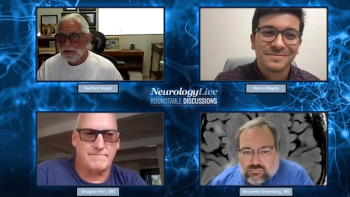
A group of panelists discussed the history of the Siegel Rare Neuroimmune Association, and the progress made on rare neuroimmune disorders in the nearly 30 years since its existence.
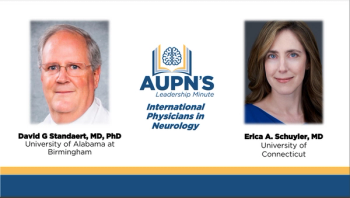
Episode 37 of the AUPN Leadership Minute features David G. Standaert, MD, PhD, of the University of Alabama at Birmingham; and Erica A. Schuyler, MD, of the University of Connecticut. [WATCH TIME: 5 minutes]

Patients who have 1 of 4 recently identified genetic variants are at 10 times the risk of developing progressive multifocal leukoencephalopathy depending on specific treatments for their condition.

The genetic epidemiologist at the University of Pennsylvania discussed a recent study that highlighted the importance of diverse samples in genetic research for Alzheimer disease in helping to uncover hidden genetic risk factors. [WATCH TIME: 2 minutes]

A recent systematic review showed that AQP4+NMOSD in patients with systemic lupus erythematosus can mimic neuropsychiatric manifestations, frequently occur after the onset of lupus or may predate, and necessitate indefinite treatment.

The combined preclinical and clinical data with neflamapimod suggest the therapy has potential to be the first disease-modifying treatment for dementia with Lewy Bodies, demonstrating a positive impact on cognition, function, and mobility.