
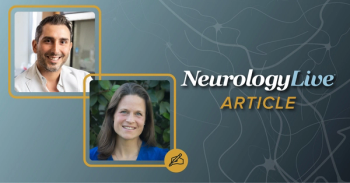
Experts Laura Saucier, MD, MSc, and Jonathan Santoro, MD, examined pediatric MOGAD phenotypes, highlighting how variability in clinical presentation may influence treatment responses and inform individualized care strategies.
Experts Laura Saucier, MD, MSc, and Jonathan Santoro, MD, examined pediatric MOGAD phenotypes, highlighting how variability in clinical presentation may influence treatment responses and inform individualized care strategies.

The FDA has cleared an updated Cala kIQ Plus wearable system, adding adaptive features to support personalized management of hand tremor in essential tremor and Parkinson disease.

In honor of International Pompe Day, held April 15, 2026, NeurologyLive reviewed recent studies on the latest research and evolving standards of care for Pompe disease.
International Pompe Day highlights advances in molecular diagnostics, newborn screening, and enzyme replacement therapy that have reshaped the recognition and management of Pompe disease over the past century.

In observance of International Pompe Day, held annually on April 15, catch up on the past year’s news and expert insights related to this rare disease.

Erika Trovato, DO, MS, associate chief medical officer at Burke Rehabilitation Hospital in New York, discusses interdisciplinary rehabilitation, emerging technologies, and the evolving focus on long-term outcomes and caregiver support in brain injury care.
The director of neurointerventional surgery at Abbott Northwestern Hospital, part of Allina Health, discussed evolving stroke care, patient selection, and emerging neurointerventional technologies shaping clinical practice.

The approved neurofilament light chain test offers a minimally invasive approach to assessing neuroaxonal damage, with potential to complement MRI in routine multiple sclerosis care.

A recent study revealed that a substantial proportion of patients with NMOSD required escalation from first-line immunosuppressants to rituximab, with baseline severe disability emerging as a key associated factor.

The medical director of neurointerventional surgery at Allina Health Brain and Spine Institute provided clinical insights on the procedural factors that guide patient selection for endovascular stroke intervention. [WATCH TIME: 3 minutes]

A recent population-based data analysis of Korean adults reported those with anxiety and certain sleep disturbances experienced longer durations of morning grogginess, known as sleep inertia.

A recent study reported that relapse prevention was the most influential factor in treatment selection, with respondents favoring profiles similar to ravulizumab over other approved options for NMOSD.
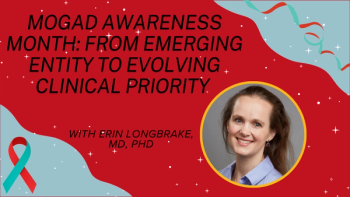
MOGAD Awareness Month highlights the evolution of myelin oligodendrocyte glycoprotein antibody–associated disease from a once-misclassified condition to a distinct neuroimmunologic disorder.

A data-driven slideshow for National Public Health Week highlights the global burden of neurologic diseases, featuring key statistics on prevalence, disability, and workforce gaps across major conditions.

Alexander Shustorovich, DO, an interventional pain medicine physician, discussed a unique case of sustained pain relief after spinal cord stimulation trial and its implications for neuromodulation strategies.

Here's some of what is coming soon to NeurologyLive® this week.

Real-world MOGAD data show tocilizumab drives relapse-free control, improves disability and vision, but requires infection monitoring.
Test your neurology knowledge with NeurologyLive®'s weekly quiz series, featuring questions on a variety of clinical and historical neurology topics. This week's topic is AAN Annual Meeting History!

Diana Castro, MD, founder and director of the Neurology and Neuromuscular Care Center, discussed early phase 1b data on salanersen, an investigational therapy for patients living with spinal muscular atrophy.

Neurology News Network for the week ending April 11, 2026. [WATCH TIME: 4 minutes]
Take 5 minutes to catch up on NeurologyLive®'s highlights from the week ending April 10, 2026.

A multicenter study showed that kappa free light chain index offers strong diagnostic accuracy for distinguishing MS from MOGAD and NMOSD, with added value when combined with oligoclonal band testing in complex cases.
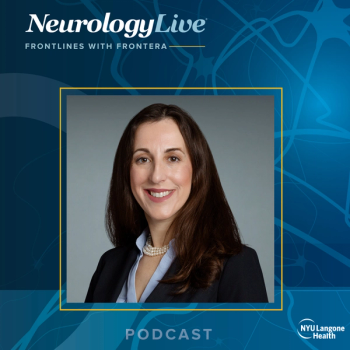
Frontlines with Frontera, a podcast hosted by neurointensivist Jennifer Frontera, MD, brings you a 2-part exclusive interview with Brian Edlow, MD, of Mass General Brigham. [LISTEN TIME: 26 minutes]
Frontlines with Frontera, a podcast hosted by neurointensivist Jennifer Frontera, MD, brings you a 2-part exclusive interview with Brian Edlow, MD, of Mass General Brigham. [LISTEN TIME: 26 minutes]

Lead Investigators explain blood-based “Clock Model” that uses plasma p-tau217 levels to estimate when symptoms of Alzheimer disease may begin, with an average prediction error of approximately 3 to 4 years.

FDA accepts Ultragenyx’s UX111 gene therapy BLA for Sanfilippo A, setting a September 2026 decision date.

The director of neuromuscular medicine at Marcus Neuroscience Institute shared findings from an analysis presented at MDA 2026 that compared real-world infection rates associated with generalized myasthenia gravis therapies. [WATCH TIME: 8 minutes]

In recognition of National Public Health Week, held April 6-12, NeurologyLive summarizes recent literature showing that environmental exposures are associated with increased risk of neurologic disorders.

A meta-analysis of randomized trials confirmed modafinil improves both objective and subjective measures of daytime sleepiness in narcolepsy.

High-dose influenza vaccination was associated with a lower risk of incident Alzheimer dementia compared with standard-dose vaccination among adults aged 65 years and older in a large US claims-based cohort study.