

The proportion of patients who achieved an at least 50% reduction in monthly migraine days was significantly higher among those on either erenumab dose compared with placebo.
The proportion of patients who achieved an at least 50% reduction in monthly migraine days was significantly higher among those on either erenumab dose compared with placebo.

The chief of emergency medical services at Jefferson Health spoke about the operation of the Jefferson mobile stroke unit in the field, and the impact that the onset of the COVID-19 pandemic had on launching the program. [WATCH TIME: 3 minutes]

Among participants with a high dementia polygenic risk score, the 12-year cumulative incidence of dementia was 4.3% for those with hypertension compared with 2.8% for those without.

In light of Tuberous Sclerosis Complex (TSC) Awareness Month throughout May, Kari Rosbeck, president and CEO, TSC Alliance, highlights what has been done to advance TSC research and how the organization is improving the diagnosis journey, access to care, and support for families.
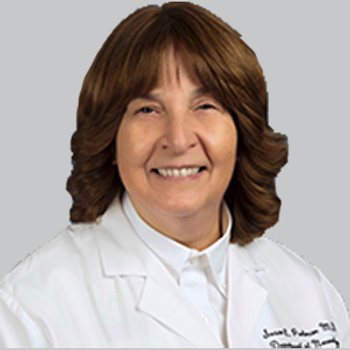
Falls, a common occurrence for patients with spinocerebellar ataxia, were significantly reduced following treatment with troriluzole after 48 weeks.

The director of the Stanford Stroke Center and Coyote Foundation Professor of Neurology and Neurological Sciences at Stanford Medical Center shared his perspective on the uptake of mobile stroke units across the United States. [WATCH TIME: 6 minutes]

Patients with relapsing multiple sclerosis who had progression independent of relapse activity were subject to global brain tissue loss similar to that of patients experiencing solely relapse activity.
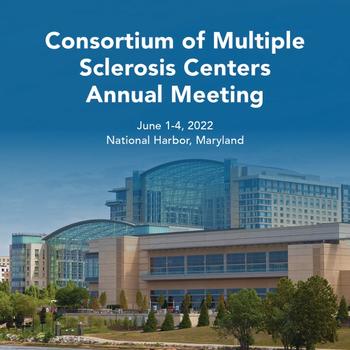
June Halper, MSN, APC-C, MSCN, FAAN, the chief executive officer of the Consortium of Multiple Sclerosis Centers, shared her perspective on what to expect from this year’s annual meeting, which takes place June 1-4, 2022, in National Harbor, Maryland.

Although neutropenic fever was common among patients, there was no significant difference between disease-modifying therapies, including those with long-lasting effects.

The director of the MedStar Georgetown Headache Center shared her clinical understanding of new therapies for migraine and how the paradigm shift in care has altered the experience for both patients and physicians.
The founder and chief medical officer of Omniscient Neurotechnology provided commentary on expanding the brain map, the use of advanced technology, and the need to familiarize clinicians with connectomics.
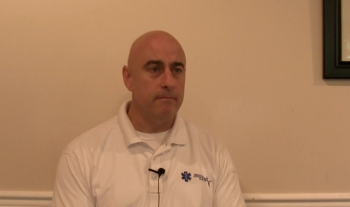
The executive director of the Bensalem Rescue Squad spoke specifically to how the MSU has shifted the paradigm of care that EMS can provide to individuals in the community. [WATCH TIME: 4 minutes]

The new ASA/AHA guidance, updating the prior 2015 publication, provides several significant recommendations and changes, including those for the use of antiseizure medications in patients with ICH.
In 2 pivotal trials, the agent showed statistically significant superiority over placebo at 2 hours on coprimary end points of pain freedom and freedom from the most bothersome symptom.
The assistant professor of neurology at The Ohio State University Wexner Medical Center provided insight on finding strategies to prevent neurodegeneration in multiple sclerosis. [WATCH TIME: 3 minutes]

In total, 14% of those on antiseizure medication who did not receive periconceptional folic acid experienced preterm birth compared with 5% of those with supplementation.

A year after the 2021 ASA/AHA stroke prevention guidelines were released, experts in the field shared some of the most notable changes to care, and the areas that still need to be addressed going forward.
The director of the Division of Movement Disorders at the USC Keck School of Medicine discussed the early reactions behind reflex tears as a potential biomarker for Parkinson disease. [WATCH TIME: 2 minutes]

Resective epilepsy surgery was generally associated with good outcomes regarding employment status, seizure reduction, and antiseizure medication reduction.

In total, 65% of those who self-discontinued treatment experienced further seizure recurrence, which led to a majority (84%) of patients restarting treatment.

The founder and chief medical officer of Omniscient Neurotechnology provided insight on the successes using connectomics, including the FDA approval of Quicktome, a digital brain mapping platform. [WATCH TIME: 4 minutes]

Here's what is coming soon to NeurologyLive®.

Despite good tolerability with few drug-related treatment emergent AEs and increased muscle volume, the failure to provide clinically relevant improvements in muscle function led to the discontinuation of ACE-083 for CMT in 2020.
Test your neurology knowledge with NeurologyLive®'s weekly quiz series, featuring questions on a variety of clinical and historical neurology topics. This week's topic is neuropathic disorders.

If approved, ABBV-951 would become the first subcutaneous delivery of levodopa and carbidopa, the gold standard for symptom management in Parkinson disease.
Neurology News Network for the week ending May 21, 2022. [WATCH TIME: 4 minutes]
Take 5 minutes to catch up on NeurologyLive®'s highlights from the week ending May 20, 2022.

The founder and chief medical officer of Omniscient Neurotechnology discussed the idea behind connectomics and how AI revolutionizes large-scale brain data. [WATCH TIME: 4 minutes]
Mind Moments®, a podcast from NeurologyLive®, brings you an exclusive interview with Matthew B. Harms, MD. [LISTEN TIME: 28 minutes]
The chief of emergency medical services at Jefferson Health shared his perspective on the first 2 years of the Jefferson MSU’s use and what takeaways he has gleaned from the experience. [WATCH TIME: 3 minutes]