

The chief medical officer of NeuroPace discussed the data provided by the company’s new nSight Platform for seizure-related outcome tracking, which also offers improved potential for patient monitoring.
The chief medical officer of NeuroPace discussed the data provided by the company’s new nSight Platform for seizure-related outcome tracking, which also offers improved potential for patient monitoring.

"Mind Moments," a podcast from NeurologyLive, brings you an exclusive interview with Adolfo Ramirez-Zamora, MD.
The results support continued development of tolebrutinib 60 mg in phase 3 trials for MS, based on the well-established relationship between reductions of Gadolinium-enhancing lesions and relapse rates.

Investigators found incobotulinumtoxinA treatment decreased unstimulated salivary flow rate and increased GICS ratings in children.
The director of Mayo Clinic Center for Multiple Sclerosis and Autoimmune Neurology discussed the most notable recent advances that has propelled care for patients with NMOSD.

The Swedish treatment strategy—one of mostly induction—was associated with a 24% reduction in the rate of reaching EDSS score of 3 and a 25% reduction in the rate of reaching an EDSS score of 4.

The principal investigator of the Alzheimer’s Disease Neuroimaging Initiative discussed a study published earlier this year, which aimed at identifying better ways to predict dichotomous Aß.
The toolkit’s assays contain several biomarkers, including Aß 1-42, Aß 1-40, α-syn, GFAP, IL-6, neurogranin, NfL, phosphotau181, S100B, sTREM2, total tau, and YKL-40.

The clinical research director of the UCSF Multiple Sclerosis Center shared his perspective on the history of clinical care for neuromyelitis optica spectrum disorder in light of 3 recent FDA approvals.
Investigators found that frequency of MOG-Ab associated NMOSD was not significantly different between Asian and Caucasian populations despite the prevalence of NMOSD in Asian regions.
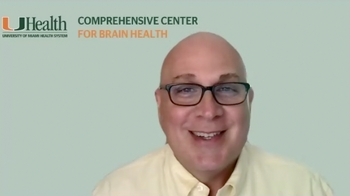
The director of the Comprehensive Center for Brain Health at the University of Miami Miller School of Medicine discussed the real-world level of dementia education and where it needs improvement.
The rate of patients demonstrating impairment on cognitive assessments such as CVLTII, BVMT-R, and SDMT significantly decreased after treatment with fingolimod at 5-year follow-up.

The chief medical officer of Wave Life Sciences outlined the FOCUS-C9 study, which has incorporated feedback from patients with both ALS and FTD, as well as investigators in the research field.

The director of the Cerebrovascular Center at Cleveland Clinic provided context on why stroke systems should incorporate IV tPA as early as possible to treat emergent large vessel occlusion.
The long-acting C5 complement inhibitor, developed by Alexion and approved for atypical hemolytic uremic syndrome and paroxysmal nocturnal hemoglobinuria (PNH), failed to show an effect on ALSFRS-R score.

A recent systematic review investigated the use of virtual reality as a therapeutic tool compared to conventional interventions, finding its use may improve quality of life, fatigue, and balance.
At weeks 54, 106, and 145, most of both age groups achieved treatment success on both the CGIC and PGIC, with numerically higher percentages observed in younger vs older participants.
Discussing the new platform, the chief medical officer of NeuroPace spoke on the potential to open and streamline patient-provider communication with the company’s nSight Platform and its RNS system.

For the primary end point, the 3 dose options atogepant (AbbVie) were associated with a reduction ranging from 3.9 to 4.2 days in the mean number of headache days per month for those with episodic migraine.
The director of the Comprehensive Center for Brain Health at the University of Miami Miller School of Medicine discussed employing the MoCA-T app as a means of cognitive screening in rural and ethnically diverse populations.

Coauthor and member of the American Academy of Sleep Medicine board of directors, Lynn Marie Trotti, MD, MSc, discussed key takeaways from the new guideline, which encompasses the first updates since 2007.

Lesions in the canalicular and intracranial optic nerve, area postrema, medulla, and cervical spinal cord were prominent in patients with aquaporin-4–NMOSD.

The innovative nonsurgical device has previously received market authorization to treat gait deficit due to mild-to-moderate symptoms from multiple sclerosis.
The full approval for BNT162b2 (Comirnaty; Pfizer/BioNTech) will afford physicians greater prescribing capability and is expected to play a role in driving workplace vaccine mandates.
The potential of a new investigational treatment for C9orf72-associated amyotrophic lateral sclerosis and frontotemporal could offer long-lasting effects for patients.
This NeurologyLive® Peers & Perspectives series features experts in the diagnosis and treatment of Alzheimer disease discussing the recent approval of aducanumab, its implications for Alzheimer disease, and other promising therapies and diagnostic technologies in development.
The director of the Cerebrovascular Center at Cleveland Clinic discussed areas within hospital care that need addressing to improve outcomes of patients with stroke.

Here's what is coming soon to NeurologyLive.
The director of the Center for Brain Health at Miami University Miller School of Medicine discussed how much influence people have on lowering their Alzheimer disease risk.
Michael Weiner, MD, professor of radiology and biomedical imaging, medicine, psychiatry, and neurology at the University of California–San Francisco, discussed the findings of a systematic review aimed at evaluating models that predict dichotomous Aß.