

Findings from STROKE 2018 revealed sICH was more likely with right hemispheric patients post-alteplase infusion.
Findings from STROKE 2018 revealed sICH was more likely with right hemispheric patients post-alteplase infusion.

Haeberlein spoke about a number of topics in the Alzheimer space, including the progress that has been made and her excitement for the future.
Stephen D. Silberstein, MD, discussed the powerful impact that the new class of CGRP inhibitors is beginning to have on migraine.

The 2 anti-Aβ monoclonal antibodies, in treatment for Alzheimer disease, are currently being tested in 2 phase III trials.

The phase IIb/III study is scheduled to initiate enrollment of approximately 450 patients, randomized 1:1:1 to 2 different ANAVEX 2-73 doses or placebo.

Michael J. Thorpy, MBChB, spoke about solriamfetol’s success and the possibility of it treating other sleep conditions.
The use of DBS in early Parkinson could slow rest tremor progression in patients.
The professor of psychiatry in neurology at the Gertrude H. Sergievsky Center at Columbia University Medical Center spoke about the possibility of using lithium for agitation in Alzheimer.

Higher doses of gantenerumab, a monoclonal antibody designed to bind to aggregated Aβ and remove beta plaques, will be investigated in phase III trials.

This guideline gives recommendations to improve diagnosis, health outcomes and care of individuals with prolonged disorders of consciousness.

The human recombinant monoclonal antibody is designed to increase progranulin levels to sustain neuron survival and moderate inflammation.

Hospitals participating in the Get With The Guidelines-Stroke program provided patients with more evidence-based interventions but highlighted a gap in intervening practices.

The senior lecturer in Clinical Pharmacy at Aston University talked about issues facing the medical community in treating those with dementia who have sleep problems.

The results conclude that treatment with crenezumab was associated with a consistent decrease in Aβ oligomer levels in the CSF.

The professor of age-related diseases and Dean of the University of Exeter Medical School provided insight into the safety and efficacy of pimavanserin studied in treatment for Alzheimer psychosis.

After a 2-year blinded extension of the RADIANCE trial, ozanimod revealed sustained efficacy in both patients who continued treatment and those who switched from placebo.

In patients with minor ischemic stroke or TIA, the 90-day risk of major ischemic events can be lowered with combination clopidogrel and aspirin compared to only aspirin but slightly raises the risk of major hemorrhage.
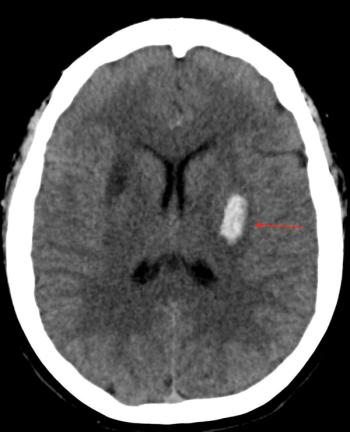
A 39-year-old male with a past medical history of hypertension and depression woke up with a severe headache, difficulty speaking, and right-sided weakness. Read the case details here.
This technology offers a non-invasive, image-guided and reversible approach to blood-brain barrier, suggesting the possibility of its use in Alzheimer disease.

The once-daily 15-mg dose resulted in a significant 12-week improvement for patients with the rare condition.

The subcutaneous infusion resulted in 1.89 fewer hours per day spent in “off” periods compared to placebo.

The senior lecturer in Clinical Pharmacy at Aston University spoke about the findings of the ZED study, which looked into the use of hypnotic z-drugs.
ANAVEX 2-73 is being studied as the first potential precision medicine biomarker-guided, targeted therapeutic in Alzheimer disease.

Nine of 10 patients with chronic inflammatory demyelinating polyneuropathy may benefit from a regimen of pulsed corticosteroids followed by intravenous immunoglobulin.

IONIS-HTT Rx is the first and only drug to demonstrate reduction of mutant huntingtin protein in patients.

The professor of neurology provided insight into the field of deep brain stimulation and how Abbott's recent FDA approval is a solid step forward.

A 36-year-old male presents with new-onset tremors of the hands. He is a project manager at a small company, and he is increasingly self-conscious about his condition that is getting worse at his high-stress job.

The director of the University of Rochester Alzheimer's Disease Care, Research and Education Program spoke about the need to rethink trial design and Alzheimer neuropsychiatric symptom management.

BAN2401 produced a dose-dependent substantial reduction in brain amyloid plaque at the highest dose, resulting in subjects converting to amyloid negative.

Abbott’s Infinity Deep Brain Stimulator now allows for performance of MRI on patients with Parkinson or essential tremor with the system implanted.