
Nestor Galvez-Jimenez, MD, a neurologist at Baptist Health Miami Neuroscience Institute, discussed how advancements have changed the landscape of care for patients living with spinal muscular atrophy.
Nestor Galvez-Jimenez, MD, a neurologist at Baptist Health Miami Neuroscience Institute, discussed how advancements have changed the landscape of care for patients living with spinal muscular atrophy.
The chief medical executive at Marcus Neuroscience Institute discussed the evolving role of AI, advanced imaging, and precision therapeutics in neurology presented at Baptist Health’s 2026 Brain & Spine Symposium. [WATCH TIME: 5 minutes]
In honor of Stroke Awareness Month, neurologist Firas Bounni, MD, discussed how advanced neuroimaging can guide thrombectomy decision-making beyond standard treatment windows.
A duo of Baptist Health experts discussed emerging evidence suggesting that hormonal factors, sex-based clinical differences, and social roles contribute to distinct experiences for women with Parkinson disease.
The director of neuromuscular medicine at Marcus Neuroscience Institute shared findings from an analysis presented at MDA 2026 that compared real-world infection rates associated with generalized myasthenia gravis therapies. [WATCH TIME: 8 minutes]
The director of the Neurology Residency Program at the Marcus Neuroscience Institute talked about the role of research, patient empowerment, and expanding treatment options in multiple sclerosis. [WATCH TIME: 5 minutes]
The director of the Neurology Residency Program at the Marcus Neuroscience Institute discussed the importance of early recognition of invisible symptoms in comprehensive multiple sclerosis care. [WATCH TIME: 9 minutes]
Constance V. Katsafanas, DO, director of the Neurology Residency Program at the Marcus Neuroscience Institute, highlighted the importance of individualized treatment strategies in multiple sclerosis.
The director of the Neurology Residency Program at the Marcus Neuroscience Institute detailed the importance of tailoring treatment to patients with multiple sclerosis. [WATCH TIME: 5 minutes]
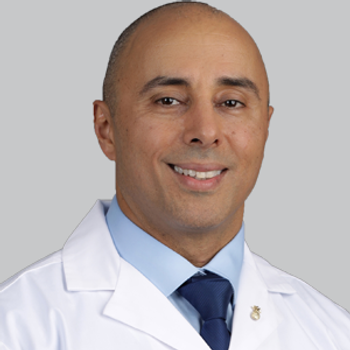
Baptist Health Brain & Spine enhances its neurology leadership with Peter Abdelmalik, MD, focusing on patient care, education, and operational efficiency.
Brad Racette, MD, FAAN, the Kemper and Ethel Marley Chair for Neurology at Barrow Neurological Institute, discussed his keynote lecture on the neurologic health effects of electric vehicles and the global implications of environmental exposure.
A physician assistant who specializes in neurology previewed her upcoming presentation on evaluating patients with headache at the 2025 Baptist Miami Neuroscience Symposium.
In this final episode, Drs. Snelling and De Los Rios share lessons from building a coordinated, multi-hospital stroke system and how network integration improves speed, access, and outcomes. [WATCH TIME: 3 minutes]
In episode 4, neurologists Brian Snelling, MD, and Felipe De Los Rios, MD, discuss how stroke recovery and secondary prevention have evolved, highlighting new therapies, combination strategies, and the complexities of real-world implementation. [WATCH TIME: 4 minutes]
The conversation centers around the pursuit of effective neuroprotective agents in stroke, the challenges of clinical trial design, and what could make future therapies succeed. [WATCH TIME: 5 minutes]
In episode 2, a pair of stroke neurologists explore how artificial intelligence is accelerating stroke detection, streamlining workflows, and redefining collaboration in modern stroke care. [WATCH TIME: 4 minutes]
In this kickoff episode, Drs. Brian Snelling, MD, and Felipe De Los Rios, MD, discussed how evolving evidence continues to expand mechanical thrombectomy eligibility, from extended time windows to large-core and medium-vessel occlusions. [WATCH TIME: 6 minutes]
The codirector of interventional neuroradiology at Baptist Health's Neuroscience Institute, outlined a pragmatic, anatomy-first approach to aneurysm care, balancing endovascular options against open surgery and ways to tailor decision-making. [WATCH TIME: 3 minutes]
The co-director of interventional neuroradiology at Baptist Health Miami Neuroscience Institute discussed decision-making for ruptured and unruptured aneurysm, endovascular and open outcomes, and training priorities for modern cerebrovascular care.
Dionne Morgan, MD, a sleep medicine physician at Baptist Health Miami Cardiac & Vascular Institute, provided commentary on World Narcolepsy Day, highlighting challenges in diagnosis and treatment, evolution in therapeutics, and combating comorbidities.
Seif Elbualy, MD, discusses his role at the Brain and Spine Symposium and shares insights on the future of interventional pain management, evolving techniques, and pharmaceutical innovation.
Luis Tornes, MD, a neurologist and director of Baptist Health’s Epilepsy Program, provided clinical insights on raising awareness for Purple Day, a global initiative dedicated for patients and families with epilepsy.
A pair of lead neurologists at Baptist Health South Florida provided commentary on some of the promising developments expected to emerge in neurology over the coming months.
Robert Rothrock, MD, a spinal neurosurgeon at Baptist Health Miami Neuroscience Institute, provided commentary on key topics in spine health amid the 2025 Baptist Health Spine Symposium.
Italo Linfante, MD, director of interventional neuroradiology at Baptist Health Miami Neuroscience Institute, discussed the importance of brain aneurysms in the context of neurology.
Diego Torres-Russotto, MD, chair of neurology at Baptist Health Miami Neuroscience Institute, discussed the Miami Neuroscience Symposium’s focus on addressing the community’s neurological needs, balancing content delivery and fostering multidisciplinary collaboration.
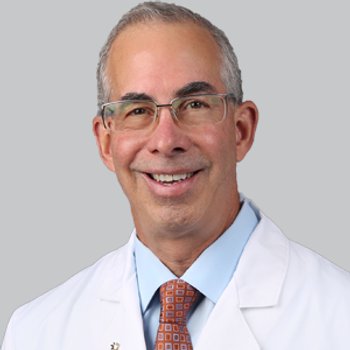
Michael McDermott, MD, chief medical executive at Baptist Health Miami Neuroscience Institute, gave greater insights on the institute’s annual symposium, which offers attendees updates in cutting-edge imaging, surgical techniques, and neurocognitive research.
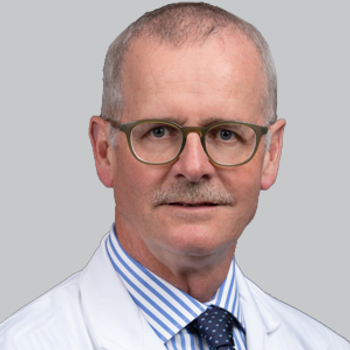
Michael McDermott, MD, chief medical executive at Baptist Health Miami Neuroscience Institute, gave greater insights on the institute’s annual symposium, which offers attendees updates in cutting-edge imaging, surgical techniques, and neurocognitive research.
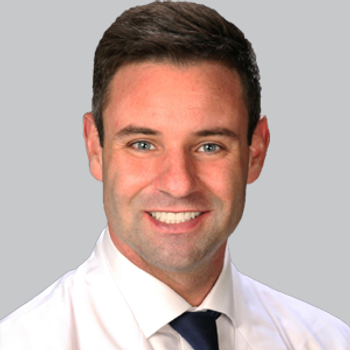
Tim Miller, MD, director of functional neurosurgery at the Marcus Neuroscience Institute, Baptist Health, provided commentary on the use of HIFU as a non-invasive treatment for patients with essential tremor and specific types of Parkinson disease.
Tanya, a patient who lost her mobility due to undiagnosed spinal issues, discussed her life-saving surgery for spinal meningioma, and the complex surgical process she underwent to regain her strength.