The director of the MedStar Georgetown Headache Center talked about recognizing the struggles of patients with migraine disorders and the importance of bringing awareness of available treatments to this patient population. [WATCH TIME: 5 minutes]

The director of the MedStar Georgetown Headache Center talked about recognizing the struggles of patients with migraine disorders and the importance of bringing awareness of available treatments to this patient population. [WATCH TIME: 5 minutes]

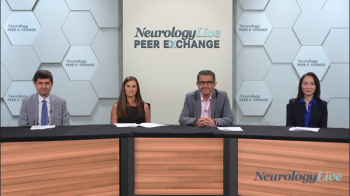
The expert panel examines the evolution of moderate to severe spasticity following injury or insult, focusing on alterations in joint mobility, changes in range of motion from early to later stages, and other progressive manifestations of the condition.

Khashayar Dashtipour, MD, PhD; Francois Bethoux, MD; Jennifer Smith, PA, and Ye Vivian Liang, MD, PhD offer a comprehensive examination of the underlying mechanisms and physiological processes involved in spasticity.

The panelists explore diagnostic methods for differentiating between mild and moderate multiple sclerosis (MS) while also examining prognostic factors, the role of imaging, and the concept of brain reserve in mild MS cases.

Key opinion leaders provide insights into the prevalence and incidence of clinically isolated syndrome (CIS) within their clinical practice.

The director of the Headache Center at Allegheny Health Network talked about the evolution of migraine treatments and highlighted the importance of personalized medicine for patients living with this disabling condition. [WATCH TIME: 10 minutes]

In this conversation, Negroski provides commentary on the role of lymphocyte counts and specifically a study evaluating changes in these counts for patients switching between dimethyl and diroximel fumarates.

Donald Negroski, MD, shared thoughts on retrospective data assessing patients with multiple sclerosis who switched from S1P-modulating agents to ozanimod, another approved disease-modifying therapy.

The clinical research director of the UCSF Multiple Sclerosis Center discussed findings from the end-of-study analysis assessing inebilizumab which revealed a significant reduction in attack rates among patients with NMOSD over time. [WATCH TIME: 3 minutes]

The pediatric neurologist and sleep medicine specialist at Geisinger Medical Center provided commentary on the complexities with treating cataplexy, and the misperceptions patients may have about how to manage their condition. [WATCH TIME: 3 minutes]

Key opinion leaders (KOLs) address the challenges and obstacles associated with transitioning patients from pediatric to adult care as they age out of the pediatric system, offering valuable insights and strategies for successfully navigating this process.

Leading medical professionals specializing in spinal muscular atrophy (SMA) discuss the common clinical presentations of undiagnosed or newly diagnosed adult patients, highlighting crucial signs and symptoms that healthcare providers should recognize.

The director of The McCasland Family Comprehensive Headache Center talked about findings from a study that explored the effect of eptinezumab treatment in a broader chronic migraine population. [WATCH TIME: 6 minutes]

The assistant professor of neurology at UCSF Weill Institute for Neurosciences talked about a study that explored the use of commercial wearable devices to monitor and manage bladder dysfunction in multiple sclerosis. [WATCH TIME: 6 minutes]

Neurology News Network. for the week ending June 15, 2024. [WATCH TIME: 4 minutes]

The director of the Center for Sleep and Cardiovascular Outcomes Research at University of Pittsburgh talked about a novel pharmacologic treatment that shows potential as an alternative to continuous positive airway pressure for sleep apnea. [WATCH TIME: 5 minutes]

The assistant professor of neurology at Cleveland State University provided perspective on an early-stage study assessing the impacts of a functional electrical stimulation approach to treat gait problems in multiple sclerosis. [WATCH TIME: 4 minutes]

The director of Mission Delivery and Program Development for the Multiple Sclerosis Association of America provided perspective on a study presented at CMSC 2024 highlighting factors that play a role in access to resources and healthcare for patients with MS. [WATCH TIME: 3 minutes]

The pediatric neurologist and sleep medicine specialist at Geisinger Medical Center discussed a presentation from SLEEP 2024 highlighting the impacts of narcolepsy and how patients try to mitigate their symptoms. [WATCH TIME: 5 minutes]

The president and CEO at Alzheon talked about the recent discoveries made in understanding the pathology of Alzheimer disease and the development of innovative therapies to potentially set the stage for more effective care. [WATCH TIME: 12 minutes]

The clinical research director of the UCSF Multiple Sclerosis Center provided an overview of the phase 2/3 N-Momentum study assessing the efficacy of inebilizumab in patients with neuromyelitis optica spectrum disorder. [WATCH TIME: 5 minutes]

The professor of neurology at Stony Brook Medicine talked about the diagnosis of primary progressive multiple sclerosis, a unique MS phenotype characterized by a gradual deterioration without initial attack. [WATCH TIME: 5 minutes]

Panelists examine the natural history of spinal muscular atrophy (SMA), assessing the characteristic indicators of motor function deterioration and the loss of ambulatory abilities as patients advance in age.

Key opinion leaders offer a concise summary of the clinical characteristics and classifications of spinal muscular atrophy (SMA), emphasizing the distinctive features observed in adult patients with SMA.

The assistant professor at Hunter College emphasized the important role of localization and accurately identifying the origin of neurological symptoms when diagnosing and managing multiple sclerosis. [WATCH TIME: 7 minutes]

Neurology News Network. for the week ending June 9, 2024. [WATCH TIME: 4 minutes]

The professor of neurology at the University of Virginia talked about the improvement and areas of unmet need in the diagnosis and treatment for neuromyelitis optica spectrum disorder. [WATCH TIME: 6 minutes]

The associate vice president of research at National MS Society talked about proactive and early referral to rehabilitation services to effectively manage multiple sclerosis symptoms from the outset. [WATCH TIME: 4 minutes]

The pediatric neurologist at the University of California, Davis, provided perspective on some of the mechanistic links between sleep and neurodevelopmental disorders. [WATCH TIME: 3 minutes]

Sharon Cohen, MD, and Marwan Sabbagh, MD, share their final thoughts on Alzheimer's disease and offer advice on strategies to reduce the risk of developing AD and slow the progression of the disease for those already affected.