
Drs Obeidat and Okai, 2 MS experts, discuss impact of relapsing-remitting multiple sclerosis (RRMS) on the quality of life of patients and caregivers.
Drs Obeidat and Okai, 2 MS experts, discuss impact of relapsing-remitting multiple sclerosis (RRMS) on the quality of life of patients and caregivers.
Episode 21 of the AUPN Leadership Minute features Alissa Willis, MD, of University of Mississippi Medical Center; and Michael Dobbs, MD, MHCM, of University of Texas at Rio Grand Valley. [WATCH TIME: 5 minutes]
The director of the Division of Movement Disorders at the USC Keck School of Medicine discussed the efforts needed to validate tears as a biomarker in patients who don’t present with typical Parkinson disease. [WATCH TIME: 4 minutes]
Sait Ashina, MD, reviews current AHS (American Headache Society) treatment recommendations for the acute and preventive treatment of migraine.
Dr Julio R. Vieira defines acute versus preventive treatment for migraine and highlights the differences in goals of therapy for each.
Margaret Park, MD, and Russell Rosenberg, PhD, DABSM, provide clinical pearls and the future treatment landscape for the management of narcolepsy.v
Drs Margaret Park and Russell Rosenberg share considerations for the use of solriamfetol, lower-sodium oxybate, and pitolisant in narcolepsy for various patient populations.
The chief executive officer of the Child Neurology Foundation provided insight on the ongoing efforts to make children with neurological conditions feel inclusive in today’s society. [WATCH TIME: 3 minutes]
The assistant professor of neurology and director of the Parkinson’s Disease & Movement Disorder Program at Global Neurosciences Institute discussed the need to understand the chemical markers that trigger nonmotor symptoms of Parkinson disease. [WATCH TIME: 3 minutes]
The director of the Division of Movement Disorders at the USC Keck School of Medicine provided insight on the next steps in how we can expand on tears as a valuable biomarker for neurodegenerative diseases. [WATCH TIME: 4 minutes]
The chief executive officer of the Child Neurology Foundation discussed the need to change conversations about children living with neurological disorders and creating more healthy environments for them. [WATCH TIME: 4 minutes]
Neurology News Network for the week ending May 7, 2022. [WATCH TIME: 4 minutes]
The neuropathologist at Mount Sinai and chief science officer of Precise Dx pairing spoke to the role of artificial intelligence in the diagnosis of diseases from peripheral tissue biopsies and its ability to improve neuropathology. [WATCH TIME: 8 minutes]
The director of the Division of Movement Disorders at the USC Keck School of Medicine commented on the potential of reflex tears as a critical biomarker of Parkinson disease. [WATCH TIME: 6 minutes]
The neuropathologist at Mount Sinai and chief science officer of Precise Dx pairing shared background information on the artificial intelligence’s ability to improve the diagnosis of Parkinson disease from peripheral tissue biopsies. [WATCH TIME: 9 minutes]
The president of the National Headache Foundation discussed whether switching or continuing preventive medications has a benefit in patients who have chronic migraine with medication overuse. [WATCH TIME: 4 minutes]
The neurologist at Christus St. Vincent Health System detailed the areas of research dedicated to understanding more about neuropsychiatric symptoms of Parkinson disease and the root causes of the disease. [WATCH TIME: 3 minutes]
Sait Ashina, MD, and Jessica Ailani, MD, comment on the importance of individualized treatment regimens for the management of migraine.
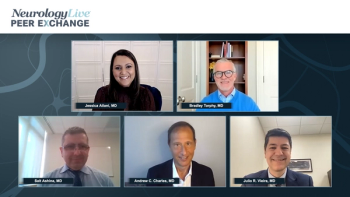
Experts in neurology, Drs Julio R. Vieira, Jessica Ailani, and Bradley Torphy review diagnostic tools available for migraine, including patient use of headache diaries.
Key opinion leaders in sleep medicine discuss the pitolisant studies and their experience using the drug in clinical practice.
Margaret Park, MD, and Russell Rosenberg, PhD, DABSM, provide insight on novel FDA-approved treatment options and their impact on the narcolepsy treatment landscape.
The assistant professor of neurology and director of the Parkinson’s Disease & Movement Disorder Program at Global Neurosciences Institute provided insight on how technology expands the capabilities of treating Parkinson disease. [WATCH TIME: 3 minutes]
The professor of neurology at the University of Basel provided insight on a new methodology that allows depiction of patient profiles from baseline characteristics and their associations with individual outcomes. [WATCH NOW: 5 minutes]
The neurologist at Christus St. Vincent Health System provided insight on the desperate need for new medications for both motor and nonmotor symptoms of Parkinson disease. [WATCH TIME: 3 minutes]
Neurology News Network for the week ending April 30, 2022. [WATCH TIME: 4 minutes]
The assistant professor of neurology and director of the Parkinson’s Disease & Movement Disorder Program at Global Neurosciences Institute provided insight on the areas of focus during Parkinson Awareness Month. [WATCH TIME: 3 minutes]
The neurologist at Christus St. Vincent Health System provided commentary on the importance of emphasizing social connectedness following diagnosis of Parkinson disease, along with the signs to look for in social isolation. [WATCH TIME: 4 minutes]
Jessica Ailani, MD, and Bradley Torphy, MD, discern the signs of migraine and comment on the importance of ensuring accurate diagnosis for patients.
Drs Bradley Torphy and Julio R. Vieira share insight on approaching the diagnosis of migraine as well as current challenges in diagnosis.
Margaret Park, MD, leads the discussion on setting and managing patient expectations for treatment in narcolepsy.