
The assistant professor of neurology at the Icahn School of Medicine at Mount Sinai provided an overview of a session on exercise and migraine presented at the 2024 Scottsdale Headache Symposium. [WATCH TIME: 5 minutes]
The assistant professor of neurology at the Icahn School of Medicine at Mount Sinai provided an overview of a session on exercise and migraine presented at the 2024 Scottsdale Headache Symposium. [WATCH TIME: 5 minutes]
A panelist discusses how comparing hospitalization rates, relapse risks, and safety considerations between rituximab and other NMOSD therapies, such as complement inhibitors, can provide valuable insights to guide treatment decisions, manage healthcare costs, and optimize patient quality of life.
Neurology News Network. for the week ending November 30, 2024. [WATCH TIME: 4 minutes]
John Michael Schreiber, MD, describes how he counsels and educates caregivers about the potential benefits and limitations of genetic testing, detailing his approach to educating them before testing, how he guides them in interpreting results and transitioning to clinical management afterward, and the role of genetic counseling, including when to refer to a genetic specialist; he also provides key takeaways on the role and value of genetic testing for pediatric epilepsy and discusses how providers should utilize next-generation sequencing (NGS) moving forward.
The pediatric neurologist at Duke Health and chief executive officer at Theranica talked about a remote electrical neuromodulation wearable that showed promising results for the treatment and prevention of migraine in pediatric patients. [WATCH TIME: 5 minutes]
The cofounder and chief science officer of the Alzheimer's Drug Discovery Foundation highlighted the critical role of collaboration and innovative diagnostics for advancing Alzheimer disease care. [WATCH TIME: 4 minutes]
The professor of neurology at the University of Pennsylvania Perelman School of Medicine provided clinical insight on a long-term safety analysis of omaveloxolone, the first FDA-approved treatment for Friedreich ataxia. [WATCH TIME: 4 minutes]
A panelist discusses how when treating NMOSD, neurologists should consider the patient's clinical characteristics, safety profiles, administration requirements, and cost-effectiveness when selecting between FDA-approved therapies such as eculizumab, inebilizumab, satralizumab, ravulizumab, and rituximab. Shared decision-making is crucial, involving close collaboration between the healthcare team and the patient to develop a personalized treatment plan that considers the patient's overall well-being.
The vice chair of the American Academy of Sleep Medicine’s Clinical Practice Guidelines Task Force provided in-depth insight on the most noted changes to the 2024 RLS guidelines clinicians should be aware of. [WATCH TIME: 9 minutes]
Neurology News Network. for the week ending November 23, 2024. [WATCH TIME: 4 minutes]
The professor of neurology and radiology at University of California, San Francisco, discussed the potential of blood-based biomarkers in Alzheimer treatment eligibility, highlighting current limitations and the importance of safety monitoring. [WATCH TIME: 7 minutes]
The neurologist in the Headache Center at Cleveland Clinic shared her post perspective on the 2024 AHS Scottsdale meeting which highlighted advancements in headache medicine and the growing impact of the field on patient care. [WATCH TIME: 5 minutes]
John Michael Schreiber, MD, describes the benefits of genetic testing for pediatric epilepsy diagnoses, noting the challenges associated with interpreting test results, and highlights key differences between genetic tests and their implications for clinical decisions, discussing how a genetic diagnosis can inform and guide epilepsy treatment.
The epilepsy specialist and Cleveland Clinic’s Chief Research and Information Officer discussed the wide-spread applicability of scalp EEG and the potential for machine learning models to help predict epilepsy surgery outcomes. [WATCH TIME: 4 minutes]
The dean and chief academic officer at the University of Miami Miller School of Medicine discussed the university’s investment in computational biology to advance aging and neuroscience research. [WATCH TIME: 5 minutes]
The professor in residence at UCLA Health discussed the critical considerations when deciding appropriate patients for gene therapies, specifically AAV vectors, in treating muscular dystrophies. [WATCH TIME: 4 minutes]
Michael Levy, MD, PhD, discusses how Aquaporin-4 IgG-seropositive neuromyelitis optica spectrum disorder (AQP4-IgG+ NMOSD) is a rare autoimmune condition affecting the central nervous system. Anti-CD20 therapies, particularly rituximab, have led to increased relapse rates.
The professor in residence at UCLA Health provided clinical insight on the limitations of certain gene therapy vehicles for muscular dystrophies, and the need for better vectors that are more myotropic. [WATCH TIME: 3 minutes]
The William S. and Lois Stiles Edgerly Professor of Neurology at Yale School of Medicine talked about the ongoing evolution of multiple sclerosis diagnostic criteria and the importance of comprehensive testing to guide early intervention and improve outcomes. [WATCH TIME: 5 minutes]
Neurology News Network. for the week ending November 9, 2024. [WATCH TIME: 4 minutes]

The doctor of nursing practice specialized in movement disorders discussed specific data the StrivePD app captures and how it can enhance quality of life for patients with Parkinson disease. [WATCH TIME: 3 minutes]
John Michael Schreiber, MD, expands on the role of genetic testing in identifying and diagnosing epilepsy, discussing when it is clinically indicated and who should receive it, while also addressing key considerations for selecting tests for pediatric patients based on individual presentations and clinical factors, and outlining how to choose the best testing options while recognizing potential barriers and expectations for health care providers, caregivers, and patients before and after testing.
The epilepsy specialist and Cleveland Clinic’s Chief Research and Information Officer provided clinical background on a promising study employing a machine learning algorithm to predict post-operative seizure outcomes using a peri-ictal scalp EEG. [WATCH TIME: 6 minutes]
The senior scientist at Sunnybrook Research Institute in Toronto, Ontario, provided clinical insight on the advantages of a flipped classroom, and why neurology educators should consider this approach. [WATCH TIME: 2 minutes]
The doctor of nursing practice specialized in movement disorders provided clinical insight on how the StrivePD application empowers patients with Parkinson disease to track symptoms, medication, and daily activities using an iPhone and Apple Watch. [WATCH TIME: 3 minutes]
The consultant neurologist and senior lecturer at St. Georges Hospital in London, explores the origins of common neuropsychiatric symptoms experienced by patients with Parkinson disease and how they may be exasperated. [WATCH TIME: 4 minutes]
The professor of neurology and radiology at University of California, San Francisco talked about how the new appropriate use recommendations of donanemab aims to safely integrate this anti-amyloid antibody into the clinical practice. [WATCH TIME: 7 minutes]
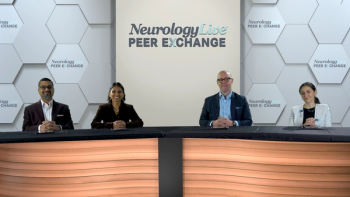
Panelists discuss how a multidisciplinary approach involving various specialists is crucial in managing generalized myasthenia gravis (gMG), offering final insights and recommendations for health care professionals treating gMG patients.
Panelists discuss how recent data presented at the 2024 American Association of Neuromuscular and Electrodiagnostic Medicine (AANEM) conference may impact clinical practice for myasthenia gravis, highlighting emerging treatments they find particularly promising for future management of the condition.

Despite advances in understanding and treating Long COVID, many questions about its mechanisms, susceptibility, and varied recovery patterns remain unresolved, underscoring the need for continued research.