
The assistant professor of neurology and neurosurgery at McGill University discussed the role of paramagnetic rim lesions as potential biomarkers of compartmentalized inflammation in MS. [WATCH TIME: 4 minutes]
The assistant professor of neurology and neurosurgery at McGill University discussed the role of paramagnetic rim lesions as potential biomarkers of compartmentalized inflammation in MS. [WATCH TIME: 4 minutes]
The founder and executive director of the Sumaira Foundation talked about how the landscape of NMOSD treatment has drastically improved with FDA-approved therapies, while noting that accessibility and awareness remain significant challenges. [WATCH TIME: 4 minutes]
The assistant professor of medicine at the University of Toronto talked about emerging research on how prodromal symptoms may aid in the early identification of multiple sclerosis and neuromyelitis optica spectrum disorder. [WATCH TIME: 6 minutes]
At the 2025 ACTRIMS Forum, the assistant professor of neuroimmunology at McGill University talked about examining immune cell signatures to track disease worsening in multiple sclerosis. [WATCH TIME: 4 minutes]
The autoimmune neurology program director at the University of Colorado highlighted the potential of CAR T-cell therapy for treating autoimmune neurologic diseases like progressive forms of multiple sclerosis. [WATCH TIME: 3 minutes]
Neurology News Network. for the week ending March 1, 2025. [WATCH TIME: 3 minutes]
The autoimmune neurology program director at the University of Colorado talked about the emerging use of CAR T-cell therapy, a breakthrough from oncology, now being explored in autoimmune neurologic diseases like multiple sclerosis. [WATCH TIME: 3 minutes]

The vice president and senior global program lead for Hematology and Cell Therapy at BMS provided an overview behind the mechanism and early phase 1 data of BMS-986353 in various forms of multiple sclerosis. [WATCH TIME: 4 minutes]
The staff neurologist at the Mellen Center for Multiple Sclerosis at Cleveland Clinic discussed how the CALLIPER trial’s lower proportion of patients with gadolinium-enhancing lesions mirrors clinical practice more closely than other progressive MS trials. [WATCH TIME: 2 minutes]
The staff neurologist at the Mellen Center for Multiple Sclerosis at Cleveland Clinic discussed key insights into patient characteristics and lesion differences of the CALLIPER Trial in retrospect to other studies. [WATCH TIME: 4 minutes]
The executive vice president of research at National MS Society talked about how advancements in the field of neurology are shaping new approaches to diagnosing, monitoring, and treating multiple sclerosis. [WATCH TIME: 5 minutes]
The executive vice president of research at National MS Society discussed the role of compartmentalized inflammation, microglial interactions, and emerging therapeutic targets in multiple sclerosis. [WATCH TIME: 4 minutes]
The neurooncologist from the University of California Los Angeles provided clinical insight on the impact of a new treatment option for adults and children with neurofibromatosis type 1 that are not amenable to complete surgical resection. [WATCH TIME: 2 minutes]
A physician assistant specializing in Parkinson disease discussed advancements in neurology aimed at enabling personalized treatment, continuous monitoring, and improved disease management. [WATCH TIME: 4 minutes]
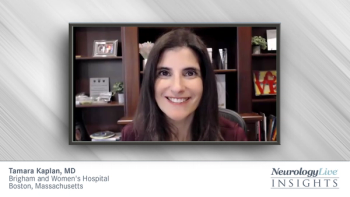
Panelist discusses how a detailed patient history is critical for neurological lesion localization, helping physicians map symptoms to specific anatomical regions. Key bladder-related history focuses on urinary urgency, frequency, retention, and incontinence patterns, as these symptoms often indicate specific spinal cord or brain lesion locations that affect autonomic function.
The John David Eaton Chair in Multiple Sclerosis at the University of Toronto gave clinical insights on emerging, innovative tracks at the 2025 ACTRIMS Forum and how these sessions align with recent trends in the multiple sclerosis field. [WATCH TIME: 4 minutes]
The associate professor in pain management and emergency medicine at UC San Diego shared her reaction to the FDA approval of suzetrigine, a selective, nonaddictive alternative to opioids for acute pain management. [WATCH TIME: 4 minutes]
The associate professor of neurology at Columbia University provided commentary on the rapid advancements in translating genetic research into ALS treatments and the challenges that remain. [WATCH TIME: 5 minutes]
The director of the Cerebrovascular Center at Mount Sinai discussed how results from the ESCAPE-MeVO trial highlight the impact of anesthesia rates, thrombectomy techniques, and the need for rigorous clinical trials to minimize bias. [WATCH TIME: 3 minutes]
Neurology News Network. for the week ending February 23, 2025. [WATCH TIME: 3 minutes]

The president of the American Heart Association discussed how precision medicine, advanced imaging, and expanded treatment windows are transforming stroke care, as displayed at ISC 2025. [WATCH TIME: 5 minutes]
The professor of neurology at the Geisel School of Medicine at Dartmouth talked about how the combination therapy involving meloxicam and rizatriptan may provide a more effective approach to treating migraine. [WATCH TIME: 6 minutes]
The pediatric neurologist at Children’s Hospital of Philadelphia provided background on a notable track session at the upcoming MDA Clinical & Scientific Conference covering updates in gene therapy for neuromuscular conditions. [WATCH TIME: 4 minutes]
The assistant professor in the neurology department at the University of Utah in Salt Lake City discussed the importance of addressing broader quality-of-life measures in patients with NMOSD beyond just preventing relapses. [WATCH TIME: 3 minutes]
The director of the Montefiore Headache Center at Albert Einstein College of Medicine provided an overview of the drug profile for the recently approved migraine treatment AXS-07. [WATCH TIME: 3 minutes]
The associate professor of neurology at Columbia University gave clinical insight on what neurologists and other neuromuscular specialists can expect from the ALS/frontotemporal dementia track at this year’s MDA Clinical & Scientific Conference. [WATCH TIME: 3 minutes]
The president of the American Heart Association provided post-conference commentary on the advances shaping stroke care and excitement behind this year’s International Stroke Conference. [WATCH TIME: 3 minutes]
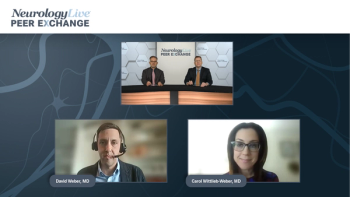
Experts discuss the future of Duchenne care, emphasizing proactive management, multidisciplinary collaboration, and the need for adult-focused treatment strategies.
The Lillehei professor in stem cell and regenerative cardiovascular medicine at the University of Minnesota talked about the potential of investigating inducted pluripotent stem cells in neuromuscular diseases at MDA’s 2025 conference. [WATCH TIME: 8 minutes]
Experts discuss the evolving landscape of Duchenne muscular dystrophy management, emphasizing the need for effective therapies and improved quality of life.