
Commentary|Videos|June 6, 2026
A Call for Greater Education in Stem Cell Therapies
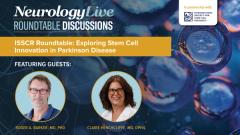
In this final episode, Roger Barker, MD, PhD, and Claire Henchcliffe, MD, DPhil, discuss why neurologists should stay informed on stem cell medicine and the broader implications of regenerative therapies across neurology.
Advertisement
Episodes in this series
Stem cell medicine is poised to influence an increasing number of neurologic diseases in the years ahead. While Parkinson disease has emerged as one of the leading areas for cell replacement research, similar regenerative and cell-based approaches are being explored across a broad range of neurologic conditions, creating a growing need for clinician education and familiarity with these evolving therapeutic strategies.
To help meet that need, the International Society for Stem Cell Research (ISSCR), in collaboration with Harvard Medical School, recently launched an educational course on stem cell medicine in Parkinson disease. Designed for clinicians and healthcare professionals, the program provides an evidence-based overview of stem cell science, therapeutic development, clinical trials, and patient counseling considerations, while also serving as a foundation for understanding how these technologies may shape the future of medicine.
In the final episode of this NeurologyLive® Roundtable Discussion series, Roger Barker, MD, PhD, professor of clinical neuroscience at the University of Cambridge, and Claire Henchcliffe, MD, DPhil, professor of neurology at the University of California, Irvine, reflect on the broader value of the course and why clinicians across neurology should engage with stem cell education. The discussion highlights the growing relevance of regenerative medicine, the importance of providing patients with informed guidance, and the potential impact of stem cell-based therapies beyond Parkinson disease.
Transcript edited for clarity.
Roger Barker, MD, PhD: I would say this is a great course to update yourself on where dopamine cell therapies are with respect to Parkinson disease. Even if you're not personally interested in the topic, I can tell you that your patients and their families are.
Having a resource that you can turn to and quickly obtain an up-to-date, realistic account of where these therapies currently stand is something everybody should take advantage of. We should be doing this across all areas of neurology. We should all be keeping ourselves up to date in every aspect of the conditions we manage.
Claire Henchcliffe, MD, DPhil: Agreed.
I think this is relevant not just to subspecialists like me who focus on Parkinson disease, but to all neurologists simply because Parkinson disease is so common. It doesn't matter whether you're a stroke specialist or someone who specializes in autoimmune neurologic disorders—you are going to encounter patients who either have Parkinson disease or know someone who has been affected by it.
I think this course is very well rounded. It provides a broad overview while still offering enough detail to be clinically useful. As we've mentioned before, it also points learners toward additional resources that can help clinicians better counsel their patients.
Roger Barker, MD, PhD: And you raise a great point, Claire Henchcliffe, MD, DPhil, because this type of therapy is likely to extend far beyond Parkinson disease.
To give a couple of examples, researchers are already exploring stem cell therapies for stroke. In autoimmune encephalitis and other immune-mediated conditions, people are investigating stem cell approaches and engineered T-cell therapies that may help switch off harmful immune responses.
The future of medicine—and the future of neurology—is going to involve stem cells in many different forms and across many different diseases. Parkinson disease just happens to be one of the front runners.
Claire Henchcliffe, MD, DPhil: Well said.
Advertisement
Related to this article

A quick-read roundup of 10 late-breaking abstracts from the 2026 MDS Congress, from phase 3 Parkinson disease readouts to long-term data in Huntington disease and Tourette syndrome, with the key results that matter for practice.
The director of the Center for Neurological Restoration at Cleveland Clinic discusses when to transition beyond oral medication and considerations for selecting device-aided therapies in PD.

Take 5 minutes to catch up on NeurologyLive®'s highlights from the week ending October 16, 2026.
The Galassia trial will evaluate the safety and tolerability of intranasal cenegermin in about 60 children with spastic cerebral palsy across Italy.
Take 5 minutes to catch up on NeurologyLive®'s highlights from the week ending October 9, 2026.
The FDA set a first quarter 2027 goal date for troriluzole in spinocerebellar ataxia and plans an advisory committee after a 2025 complete response letter.
A pooled analysis of 4 randomized trials found that more time with blood pressure below 130 mmHg after intracerebral hemorrhage reduced recurrent stroke risk.
A phase 2 trial found liposomal mitoxantrone hydrochloride had an acceptable safety profile and a potential trend toward fewer relapses in neuromyelitis optica spectrum disorder.
Advertisement
Advertisement
Trending on NeurologyLive - Clinical Neurology News and Neurology Expert Insights
1
Clene Submits NDA Seeking Accelerated Approval for ALS Drug
2
Early Data Show Dual-Targeting CAR-T Agent CTA313 Stabilizes Progressive Multiple Sclerosis
3
Real-World Data Show Switch to Subcutaneous Ocrelizumab Well Tolerated
4
CALLIPER Extension Data Show Sustained Disability Outcomes With Vidofludimus Calcium in Progressive MS
5