
Commentary|Videos|June 5, 2026
Stem Cell Therapy Versus Traditional Parkinson Treatments
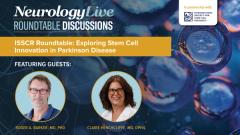
Neurologists Roger Barker, MD, PhD, and Claire Henchcliffe, MD, DPhil, discuss how stem cell therapies may differ from existing Parkinson disease treatments and the potential benefits of dopamine cell replacement.
Advertisement
Episodes in this series
Although current Parkinson disease treatments can provide meaningful symptomatic benefit, many patients eventually experience motor fluctuations, dyskinesias, and other complications that become increasingly difficult to manage over time. As researchers continue to explore new therapeutic approaches, stem cell-based therapies have emerged as a potential strategy to address some of the limitations associated with existing medical and surgical interventions.
To help clinicians better understand these advances, the International Society for Stem Cell Research (ISSCR), in collaboration with Harvard Medical School, recently launched an educational course focused on stem cell medicine in Parkinson disease. The program examines the scientific foundations of regenerative therapies, ongoing clinical development efforts, and the practical considerations surrounding their potential integration into clinical care.
In this episode of NeurologyLive's Roundtable Discussion series,
Transcript edited for clarity.
Claire Henchcliffe, MD, DPhil: I think we've got fantastic treatments for Parkinson disease in terms of oral drugs and the more advanced therapies, including deep brain stimulation and MR-guided focused ultrasound. But I don't think anyone would say we're really where we want to be, and there are still a lot of unmet needs.
When you think about the gold-standard medication, levodopa, it's brilliant at the beginning for the vast majority of people with Parkinson disease. It's essentially replacing dopamine, and you don't need surgery to do it. So why would we need something more invasive?
The problem is that, over time, people develop increasingly complicated responses to it. Without getting into all the details, patients can experience ups and downs throughout the day, difficulties controlling symptoms smoothly, and dyskinesias. That's when we start thinking very seriously about what the next advanced therapeutic option might be.
For me, there are some very attractive principles behind using cells that have been grown from stem cells. With the current approach, it's really about restoration. As Roger said before, the rationale is simple: you lose dopamine cells, so you replace them.
The precise positioning of the cells during surgical delivery means you're placing your dopamine-producing "engine," if you will, exactly where dopamine needs to be delivered. That helps avoid some of the off-target effects and side effects that can occur with systemically administered therapies such as oral medications.
It also means you're not living with implanted hardware as you would with deep brain stimulation. And while we're certainly enthusiastic about lesion therapies using focused ultrasound, I think it's much more compelling to think about rebuilding rather than modifying a network through a lesion.
The ultimate goal would be a one-time delivery of cells that could potentially provide long-term control of motor symptoms.
Now, many people point out that nonmotor symptoms, such as cognitive changes and dysautonomia, often become increasingly important over time. With the way we're delivering these cells today, we don't necessarily expect direct effects on those symptoms, although there could be indirect benefits.
As a clinician, I spend so much time managing complications related to levodopa therapy that discussions about nonmotor symptoms can sometimes become secondary. I would love to have more time to focus on those aspects of care.
This also opens the door to combination approaches. Nobody is saying this is a magic bullet or that replacing dopamine cells cures Parkinson disease. There will always be other aspects of the disease that require treatment. But if we can eliminate one major source of disability and burden, that would represent a substantial advance.
Roger Barker, MD, PhD: Claire makes a lot of very good points.
Part of the challenge is defining what we mean by "disease modifying," because that means different things to different people.
In one sense, dopamine cell therapies are not disease modifying because the underlying pathology that drives Parkinson disease continues. The alpha-synuclein pathology remains, regardless of whether you place new dopamine cells into the brain. So in that sense, you're not modifying the underlying disease process.
However, you are modifying the natural history of the disease.
I often point out that if you had Parkinson disease in 1950, you would probably have died within 10 years. Life expectancy was dramatically shortened. With the advent of levodopa, despite all of its complications, studies from our community have shown that life expectancy for people with Parkinson disease is now essentially normal.
In that sense, symptomatic therapies have already modified the course of the disease by improving survival and quality of life.
We see similar examples elsewhere in medicine. Most people with asthma are not cured of asthma, but with effective symptomatic treatment, they can live normal lives.
I think stem cell therapies have the potential to eliminate the need for many of the drugs we currently use, as well as many of the advanced therapies that become necessary because of complications from those medications.
For the dopamine-responsive components of Parkinson disease, particularly the motor symptoms, this could be transformative. By reducing medication requirements, you may also reduce complications that affect blood pressure, cognition, and other aspects of health.
I think these therapies have the potential to improve both motor and nonmotor outcomes, although the nonmotor aspects of the disease will certainly remain.
One important misconception is that stem cell therapies are curative. They are not. There is no reason we should stop pursuing true disease-modifying or curative therapies, and the two approaches are entirely compatible.
I think Claire and I would both agree that the ideal future would involve therapies that prevent Parkinson disease from progressing, combined with dopamine cell replacement and other treatments that slow disease progression.
That combination approach would be extremely attractive.
People often worry about things such as tumors. That's one of the major concerns associated with stem cell therapies. Could the cells become something unintended? Fortunately, the evidence for that is not really there at the moment.
The more important question may be whether we can generate enough dopamine cells to adequately replace those that have been lost.
It's a very exciting time, but it's also important to remain realistic. The reason people are excited is that these therapies could potentially replace many of the medical and surgical treatments we currently use for Parkinson disease. That's an exciting vision, but it still needs to be proven.
Advertisement
Related to this article

A quick-read roundup of 10 late-breaking abstracts from the 2026 MDS Congress, from phase 3 Parkinson disease readouts to long-term data in Huntington disease and Tourette syndrome, with the key results that matter for practice.

The director of the Center for Neurological Restoration at Cleveland Clinic discusses when to transition beyond oral medication and considerations for selecting device-aided therapies in PD.
Take 5 minutes to catch up on NeurologyLive®'s highlights from the week ending October 16, 2026.
The Galassia trial will evaluate the safety and tolerability of intranasal cenegermin in about 60 children with spastic cerebral palsy across Italy.
Take 5 minutes to catch up on NeurologyLive®'s highlights from the week ending October 9, 2026.
The FDA set a first quarter 2027 goal date for troriluzole in spinocerebellar ataxia and plans an advisory committee after a 2025 complete response letter.

A pooled analysis of 4 randomized trials found that more time with blood pressure below 130 mmHg after intracerebral hemorrhage reduced recurrent stroke risk.
A phase 2 trial found liposomal mitoxantrone hydrochloride had an acceptable safety profile and a potential trend toward fewer relapses in neuromyelitis optica spectrum disorder.
Advertisement
Advertisement
Trending on NeurologyLive - Clinical Neurology News and Neurology Expert Insights
1
Clene Submits NDA Seeking Accelerated Approval for ALS Drug
2
Early Data Show Dual-Targeting CAR-T Agent CTA313 Stabilizes Progressive Multiple Sclerosis
3
Real-World Data Show Switch to Subcutaneous Ocrelizumab Well Tolerated
4
CALLIPER Extension Data Show Sustained Disability Outcomes With Vidofludimus Calcium in Progressive MS
5