
Commentary|Videos|June 4, 2026
Mapping the Clinical Trial Landscape for Stem Cell Therapies in Parkinson Disease
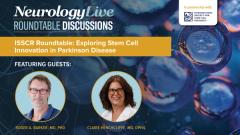
Roger Barker, MD, PhD, and Claire Henchcliffe, MD, DPhil, examine the expanding clinical trial landscape for stem cell therapies in Parkinson disease and the programs leading development efforts.
Advertisement
Episodes in this series
Over the past decade, stem cell-based therapies have emerged as one of the most closely watched areas of Parkinson disease research. Advances in cell manufacturing, transplantation techniques, and regenerative medicine have fueled a growing number of clinical programs aimed at replacing the dopamine-producing neurons lost during disease progression. As a result, clinicians are increasingly seeking clarity on which therapies are being studied, how far the field has progressed, and what challenges remain before these approaches can become widely available.
To help address these questions, the International Society for Stem Cell Research (ISSCR), in collaboration with Harvard Medical School, recently launched an educational course on stem cell medicine in Parkinson disease. The program provides clinicians with foundational and advanced insights into stem cell science, ongoing therapeutic development, and the evolving clinical trial landscape surrounding regenerative therapies.
In this episode of NeurologyLive's Roundtable Discussion series,
Transcript edited for clarity.
Roger Barker, MD, PhD: so the clinical landscape is very rich at the moment. This is a field that has somewhat exploded over the last 10 years around stem cell therapies for Parkinson disease.
What we're really talking about here, and I think it's important to understand this, is stem cell therapies where stem cells are turned into dopamine nerve cells of the type that are lost in Parkinson disease. This is dopamine cell replacement. We're not talking about stem cell therapies that are given to reduce inflammation or work in some other way to preserve the cells that are already there. This is very much about cell replacement.
The field really goes back about 15 years, when it was discovered how to make a stem cell into a dopamine cell in two laboratories, one in New York and one in Sweden. Based on that, people have learned how to produce dopamine cells using a clinical-grade manufacturing process. Over time, it has not only become possible to do that, which opens up clinical potential, but it has also proven to be very efficient. It's a quick process that can generate large numbers of cells, making it economically attractive because manufacturing runs are relatively short and inexpensive.
Intuitively, it makes perfect sense. If I lose a couple hundred thousand dopamine cells because of Parkinson disease, why not replace them?
The landscape has really taken off over the last few years. Claire Henchcliffe, MD, DPhil, has been heavily involved in trials in the United States. I don't know exactly how many are ongoing at the moment. There are four published stem cell trials and individual patient reports to date. There are probably at least a dozen or more companies around the world working in this space, either moving into trials or already conducting them.
The best way to summarize the field is that it's still very early phase. The number of patients who have received these therapies in the published literature is about 30 to 32. There are obviously many more being treated currently in ongoing studies.
What we can say is that the approach appears feasible. You can place stem cell-derived dopamine precursor cells into the brain. The cells seem to behave themselves in the sense that they don't form tumors or anything else concerning, and they appear to stay where they're placed.
The clinical results are encouraging, although there is still room for improvement. Some studies have shown more efficacy than others, but overall there does seem to be a clinical effect. Cell survival, based on imaging, has been somewhat variable. Sometimes the cells survive well, sometimes they don't. Nevertheless, the overall picture is encouraging, although nothing has been definitively proven.
At the moment, all of these studies are essentially investigator-led trials that are still trying to establish whether these therapies truly work.
In terms of the most advanced programs, it depends on how you define that. Japan has a very different regulatory structure than the rest of the world. Regulators there have conditionally approved the use of induced pluripotent stem cell-derived dopamine cell products over a seven-year period, after which the data are reviewed again.
In the United States, the leading group would probably be BlueRock Therapeutics, which Claire has worked with. They are currently conducting a phase 3 study that began in the autumn of last year.
People are moving at different speeds. In Europe, things have been somewhat slower. We've just completed the first European trial and are now deciding where to go next with that work.
This is really a global initiative. Everyone is trying to work together to bring these therapies to patients as quickly as possible. The challenge is balancing speed with safety while gathering as much information as possible.
It's a fast-moving field, and that makes it difficult for people outside the field, and sometimes even those within it, to keep up with everything that's happening.
I don't know, Claire what your take is on where the trials have gotten to and which programs you think are furthest along?
Claire Henchcliffe, MD, DPhil: As you were speaking, I was thinking about what happens in clinic when someone with Parkinson disease whose symptoms aren't well controlled by medications comes in and seems like a great candidate for an advanced therapy.
We'll talk about options like deep brain stimulation or MRI-guided focused ultrasound, and then they'll ask, "What about the experimental therapies?"
What's remarkable is that I actually have several local clinical trials that I can suggest, and we can discuss the pros and cons of each.
You mentioned the BlueRock Therapeutics program, which I would definitely consider one of the leaders worldwide. They've progressed from a phase 1 clinical trial, and we're continuing to see more results emerge. We'll soon have four-year follow-up data, and three-year follow-up data are already available.
As Roger mentioned, they're now conducting a phase 3 trial. From what I understand, enrollment began more than six months ago. The study is expected to enroll around 100 patients and includes a sham surgery component, so we'll learn a great deal from it.
The product that received conditional approval in Japan is also now being studied in US clinical trials, which means I can discuss those opportunities with my patients as well.
What's interesting about many of these approaches is that they're essentially "one-size-fits-all" products. They're derived from cell banks, so patients can be reassured that they're receiving the same cell product that has been used throughout the clinical development program.
What's especially exciting now is that we're beginning to see multiple groups investigating autologous cell approaches.
One thing we haven't mentioned is that surgical delivery of the cells is burdensome for patients. In addition, if the cells are not matched to the recipient, most current trials require some degree of immunosuppression. If patients receive cells derived from their own tissues, that could eliminate the need for immunosuppression, which is a very attractive concept.
We're seeing companies such as Aspen presenting early data. As Roger said, this field is moving incredibly quickly. Aspen recently presented initial findings at the AD/PD meeting.
I'm excited not only about the cells being studied today, but also about what the next generation of cell therapies may look like, given that many of the current products were developed years ago.
Roger Barker, MD, PhD: I also think it's important to recognize the differences among these trials.
There's an easy assumption that every trial is essentially the same, but that's not true. BlueRock uses embryonic stem cells and a particular immunotherapy regimen. The group in Japan used induced pluripotent stem cells, but not a frozen cell product, and they used less immunotherapy.
These may sound like subtle differences to people outside the field, but they may account for some of the differences we're seeing in outcomes.
The overall approach is similar, and the strategy is largely the same, but differences in protocols and trial design may prove to be very important in understanding the results.
Claire Henchcliffe, MD, DPhil: That's a great point. Isn't it fantastic to see so many research groups working in this space?
Roger Barker, MD, PhD: It is. I agree, although I would say that while there is competition, the spirit of the field is much more collaborative than competitive. It's not about dismissing what others are doing. It's about learning from one another and working together.
Of course, there are financial interests and companies involved, which introduces another dynamic. But fundamentally, everyone is trying to develop better therapies for patients.
People are generally very open to hearing what others have learned and sharing their own experiences. The goal is to advance the field together as a community rather than as isolated research groups.
Claire Henchcliffe, MD, DPhil: I completely agree.
Advertisement
Related to this article

A quick-read roundup of 10 late-breaking abstracts from the 2026 MDS Congress, from phase 3 Parkinson disease readouts to long-term data in Huntington disease and Tourette syndrome, with the key results that matter for practice.

The director of the Center for Neurological Restoration at Cleveland Clinic discusses when to transition beyond oral medication and considerations for selecting device-aided therapies in PD.
Take 5 minutes to catch up on NeurologyLive®'s highlights from the week ending October 16, 2026.
The Galassia trial will evaluate the safety and tolerability of intranasal cenegermin in about 60 children with spastic cerebral palsy across Italy.
Take 5 minutes to catch up on NeurologyLive®'s highlights from the week ending October 9, 2026.
The FDA set a first quarter 2027 goal date for troriluzole in spinocerebellar ataxia and plans an advisory committee after a 2025 complete response letter.

A pooled analysis of 4 randomized trials found that more time with blood pressure below 130 mmHg after intracerebral hemorrhage reduced recurrent stroke risk.
A phase 2 trial found liposomal mitoxantrone hydrochloride had an acceptable safety profile and a potential trend toward fewer relapses in neuromyelitis optica spectrum disorder.
Advertisement
Advertisement
Trending on NeurologyLive - Clinical Neurology News and Neurology Expert Insights
1
Clene Submits NDA Seeking Accelerated Approval for ALS Drug
2
Early Data Show Dual-Targeting CAR-T Agent CTA313 Stabilizes Progressive Multiple Sclerosis
3
Real-World Data Show Switch to Subcutaneous Ocrelizumab Well Tolerated
4
CALLIPER Extension Data Show Sustained Disability Outcomes With Vidofludimus Calcium in Progressive MS
5