
Commentary|Videos|April 3, 2026
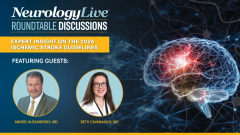
“Leave No Stroke Behind”: Experts Discuss the Future of Stroke Care
Author(s)Andrei Alexandrov, MD, Beth Cavanaugh, MD
Experts discuss the evolving philosophy of stroke care, highlighting the importance of rapid recognition, advanced imaging, and expanding treatment pathways for patients with suspected stroke. [WATCH TIME: 4 minutes]
Advertisement
WATCH TIME: 4 minutes | Captions are auto-generated and may contain errors.
In January 2026, the American Heart Association and American Stroke Association released updated guidelines for the management of acute ischemic stroke, highlighting the latest best practices in stroke care. Notably, these updates include guidance specific to pediatric patients, reflecting the unique challenges and considerations involved in treating children. Developed through extensive research and expert consensus, the recommendations aim to streamline and optimize rapid, evidence-based interventions across a variety of clinical settings.
To explore the practical impact of these updates, NeurologyLive® hosted a conversation with Beth Cavanaugh, MD, pediatric stroke neurologist and director of the Pediatric Stroke Program at Le Bonheur Children's Hospital, and Andrei Alexandrov, MD, professor and chair of the Department of Neurology at the University of Arizona College of Medicine–Phoenix. During the discussion, the clinicians covered several topics, including the pediatric considerations and the need for collaboration among pediatric specialists and adult stroke programs.
In this episode, Alexandrov and Cavanaugh touch on several key considerations shaping the future of stroke care, including evolving treatment approaches, improving systems for rapid evaluation, and the unique challenges clinicians may encounter when assessing stroke symptoms across different patient populations. Their conversation highlights how ongoing innovation and collaboration continue to influence the way clinicians think about stroke recognition and management.
This transcript is edited for clarity.
Alexandrov, MD: I'm excited because right now, what is called stroke? It’s essentially every stroke that comes to the hospital. The emergency physicians are encouraged to call us if the onset is within 24 hours or unknown and that's essentially 90% of all patients who come to our emergency rooms. The answer to stroke treatment these days is recognition, as Dr. Cavanaugh pointed out, timely imaging, and contact with an expert.
What does imaging mean and what are the options? Is it systemic thrombolysis, thrombectomy or some other neurosurgical intervention? The options are becoming really, really diverse. Time is brain. The sooner you get there, the better. But regardless of the time delay, we're still looking to find patients with salvageable brains, that's the excitement.
Cavanaugh, MD: I think one thing that I have observed, at least through my early career, is not just the availability of the options, but finding the right patient for the right treatment. And I think a lot of times that has been something that I've seen—how do we select the best patients for the interventions out there? I'm really hopeful that this can both include more children and continue to redefine the patient population that benefits from these interventions.
Alexandrov, MD: The philosophy for approaching a stroke patient should be twofold: find reasons to treat, not excuses not to treat, and leave no stroke behind. The more treatment options available, and the more sophisticated our imaging selection tools become, the more in-depth evaluations we can offer patients.
Innovation comes in pre-hospital care; just look at the inclusion of mobile stroke units in the guidelines. Across all levels of hospitals, we’re encouraged to build hub-and-spoke relationships, and timely contact with the right expert is important. We have tools from cloud-based imaging to identifying hospitals that are stroke-ready and can perform multimodal imaging, and that progress is already encouraging.
Cavanaug, MD: And I think one thing I might mention about difficulties or barriers specifically with pediatrics, is that it can be a tricky population. Children who present with focal neurological deficits do have higher rates of stroke mimics. They can still be neurological emergencies that benefit from quick evaluation and contacting expertise in both pediatrics and stroke neurology.
But that's just one thing to keep in mind: you may see higher rates of mimics, but we're still improving the diagnostic yield when screening children who present with stroke-like symptoms. So, changing perspective—while not everything is a stroke in kids—they can still be neurological emergencies that benefit from early diagnosis.
Advertisement
Related to this article

Take 5 minutes to catch up on NeurologyLive®'s highlights from the week ending October 2, 2026.
An analysis of the phase 3 GEMZ trial presented at CNS 2026 showed that fenfluramine produced comparable seizure reductions and safety outcomes in children and adults with CDKL5 deficiency disorder.
Arimoclomol Plus Miglustat Shows Early, Sustained Slowing of Niemann-Pick Disease Type C Progression
A post hoc analysis of the phase 2/3 NPC002 trial presented at CNS 2026 showed that the benefit of arimoclomol plus miglustat in Niemann-Pick disease type C emerged as early as 3 months after treatment initiation.

The professor of neurology and program director of Neuromuscular Medicine at UC Irvine, discusses phase 3 NIMBLE trial findings for cemdisiran in generalized myasthenia gravis, including its novel siRNA mechanism, efficacy, and hospitalization data.
New 48-week phase 3 data show many patients with generalized myasthenia gravis reached minimal symptom expression on telitacicept, and most who did sustained it.
The Galassia trial will evaluate the safety and tolerability of intranasal cenegermin in about 60 children with spastic cerebral palsy across Italy.
New analyses found differences in functional outcomes over 2 years among patients aged 8 to 12 years treated with delandistrogene moxeparvovec, while separate findings characterized micro-dystrophin expression in children younger than 3 years.
The director of the Center for Neurological Restoration at Cleveland Clinic discusses when to transition beyond oral medication and considerations for selecting device-aided therapies in PD.
Advertisement
Advertisement
Trending on NeurologyLive - Clinical Neurology News and Neurology Expert Insights
1
The Road Ahead for Precision Medicine in Multiple Sclerosis
2
ELEVIDYS Shows Sustained Functional Differences vs External Controls in Older Ambulatory Duchenne Patients
3
Telitacicept Shows Deepening, Durable Response in Myasthenia Gravis
4
Dompé Begins Phase 2 Trial Testing Intranasal Nerve Growth Factor for Cerebral Palsy
5