
Commentary|Videos|April 6, 2026 (Updated: April 6, 2026)
Key Takeaways and Implications of the 2026 Stroke Guidelines
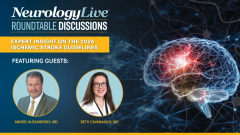
Author(s)Andrei Alexandrov, MD, Beth Cavanaugh, MD
Experts discuss key takeaways in the latest ischemic stroke guidelines, including the transition toward tenecteplase, advances in multimodal imaging, and growing attention to pediatric stroke care. [WATCH TIME: 3 minutes]
Advertisement
WATCH TIME: 3 minutes | Captions are auto-generated and may contain errors.
In January 2026, the American Heart Association and American Stroke Association released updated guidelines for the management of acute ischemic stroke, highlighting the latest best practices in stroke care. Notably, these updates include guidance specific to pediatric patients, reflecting the unique challenges and considerations involved in treating children. Developed through extensive research and expert consensus, the recommendations aim to streamline and optimize rapid, evidence-based interventions across a variety of clinical settings.
To explore the practical impact of these updates, NeurologyLive® hosted a conversation with Beth Cavanaugh, MD, pediatric stroke neurologist and director of the Pediatric Stroke Program at Le Bonheur Children's Hospital, and Andrei Alexandrov, MD, professor and chair of the Department of Neurology at the University of Arizona College of Medicine–Phoenix. During the discussion, the clinicians covered several topics, including the pediatric considerations and the need for collaboration among pediatric specialists and adult stroke programs.
View all episodes here:
Episode 2: https://www.neurologylive.com/view/leave-stroke-behind-experts-discuss-future-stroke-care
In the final episode, Alexandrov and Cavanaugh review several important takeaways from the guidelines, including the transition toward tenecteplase use, new therapeutic options for post-stroke complications, and the growing emphasis on multimodal imaging. Their conversation also highlights emerging attention to pediatric stroke and how evolving recommendations may shape patient selection and treatment strategies in modern stroke care.
This transcript is edited for clarity.
Alexandrov, MD: Well, I want to mention a couple of things. The nation was transitioning from tPA to TNK ahead of the guidelines and now, this mass transition is finally supported by guidelines. We have endorsement of the most widely used TNK thrombolytic agent in the guidelines, which is great. Also, the FDA ruling on the same subject and now it's all kind of harmonized that way.
The other thing that I personally need to mention, because I have the largest experience right now in treating these patients with post-stroke sequelae, is a new option to treat dysphagia. Our hospital has already treated over 100 patients who suffer from post-stroke inability to swallow. It's really exciting to see outcomes that replicate international clinical trials upon which this technique—pharyngeal electrical stimulation—was approved by the FDA and included in the guidelines.
Cavanaugh, MD: I think my biggest takeaway is this is the first guideline that mentions pediatrics. One of the take-home messages that I would want people to remember is that pediatric stroke can be a treatable disease.
Definitely, time is brain. Calling early and having the team that has expertise in both pediatric stroke, and if you are pursuing things like endovascular thrombectomy and vascular therapies, people who have expertise in both pediatrics and stroke is huge for that. So I'm really excited about the new guidelines.
Alexandrov, MD: We now have more evidence that patient selection with multimodal imaging is the way to go. The guidelines are more supportive of the use of CT perfusion. Clearly, we should ask our spoke centers to perform at least CT and CTA, and ideally CT perfusion, as the front line and the fastest way of getting to the patient. Then utilize cloud-based image transfer for these images to be evaluated by the hub team and make the decision the fastest way possible.
I think the addition of multimodal imaging to particularly find salvageable large-core patients remains a new aspect. The guidelines are supportive of large-core interventions, and again, multimodal imaging is the way to find those patients.
Advertisement
Related to this article
Take 5 minutes to catch up on NeurologyLive®'s highlights from the week ending October 2, 2026.
An analysis of the phase 3 GEMZ trial presented at CNS 2026 showed that fenfluramine produced comparable seizure reductions and safety outcomes in children and adults with CDKL5 deficiency disorder.
Arimoclomol Plus Miglustat Shows Early, Sustained Slowing of Niemann-Pick Disease Type C Progression
A post hoc analysis of the phase 2/3 NPC002 trial presented at CNS 2026 showed that the benefit of arimoclomol plus miglustat in Niemann-Pick disease type C emerged as early as 3 months after treatment initiation.
The professor of neurology and program director of Neuromuscular Medicine at UC Irvine, discusses phase 3 NIMBLE trial findings for cemdisiran in generalized myasthenia gravis, including its novel siRNA mechanism, efficacy, and hospitalization data.
New 48-week phase 3 data show many patients with generalized myasthenia gravis reached minimal symptom expression on telitacicept, and most who did sustained it.
The Galassia trial will evaluate the safety and tolerability of intranasal cenegermin in about 60 children with spastic cerebral palsy across Italy.
New analyses found differences in functional outcomes over 2 years among patients aged 8 to 12 years treated with delandistrogene moxeparvovec, while separate findings characterized micro-dystrophin expression in children younger than 3 years.
The director of the Center for Neurological Restoration at Cleveland Clinic discusses when to transition beyond oral medication and considerations for selecting device-aided therapies in PD.
Advertisement
Advertisement
Trending on NeurologyLive - Clinical Neurology News and Neurology Expert Insights
1
The Road Ahead for Precision Medicine in Multiple Sclerosis
2
ELEVIDYS Shows Sustained Functional Differences vs External Controls in Older Ambulatory Duchenne Patients
3
Telitacicept Shows Deepening, Durable Response in Myasthenia Gravis
4
Dompé Begins Phase 2 Trial Testing Intranasal Nerve Growth Factor for Cerebral Palsy
5