
Commentary|Videos|March 28, 2026
Treating Before Symptoms: Managing RIS in the Era of Updated Multiple Sclerosis Criteria
Experts discuss how the updated McDonald criteria redefine radiologically isolated syndrome and explore the clinical, imaging, and access challenges of diagnosing and treating MS before symptom onset.
Advertisement
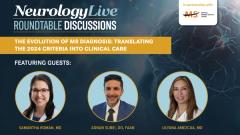
In collaboration with the National MS Society, NeurologyLive® convened a roundtable discussion featuring leading multiple sclerosis experts to examine the evolving 2024 McDonald diagnostic criteria and their real-world implications. Moderated by Marco Meglio, assistant managing editor of NeurologyLive, the panel includes Samantha Roman, MD; Adnan Subei, DO, FAAN; and Lilyana Amezcua, MD, who bring diverse clinical perspectives across academic and community care settings.
As the field moves toward earlier identification of multiple sclerosis, one of the most significant paradigm shifts is the growing recognition of radiologically isolated syndrome as part of the diagnostic spectrum. The panel underscores how advances in imaging, cerebrospinal fluid biomarkers, and disease understanding have enabled clinicians to identify MS-related pathology before clinical symptoms emerge, raising new opportunities and challenges for intervention.
In this episode, the discussion centers on the implications of diagnosing and potentially treating patients prior to symptom onset. Panelists explore the evolving mindset around radiologically isolated syndrome, including risk stratification, emerging clinical trial data supporting early treatment, and the complexities of selecting appropriate therapy in asymptomatic individuals. The conversation also highlights practical considerations such as variability in MRI acquisition, access to advanced imaging techniques like central vein sign detection, and the need for greater standardization across practice settings.
Beyond diagnostics, the panel addresses real-world barriers that may influence adoption of these criteria, including interdisciplinary coordination with radiology, limitations in imaging infrastructure, and uncertainty around insurance coverage and coding for patients who meet diagnostic criteria without clinical symptoms. For neurologists, these discussions reflect the growing tension between scientific advancement and practical implementation in modern MS care.
Explore the Full Series!
Transcript edited for clarity.
Marco Meglio (moderator): Let’s move on to topic number two, which we talked about briefly earlier. It is this shift in thinking, the impact these recommendations have on radiologically isolated syndrome and treating patients before symptoms arise. Talk a little bit about this change in mindset, as well as the steps needed for the community to adopt this new way of thinking.
Lilyana Amezcua, MD: RIS refers to individuals with MRI lesions that are highly suggestive of MS but no clinical symptoms. We already know that a substantial proportion, about 30% to 50% depending on studies, within five to 10 years, are going to develop clinical MS. Recognizing MS earlier is very important, as this represents biologically active MS in very selective, high-risk cases, which would then allow for earlier treatment and risk stratification.
This is really important for the community to realize that this is not an individual who should go untreated. We already have two clinical trials suggesting that if you treat RIS, you can delay clinical symptoms from ever happening. Any clinical symptom is suggestive of damage, so if we can prevent that, then we can prevent further progression. This reiterates the importance of diagnosing much earlier so we can apply intervention.
Samantha Roman, MD: Practically, when putting this into context, if we are seeing patients who are asymptomatic, it can be difficult to decide what treatment to offer them. I think the treatment offered would depend widely on the practice style of the clinician. This is something that will likely be studied further in the future. If somebody is meeting these new criteria and is asymptomatic, do you go ahead with one of our more highly effective therapies, or do you start with one of the platform therapies, which are older therapies? Depending on who you ask, you might get different answers.
Lilyana Amezcua, MD: That is very true, because if we are going to consider RIS to be MS, then all of our disease-modifying therapies should be options, even though we currently only have data on two. If we are addressing prevention of lesions and prevention of attacks, then we are trying to prevent the same outcomes.
Adnan Subei, DO, FAAN: I think we are able to include RIS into the diagnostic criteria now because of advancements in imaging, diagnostics, and CSF analysis. For years, we have seen patients with abnormal white matter lesions, and it has been difficult to determine how much of this is from chronic ischemic change versus demyelination. With advancements in our understanding of MS and the technology available, we are now better able to incorporate RIS into the diagnostic criteria. That said, there should still be caution when interpreting MRI findings.
Lilyana Amezcua, MD: I think it is the central vein sign that we are really talking about, which corresponds to known pathology in MS. Its presence has a high level of significance and helps us determine that a lesion is more likely demyelinating in nature.
Samantha Roman, MD: The central vein sign is very helpful. I have found it difficult in a community setting, however, to obtain MRIs of the quality necessary to detect it. This may be a challenge for providers who are not at larger academic centers and do not have access to specialized neuroradiology expertise. Hopefully this will change over time as these diagnostic criteria and imaging recommendations are more widely adopted.
Marco Meglio: Dr. Roman, to build on that, can we dive a bit deeper into the practical considerations with this new mindset and diagnostic approach? Specifically, access to MRI sequences, standardization, and what this may look like in smaller or community neurology practices.
Samantha Roman, MD: I think it will depend on how quickly the recommended sequences are adopted by radiology departments. It is important to partner with radiology as much as possible, although that can be easier said than done in many places. Changes in imaging protocols and interpretation will take time, and radiologists will need to begin actively looking for these findings. It does create challenges, but they are not insurmountable. It will require a significant amount of interdisciplinary collaboration.
Lilyana Amezcua, MD: I agree. Even within academic centers, there is no standardization of these protocols. However, conversations have started. We need to determine whether we should provide specific imaging protocols that can be implemented more broadly, including in community settings. From a radiology standpoint, it is important to understand how much additional time is required for both acquisition and interpretation, and how this impacts workflow and reporting. These are important considerations to ensure there is buy-in to move this forward.
Adnan Subei, DO, FAAN: I have had conversations with our neuroradiologists, and there are several challenges. Acquisition is one of them. Performing susceptibility-weighted imaging and T2 star imaging adds additional sequences, which can add five to 10 minutes per patient. This impacts scheduling and patient throughput. Interpretation also requires additional time. In the future, artificial intelligence may help with identifying central vein signs and reduce some of this burden.
Lilyana Amezcua, MD: Another factor is variability in scanner types. Many of these studies were conducted using specific imaging platforms, and there are differences between manufacturers in how sequences are performed. This is something that radiologists and MS specialists will need to work through together.
Samantha Roman, MD: Another practical consideration, beyond radiology, is treatment and insurance coverage. In October 2025, insurance requirements were updated so that patients must be coded based on MS subtype, such as relapsing-remitting, primary progressive, or secondary progressive, and whether progressive disease is active or inactive. For patients who meet these new criteria but have not had clinical symptoms, it can be difficult to determine how to code them. They are not clearly relapsing-remitting, yet that may be how they must be categorized. This could lead to challenges in obtaining insurance coverage for disease-modifying therapies. Hopefully, insurance policies will evolve alongside the science.
Lilyana Amezcua, MD: That is an important point. There is a code for unspecified MS, but we are generally discouraged from using it because it may lead to reduced reimbursement or lack of payment.
Advertisement
Related to this article

Take 5 minutes to catch up on NeurologyLive®'s highlights from the week ending October 16, 2026.
Findings from the phase 3 METEOROID trial showed that satralizumab reduced the risk of relapse in patients with relapsing myelin oligodendrocyte glycoprotein antibody-associated disease.

Here's some of what is coming soon to NeurologyLive® this week.
Catch up on any of the neurology headlines you may have missed in September 2026, compiled into 1 place by the NeurologyLive® team.
The associate vice president of clinical research at the Parkinson's Foundation discussed a large-scale replication of rs3115534-G, a noncoding GBA1 variant tied to Parkinson disease in people of African ancestry.

Pivotal AFFINITY DUCHENNE results showed microdystrophin expression above the prespecified threshold in 93% of evaluable participants, with preliminary functional findings favoring treatment over external controls.

Three-year extension data from the phase 3 IB1001-301 trial show levacetylleucine slowed disease progression in both adults and children with Niemann-Pick disease type C.
Adults with generalized myasthenia gravis who are anti-acetylcholine receptor antibody positive now have a second self-administration option for the complement inhibitor zilucoplan.
Advertisement
Advertisement
Trending on NeurologyLive - Clinical Neurology News and Neurology Expert Insights
1
FDA Approves Autoinjector for Self-Administered Zilucoplan in Generalized Myasthenia Gravis
2
New Phase 1 Study Tests Intrathecal Gene Therapy Agent INS1201 in Duchenne Muscular Dystrophy
3
Arimoclomol Plus Miglustat Shows Early, Sustained Slowing of Niemann-Pick Disease Type C Progression
4
Fenfluramine Shows Consistent Seizure Reduction Across Age Groups in CDKL5 Deficiency Disorder
5