
Conference Coverage
Latest News
Oct 21, 2026 | Commentary
NeuroVoices: Bruce Bebo, PhD, on Big Bets for Breakthroughs and the Campaign to End MS

Decade of OPERA Data Supports Early Ocrelizumab Treatment Initiation in Relapsing Multiple Sclerosis
Oct 20, 2026
Clene Submits NDA Seeking Accelerated Approval for ALS Drug
Oct 20, 2026
Amyloid Vaccine AV-1959R Generates Antibodies in All Phase 1 Recipients
Oct 20, 2026

Diazepam Nasal Spray Terminates Most Pediatric Status Epilepticus Episodes in Seizure Clusters, Post Hoc Analysis Shows
Oct 20, 2026


Advertisement
Shorts
1:22
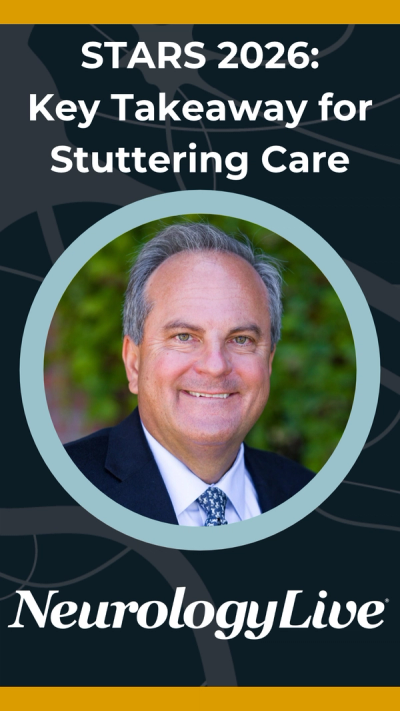
STARS 2026: Key Takeaway for Stuttering Care
19 hours ago
by
Gerald Maguire, MD(+1 more)

1:10
Part 5: What's the Biggest Gap in Pediatric Neurology Care Right Now?
a day ago
by
M. Scott Perry, MD(+1 more)

1:23
Part 4: What's the Biggest Gap in Pediatric Neurology Care Right Now?
2 days ago
by
Isabella Ciccone, MPH(+1 more)

1:08
Part 3: What's the Biggest Gap in Pediatric Neurology Care Right Now?
2 days ago
by
Jonathan Santoro, MD(+1 more)
1:48
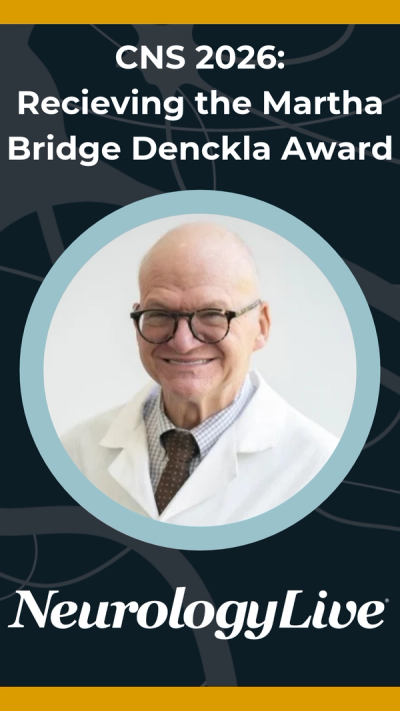
CNS 2026: Recieving the Martha Bridge Denckla Award
4 days ago
by
Michael Msall, MD(+1 more)

1:01
Part 2: What's the Biggest Gap in Pediatric Neurology Care Right Now?
5 days ago
by
Bhooma Aravamuthan, MD, DPhil(+1 more)

1:26
Individualizing Device-Aided Therapies in Advanced Parkinson Disease
5 days ago
by
Hubert Fernandez, MD(+1 more)

1:30
Part 1: What's the Biggest Gap in Pediatric Neurology Care Right Now?
6 days ago
by
Hugh McMillan, MD(+1 more)
1:06
Using Personalized Risk Tools to Guide MS Treatment Conversations
7 days ago
by
Robert Bermel, MD
1:12
Translating AAIC 2026 Research Into Clinical Care
8 days ago
by
Heather Snyder, PhD(+1 more)
The G.L.O.B: Dr. Gatson's Living Oncology Brainstorm Column
This new column translates complex neuro-oncology topics into accessible, evidence-based insights.
Mind Moments Podcast
Mind Moments® is a biweekly podcast from NeurologyLive that brings you exclusive interviews with neurology experts.
NeuroVoices
NeuroVoices is weekly series of in-depth, exclusive Q&A conversations with a variety of experts in neurology.
Clinical Trial in Focus
Every month, an ongoing clinical trial in the landscape of neurology is featured, highlighting the design of the study.
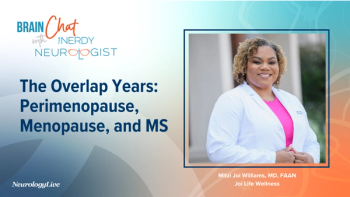
Brain Chat with the Nerdy Neurologist
Check out the "Brain Chat with the Nerdy Neurologist" podcast hosted by multiple sclerosis specialist Mitzi Joi Williams, MD.
Videos


Podcasts
Continuing Medical Education










Advertisement
All News
Advertisement
A retrospective 10-center U.S. study found stiripentol reduced convulsive seizure frequency, status epilepticus episodes, and emergency health care use in patients with Dravet syndrome.
A phase 1b/2 trial is testing an intrathecal antisense oligonucleotide designed to lower KCNT1 expression in children with a severe, drug-resistant epilepsy syndrome.

Here's some of what is coming soon to NeurologyLive® this week.
Ocrelizumab demonstrated noninferiority to fingolimod for relapse control but displayed greater reductions in MRI lesion activity among pediatric patients with relapsing-remitting multiple sclerosis.
Test your neurology knowledge with NeurologyLive®'s weekly quiz series, featuring questions on a variety of clinical and historical neurology topics. This week's topic is biomarkers in multiple sclerosis!

Leonard Dragone, MD, PhD, Disease Area Leader at Johnson & Johnson, discusses how nipocalimab is being incorporated into generalized MG care, what long-term data show, and where J&J sees the therapy’s role evolving.
Pivotal AFFINITY DUCHENNE results showed microdystrophin expression above the prespecified threshold in 93% of evaluable participants, with preliminary functional findings favoring treatment over external controls.

Take 5 minutes to catch up on NeurologyLive®'s highlights from the week ending October 16, 2026.

Three-year extension data from the phase 3 IB1001-301 trial show levacetylleucine slowed disease progression in both adults and children with Niemann-Pick disease type C.
Adults with generalized myasthenia gravis who are anti-acetylcholine receptor antibody positive now have a second self-administration option for the complement inhibitor zilucoplan.
Advertisement
Mind Moments®, a podcast from NeurologyLive®, brings you an exclusive interview with Nicholas J. Maragakis, MD; and Jinsy Andrews, MD, MSc, FAAN, FANA. [LISTEN TIME: 23 minutes]
All 10 REVEAL Part A participants gained or regained at least 1 developmental milestone after a single intrathecal TSHA-102 dose, with no treatment-related SAEs reported.
Findings from the phase 3 METEOROID trial showed that satralizumab reduced the risk of relapse in patients with relapsing myelin oligodendrocyte glycoprotein antibody-associated disease.

The phase 1 ASCEND trial is testing a single intrathecal dose of the investigational AAV9 gene therapy INS1201 in young boys with Duchenne muscular dystrophy.

A quick-read roundup of 10 late-breaking abstracts from the 2026 MDS Congress, from phase 3 Parkinson disease readouts to long-term data in Huntington disease and Tourette syndrome, with the key results that matter for practice.
Advertisement
Advertisement
Trending on NeurologyLive - Clinical Neurology News and Neurology Expert Insights
1
Clene Submits NDA Seeking Accelerated Approval for ALS Drug
2
First-in-Human Trial Begins for an Antisense Oligonucleotide in KCNT1-Related Epilepsy
3
Decade of OPERA Data Supports Early Ocrelizumab Treatment Initiation in Relapsing Multiple Sclerosis
4
Ocrelizumab Shows MRI Benefits vs Fingolimod in Phase 3 Pediatric-Onset Multiple Sclerosis Study
5