

Dementia and Alzheimer Disease
Latest News

NeuroVoices: Charbel Moussa, PhD, MBBS, on Therapeutic Potential of Nilotinib in Dementia With Lewy Bodies
By Marco Meglio

CHMP Gives Positive Opinion for Lecanemab Following Re-Examination of Data
By Marco Meglio
Advertisement
Latest Videos


CME Content











Advertisement
More News

The software, designed using thousands of brain MRI scans, is used for automated detection and severity grading of ARIA-E and ARIA-H for safety monitoring of new Alzheimer disease therapies.

Neal K. Shah, CEO at CareYaya Health Technologies, shared his perspective on how the new administration could unleash innovation in neurotech, reduce regulatory barriers with Elon Musk’s involvement, and accelerate innovations that could improve neurological care for those with Alzheimer and dementia.
The professor of neurology and radiology at University of California, San Francisco talked about how the new appropriate use recommendations of donanemab aims to safely integrate this anti-amyloid antibody into the clinical practice. [WATCH TIME: 7 minutes]
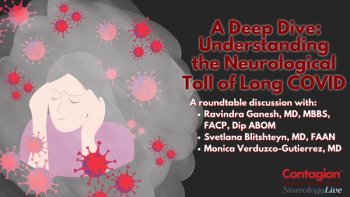
Despite advances in understanding and treating Long COVID, many questions about its mechanisms, susceptibility, and varied recovery patterns remain unresolved, underscoring the need for continued research.
The CEO at C2N Diagnostics talked about the clinical utility of the company’s PrecivityAD2 test, which uses the p-tau 217 biomarker and amyloid-β measurements, to increase diagnostic confidence and influence treatment decisions in Alzheimer disease. [WATCH TIME: 7 minutes]
The chief operating officer at Quanterix Corporation talked about pioneering ultra-sensitive blood biomarkers for Alzheimer clinical diagnosis, aiming to enhance detection of brain-derived tau and amyloid status with innovative assays. [WATCH TIME: 4 minutes]
Catch up on any of the neurology news headlines you may have missed over the course of October 2024, compiled all into one place by the NeurologyLive® team.
FDA Places Hold on RAP-219, cAPPricorn-1 Study to Assess Mivelsiran in CAA, FDA Accepts Resubmitted NDA for Ataluren
Published: | Updated:
Neurology News Network. for the week ending November 9, 2024. [WATCH TIME: 4 minutes]
Take 5 minutes to catch up on NeurologyLive®'s highlights from the week ending November 8, 2024.

Early Clinical Use of Anti-Amyloid Therapy for Alzheimer Disease in Japan: Takeshi Iwatsubo, MD, PhD
The professor of neuropathology at the University of Tokyo School of Medicine talked about the latest data on lecanemab use in clinical practice for Alzheimer disease in Japan presented at CTAD 2024. [WATCH TIME: 4 minutes]

Nina Miolane, PhD, and Amy Kuceyeski, PhD, the codirectors of the Ann S. Bowers Women's Brain Health Initiative AI Core, provided their commentary on the challenges and progress made in women’s neurology.
The head of global clinical development for immunology/bone at UCB talked about findings presented at CTAD 2024 from the phase 2 trial assessing bepranemab in Alzheimer disease. [WATCH TIME: 3 minutes]
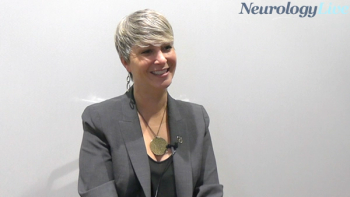
The vice president of scientific engagement at the Alzheimer's Association talked about the emergence of blood biomarker tests as valuable diagnostic tools for Alzheimer disease in the clinical setting. [WATCH TIME: 5 minutes]

The cAPPricorn-1 Phase 2 trial will assess mivelsiran’s efficacy in CAA, focusing on reducing the annualized rate of new cerebral microbleeds over 24 months.
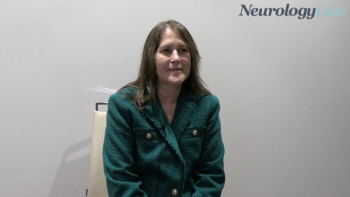
The professor of psychiatry and pharmacology at the University of Toronto talked about results from a post hoc analysis presented at CTAD 2024 that explored synthetic cannabinoid nabilone for agitation in Alzheimer disease. [WATCH TIME: 4 minutes]
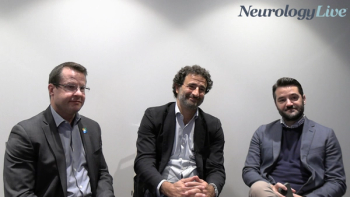
A trio of experts from Sinaptica Therapeutics talked about recent findings presented at CTAD 2024 from a study assessing personalized transcranial magnetic stimulation in patients with Alzheimer disease. [WATCH TIME: 5 minutes]

Using a Brain-Chip model, investigators demonstrated that pepinemab can inhibit or reverse damage from toxic alpha-synuclein aggregates, with similar results for amyloid-ß expected soon.
Clinicians discussed the complexities of diagnosing Long COVID, emphasizing the need for improved biomarkers and diagnostic technologies to better serve affected patients.

Over a 48-week treatment period, once daily blarcamesine slowed clinical decline in patients with early-stage Alzheimer disease, with even more pronounced effects in pre-specified common SIGMAR1 wild type group.

At week 25 of treatment with trontinemab, patients demonstrated decreases in CSF total tau, CSF p-tau181, and CSF neurogranin.
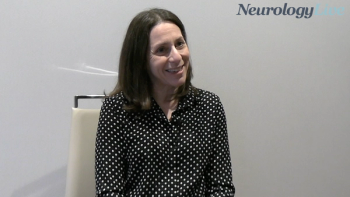
The senior director of research strategy at Banner Alzheimer’s Institute talked about improving clinical trial diversity through removal of logistical barriers, creating inclusive outreach strategies, and designing trials that address the unique needs of underrepresented populations. [WATCH TIME: 5 minutes]
The director of the Banner Sun Health Research Institute talked about how the newly approved Alzheimer treatments have shown promise in slowing clinical decline, signaling a foundational shift toward disease-modifying therapies that target core biological processes. [WATCH TIME: 5 minutes]

Over a 24-week period, comprising both the core study and extension trial, the incidence of treatment-emergent adverse events was infrequent, with less occurring over the long-term extension.
The professor of molecular geriatrics at Uppsala University talked about the research journey that led to the development of targeted antibody therapies for Alzheimer disease and emphasized the need for early diagnosis. [WATCH TIME: 5 minutes]
Enhanced Dosing of Donanemab Lowers ARIA Risk, Anti-Tau Agent E2814 Shows Promising Results, Combination Approach of Intranasal Insulin and Empagliflozin
Published: | Updated:
Neurology News Network. for the week ending November 2, 2024. [WATCH TIME: 4 minutes]
Advertisement
Advertisement
Trending on NeurologyLive - Clinical Neurology News and Neurology Expert Insights
1
Real-World Data Show Switch to Subcutaneous Ocrelizumab Well Tolerated
2
Clene Submits NDA Seeking Accelerated Approval for ALS Drug
3
Early Data Show Dual-Targeting CAR-T Agent CTA313 Stabilizes Progressive Multiple Sclerosis
4
FDA Accepts Troriluzole NDA Resubmission for Spinocerebellar Ataxia
5