




Dementia and Alzheimer Disease
Latest News
Advertisement
Latest Videos







CME Content











Advertisement
More News

The head of dementia research at Austin Health and the chief medical officer at Cognition Therapeutics talked about recently presented phase 2 findings on CT1812, an investigational medicine for patients with mild to moderate Alzheimer disease, at CTAD 2024. [WATCH TIME: 5 minutes]

In total, more than half of the screened population failed by not meeting plasma p-tau217 criteria and of the remaining, most participants were not in the intermediate tau PET range.

The cofounder and chief science officer of the Alzheimer's Drug Discovery Foundation talked about how Alzheimer disease treatment may evolve through combination therapies, adding potential anti-tau and anti-inflammatory agents to improve patient outcomes. [WATCH TIME: 5 minutes]

Insulin treatment significantly increased beneficial plasma biomarkers, including SNAP25, SMOC1, BDNF, and VCAM1.
The indication lead of neurology at Roche Diagnostics International talked about the latest Alzheimer biomarkers that are aimed to transform diagnostic accuracy and accessibility as well as enhance early detection and treatment. [WATCH TIME: 5 minutes]

The multicenter, randomized, double-blind, placebo-controlled, parallel-group, event-driven trial will use time to clinical progression, defined as an increase in Clinical Dementia Rating score, as the primary end point.
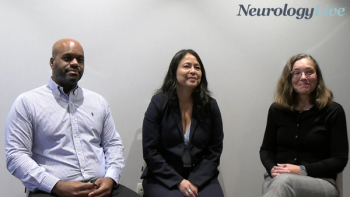
A trio of experts talked about Lexeo Therapeutics’ LX1001 gene therapy trial that demonstrated promising safety and biomarker effects in patients with early-stage Alzheimer disease. [WATCH TIME: 5 minutes]

The chief medical officer at Cognito Therapeutics talked about a medical device designed to slow cognitive decline in patients with Alzheimer disease through gamma frequency brain stimulation. [WATCH TIME: 6 minutes]

Compared with the standard dosing arm, those on an enhanced titration dosing of donanemab demonstrated a 41% reduction in the relative risk of ARIA-E.

Despite a small cohort sample size, treated patients with E2814 demonstrated significant reductions in p-tau217 after 12 weeks of treatment, sustained through the 108-week time point.

Semaglutide was associated with a lower risk of Alzheimer diagnosis compared to other diabetes medications, especially in older adults and women.
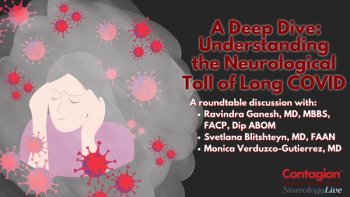
Without a specific tailored Long COVID therapy, individualized treatment based on patient phenotypes, along with extensive evaluations, is essential for effective symptom management.
Take 5 minutes to catch up on NeurologyLive®'s highlights from the week ending October 25, 2024.

With the positive recommendation, it marks a key step toward eplontersen’s availability in Europe as a treatment for ATTR polyneuropathy.
In our latest roundtable series, experts highlighted research showing that even mild COVID can result in cognitive impairment including brain fog and IQ decline.

Neal K. Shah, chief executive officer at CareYaya Health Technologies, talked about Medicare making big moves in neurological care.
Take 5 minutes to catch up on NeurologyLive®'s highlights from the week ending October 18, 2024.
In our latest roundtable series, experts discussed Long COVID prevalence, underreporting, accurate diagnosis, and emphasized that Long COVID serves as an umbrella term.
Take 5 minutes to catch up on NeurologyLive®'s highlights from the week ending October 11, 2024.

The director of the Helen and Robert Appel Alzheimer’s Disease Research Institute at Weill Cornell Medicine talked about findings from a recently published study on immune responses to Alzheimer disease risk genes between male and female mice. [WATCH TIME: 4 minutes]
Catch up on any of the neurology news headlines you may have missed over the course of September 2024, compiled all into one place by the NeurologyLive® team.

Erik Musiek, MD, PhD, a professor of neurology at Washington University in St. Louis, provided clinical insight on a presentation from ANA 2024 highlighting the intricate relationship between circadian rhythms, glial activation, and neuroinflammation in Alzheimer disease.

A group of experts from The Neuron Clinic shared their experience developing a novel inclusive clinical program to treat patients with early Alzheimer disease using lecanemab.
The disease area stronghold leader in neurodegeneration at Johnson & Johnson discussed data presented at AAIC 2024 highlighting different subtypes of Alzheimer disease that may lead to more personalized treatments. [WATCH TIME: 4 minutes]
Take 5 minutes to catch up on NeurologyLive®'s highlights from the week ending September 27, 2024.
Advertisement
Advertisement
Trending on NeurologyLive - Clinical Neurology News and Neurology Expert Insights
1
Real-World Data Show Switch to Subcutaneous Ocrelizumab Well Tolerated
2
Clene Submits NDA Seeking Accelerated Approval for ALS Drug
3
Early Data Show Dual-Targeting CAR-T Agent CTA313 Stabilizes Progressive Multiple Sclerosis
4
FDA Accepts Troriluzole NDA Resubmission for Spinocerebellar Ataxia
5