


Dementia and Alzheimer Disease
Latest News
Advertisement
Latest Videos



CME Content










Advertisement
More News

Russell Lebovitz, MD, PhD, chief executive officer and cofounder of Amprion, discussed the ongoing collaboration focused on exploring the role of misfolded synuclein traditionally associated with Parkinson disease and in various forms of dementia.

Social determinants of health are conditions that people are born into and live under that affect their health, and can greatly impact clinical outcomes as well as contribute to health disparities and inequalities.

Former presidents of the AUPN shared perspective on the advances in neurology and how it was taught during their tenure.

The group of experts provided perspectives on the shift in how residency programs are developed and laid out, as well as efforts to increase the number of young neurologists in the field.

Falls cost the US more than $50 billion annually, but platforms like CatchU, a transformative digital health tool, provide quantitative fall assessment that might significantly enhance the current standard of care for predicting falls.

Former presidents of the AUPN shared perspective on the advances in neurology and how it was taught during their tenure.

Here's some of what is coming soon to NeurologyLive® this week.
Test your neurology knowledge with NeurologyLive®'s weekly quiz series, featuring questions on a variety of clinical and historical neurology topics. This week's topic is neuromuscular disorders.
Take 5 minutes to catch up on NeurologyLive®'s highlights from the week ending August 25, 2023.

Mind Moments®, a podcast from NeurologyLive®, brings you an exclusive interview with Nicole Fowler. [LISTEN TIME: 23 minutes]
Here's some of what is coming soon to NeurologyLive® this week.
Test your neurology knowledge with NeurologyLive®'s weekly quiz series, featuring questions on a variety of clinical and historical neurology topics. This week's topic is headache and migraine.
Take 5 minutes to catch up on NeurologyLive®'s highlights from the week ending August 18, 2023.

Adam Naj, PhD, genetic epidemiologist at the University of Pennsylvania, discussed the importance of collecting genetic data from diverse ancestries to investigate the risk of Alzheimer Disease.
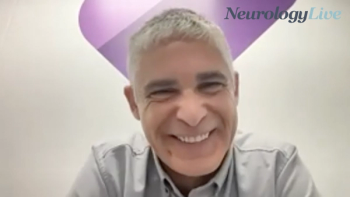
The senior vice president of research at Vaxxinity discussed recently published trial findings on a novel vaccine that targets Alzheimer disease and triggers the production of antibodies against toxic amyloid-ß peptides. [WATCH TIME: 9 minutes]
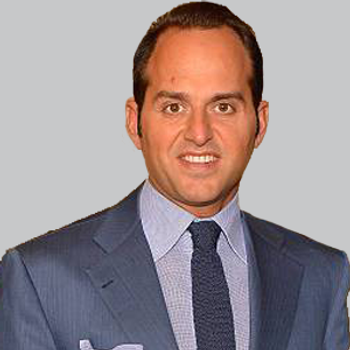
Foralumab, a therapy designed to bind to T cell receptor, is about to be assessed in phase 2 trials of patients with non-active secondary progressive multiple sclerosis in the third quarter of 2023.

Results indicated a substantial direct effect of air pollution on dementia suggesting that air pollution affects the development of dementia through multiple pathways.
Here's some of what is coming soon to NeurologyLive® this week.
Test your neurology knowledge with NeurologyLive®'s weekly quiz series, featuring questions on a variety of clinical and historical neurology topics. This week's topic is general neurology.

UB-311 elicited a robust, rapid, and titrated antibody response to amyloid-ß, with an overall 97% responder rate that was maintained by 93% of the cohort by the end of the 78-week study.
Neurology News Network for the week ending August 12, 2023. [WATCH TIME: 3 minutes]
Take 5 minutes to catch up on NeurologyLive®'s highlights from the week ending August 11, 2023.

Pharmacokinetic results indicated that ACD856 has a suitable pharmacokinetic profile for further development with a rapid absorption, dose-dependent exposure, and a favorable metabolic profile.

The double-blind, placebo-controlled trial assesses change from baseline in the weekly average of daily self-reported worst pain intensity scores after 14 weeks of treatment.
Catch up on any of the neurology news headlines you may have missed over the course of July 2023, compiled all into one place by the NeurologyLive® team.
Advertisement
Advertisement
Trending on NeurologyLive - Clinical Neurology News and Neurology Expert Insights
1
FDA Accepts Troriluzole NDA Resubmission for Spinocerebellar Ataxia
2
Real-World Data Show Switch to Subcutaneous Ocrelizumab Well Tolerated
3
CALLIPER Extension Data Show Sustained Disability Outcomes With Vidofludimus Calcium in Progressive MS
4
Early Data Show Dual-Targeting CAR-T Agent CTA313 Stabilizes Progressive Multiple Sclerosis
5