



MS and Demyelinating Disorders
Latest News
Advertisement
Latest Videos


CME Content












Advertisement
More News
A recent study confirms satralizumab's long-term safety and efficacy for treating neuromyelitis optica spectrum disorder, supporting its use as a maintenance therapy.

A case report reveals cognitive decline and brain atrophy in a patient with NMOSD, highlighting potential subclinical neurodegeneration despite limited relapses.
Take 5 minutes to catch up on NeurologyLive®'s highlights from the week ending November 21, 2025.

In a newly published study, researchers developed expert-driven, evidence-based, up-to-date consensus recommendations for managing neuromyelitis optica spectrum disorder in Saudi Arabia.
At ECTRIMS 2025, the associate professor at Pontifical Catholic University of Chile discussed global challenges in diagnosing multiple sclerosis early. [WATCH TIME: 5 minutes]

Spencer Hutto, MD, associate program director of the adult neurology residency at Emory University, outlined the key diagnostic nuances, treatment considerations, and emerging therapeutic strategies shaping modern neurosarcoidosis care.

Cladribine shows superior efficacy over S1P modulators in reducing disability progression in treatment-naive relapsing-remitting MS patients.
The assistant professor of neurology at Northwestern University explained key diagnostic, therapeutic, and management considerations for clinicians caring for patients with NMOSD across diverse and evolving clinical scenarios.
At ECTRIMS 2025, the staff neurologist at Cleveland Clinic’s Mellen Center for MS discussed developing a machine-learning tool to predict individualized risk of recurrent disease activity in multiple sclerosis. [WATCH TIME: 6 minutes]

Findings from a second phase 3 trial, dubbed FENhance 1, assessing fenebrutinib in patients with relapsing multiple sclerosis are anticipated by the first half of 2026.

Here's some of what is coming soon to NeurologyLive® this week.
Neurology News Network for the week ending November 1, 2025. [WATCH TIME: 3 minutes]
Take 5 minutes to catch up on NeurologyLive®'s highlights from the week ending October 31, 2025.

Obexelimab shows promising results in reducing lesions in relapsing multiple sclerosis, highlighting its potential as a new treatment for autoimmune diseases.
The assistant professor of neurology at Northwestern University shared important clinical insights for early-career clinicians entering neuroimmunology, emphasizing best practices in recognizing, testing, and confirming NMOSD. [WATCH TIME: 3 minutes]
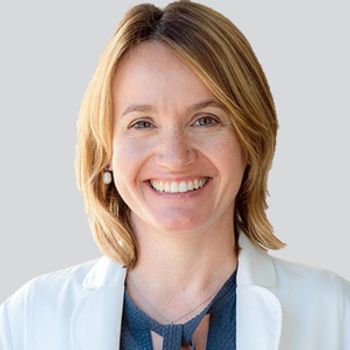
Riley Bove, MD, an associate professor of neurology at the University of California, San Francisco, discussed phase 4 findings from the MINORE and SOPRANINO studies that examined ocrelizumab exposure during pregnancy and lactation in women with MS.

Experts shared their clinical perspectives on trending topics in the treatment and management of multiple sclerosis at the 54th Child Neurology Society (CNS) Annual Meeting, held October 8-11, 2025.
Here's some of what is coming soon to NeurologyLive® this week.

Leigh Charvet, PhD, professor of neurology at NYU Grossman School of Medicine, provided clinical insights to her team’s pilot study using at-home brain stimulation to reduce cannabis use in women with multiple sclerosis.
Here's some of what is coming soon to NeurologyLive® this week.
Take 5 minutes to catch up on NeurologyLive®'s highlights from the week ending October 17, 2025.

The professor of neurology at Barts and The London School of Medicine and Dentistry provided commentary on the ways to improve inclusion for multiple sclerosis clinical trials, factoring in patients with more advanced stages of disease. [WATCH TIME: 4 minutes]
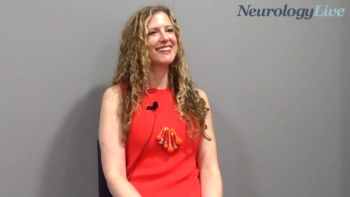
The assistant professor of neurology at Oregon Health & Science University discussed emerging evidence that aerobic exercise may enhance remyelination in patients with multiple sclerosis. [WATCH TIME: 5 minutes]
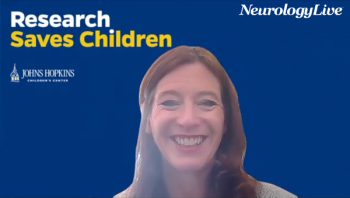
The pediatrician in chief at Johns Hopkins Children’s Center outlined the logistical, ethical, and regulatory hurdles of conducting pediatric MS trials, emphasizing the need for faster, more inclusive study designs to bring emerging therapies to clinic. [WATCH TIME: 5 minutes]
The professor of neurology at Barts and London School of Medicine and Dentistry discussed data from the phase 3b ORATORIO-HAND trial, which tested ocrelizumab’s effect in patients with more advanced primary progressive multiple sclerosis. [WATCH TIME: 5 minutes]
Advertisement
Advertisement
Trending on NeurologyLive - Clinical Neurology News and Neurology Expert Insights
1
FDA Approves Autoinjector for Self-Administered Zilucoplan in Generalized Myasthenia Gravis
2
New Phase 1 Study Tests Intrathecal Gene Therapy Agent INS1201 in Duchenne Muscular Dystrophy
3
Arimoclomol Plus Miglustat Shows Early, Sustained Slowing of Niemann-Pick Disease Type C Progression
4
Fenfluramine Shows Consistent Seizure Reduction Across Age Groups in CDKL5 Deficiency Disorder
5