

MS and Demyelinating Disorders
Latest News
Advertisement
Latest Videos

Shorts
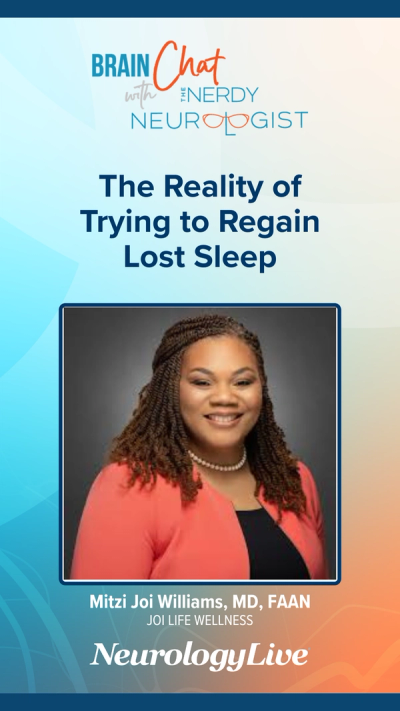
0:58
Can You Regain Lost Sleep?
5 months ago
by
Mitzi Joi Williams, MD
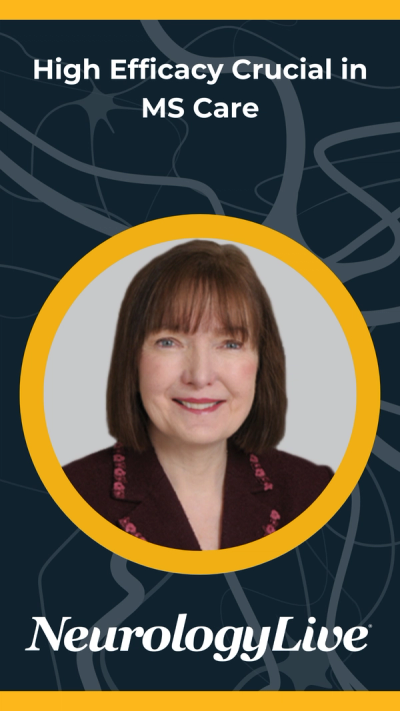
0:39
High Efficacy Treatment Crucial in MS Care
5 months ago
by
Louie Pasculli(+1 more)
1:01
Acting Tremor vs Rest Tremor
5 months ago
by
Mitzi Joi Williams, MD
1:21
AAN 2026: Using OCT in Pediatric Multiple Sclerosis
5 months ago
by
Scott Grossman, MD(+1 more)
1:01
Brain Chat with Nerdy Neurologist: Previewing Episode 2
5 months ago
by
Mitzi Joi Williams, MD
2:00
Understanding the Origins of Sexual Dysfunction in Multiple Sclerosis
5 months ago
by
Lindsay Ross, MD(+1 more)
1:01
Brain Chat with Nerdy Neurologist: Why Medication Approval Delays Happen
5 months ago
by
Mitzi Joi Williams, MD

1:16
Communicating Evidence-Based Information to Scientific Communities
6 months ago
by
Bill Nye
0:45
Brain Chat with Nerdy Neurologist: Importance and Value of Prior Authorization
6 months ago
by
Mitzi Joi Williams, MD
0:45
Brain Chat with Nerdy Neurologist: Deductible vs Copay vs Coinsurance
6 months ago
by
Mitzi Joi Williams, MD
Podcasts
CME Content










Advertisement
More News

Mitzi Joi Williams, MD, is joined by movement disorder specialists Chantale Branson, MD, MSCR, FAAN, and Keisha Young, MD, PhD, to discuss the causes, evaluation, and management of tremor disorders.

The chief medical executive at Marcus Neuroscience Institute discussed the evolving role of AI, advanced imaging, and precision therapeutics in neurology presented at Baptist Health’s 2026 Brain & Spine Symposium. [WATCH TIME: 5 minutes]
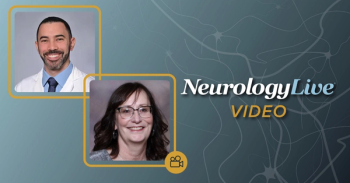
The nurse practitioner at the University of Miami and the president of the IOMSN discussed advice for younger colleagues, misconceptions about neurology nursing, and more. [WATCH TIME: 10 minutes]

Here's some of what is coming soon to NeurologyLive® this week.
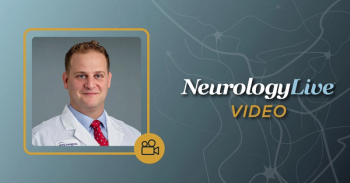
The assistant professor of neurology and ophthalmology at NYU Grossman School of Medicine discussed findings presented at AAN 2026 on the use of optical coherence tomography in pediatric MS. [WATCH TIME: 8 minutes]
The nurse practitioner at the University of Miami and the president of the IOMSN shared their thoughts on the unique demands of nursing in neurology, with a particular focus on their experience in multiple sclerosis nursing. [WATCH TIME: 6 minutes]
Mind Moments®, a podcast from NeurologyLive®, brings you an exclusive interview with Scott Grossman, MD. [LISTEN TIME: 13 minutes]
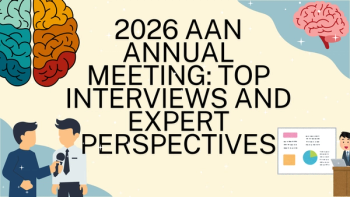
Experts shared their clinical perspectives and insights on main focus areas at the 2026 American Academy of Neurology (AAN) Annual Meeting, held April 18-22 in Chicago, Illinois.
William Kilgo, MD, and rising chief resident Ashley Nguyen, MD, discuss the evolving neurology residency Match process, offering guidance on competitiveness, interviews, program fit, and recruitment in the virtual era.
Here's some of what is coming soon to NeurologyLive® this week.
The FDA approval of ocrelizumab for pediatric RRMS expands access to a high-efficacy anti-CD20 therapy for children and adolescents with historically limited treatment options.

Take 5 minutes to catch up on NeurologyLive®'s highlights from the week ending May 8, 2026.

In this episode, Mitzi Joi Williams, MD, and Jacqueline Rosenthal, MD, review the past year in multiple sclerosis, highlighting emerging therapies, biomarkers, and evolving approaches to personalized, comprehensive care.
Here's some of what is coming soon to NeurologyLive® this week.
Neurologist Michael Levy, MD, PhD, outlines phase 3 METEOROID findings demonstrating satralizumab’s ability to reduce relapse risk and provide early, sustained disease control in patients with MOGAD.

Neurology News Network for the week ending May 2nd, 2026. [WATCH TIME: 5 minutes]
Machine learning will only transform clinical neurology if predictive accuracy is matched by usability, transparency, and active physician involvement in the design and implementation of tools that support patient care.
CHMP has recommended tolebrutinib for nonrelapsing SPMS following phase 3 data showing reduced disability progression, supporting its role in targeting CNS-driven inflammation.
Phase 3 data presented at AAN 2026 show that IVIG improves response rates in patients with autoimmune encephalitis refractory to steroids, supporting its role as a second-line immunotherapy option.
Here's some of what is coming soon to NeurologyLive® this week.
Neurology News Network for the week ending April 25th, 2026. [WATCH TIME: 5 minutes]
Take 5 minutes to catch up on NeurologyLive®'s highlights from the week ending April 24, 2026.
Mitzi Joi Williams, MD, and Carol Coleman break down insurance basics, prior authorizations, and practical strategies to help patients navigate cost and access challenges at the start of the year.
New findings presented at AAN 2025 showed that treatment with satralizumab was associated with a reduction in annualized relapse rate compared with placebo over 48 weeks in patients with MOGAD.
Neurology News Network for the week ending April 18, 2026. [WATCH TIME: 5 minutes]
Advertisement
Advertisement
Trending on NeurologyLive - Clinical Neurology News and Neurology Expert Insights
1
FDA Approves Autoinjector for Self-Administered Zilucoplan in Generalized Myasthenia Gravis
2
New Phase 1 Study Tests Intrathecal Gene Therapy Agent INS1201 in Duchenne Muscular Dystrophy
3
Arimoclomol Plus Miglustat Shows Early, Sustained Slowing of Niemann-Pick Disease Type C Progression
4
Fenfluramine Shows Consistent Seizure Reduction Across Age Groups in CDKL5 Deficiency Disorder
5